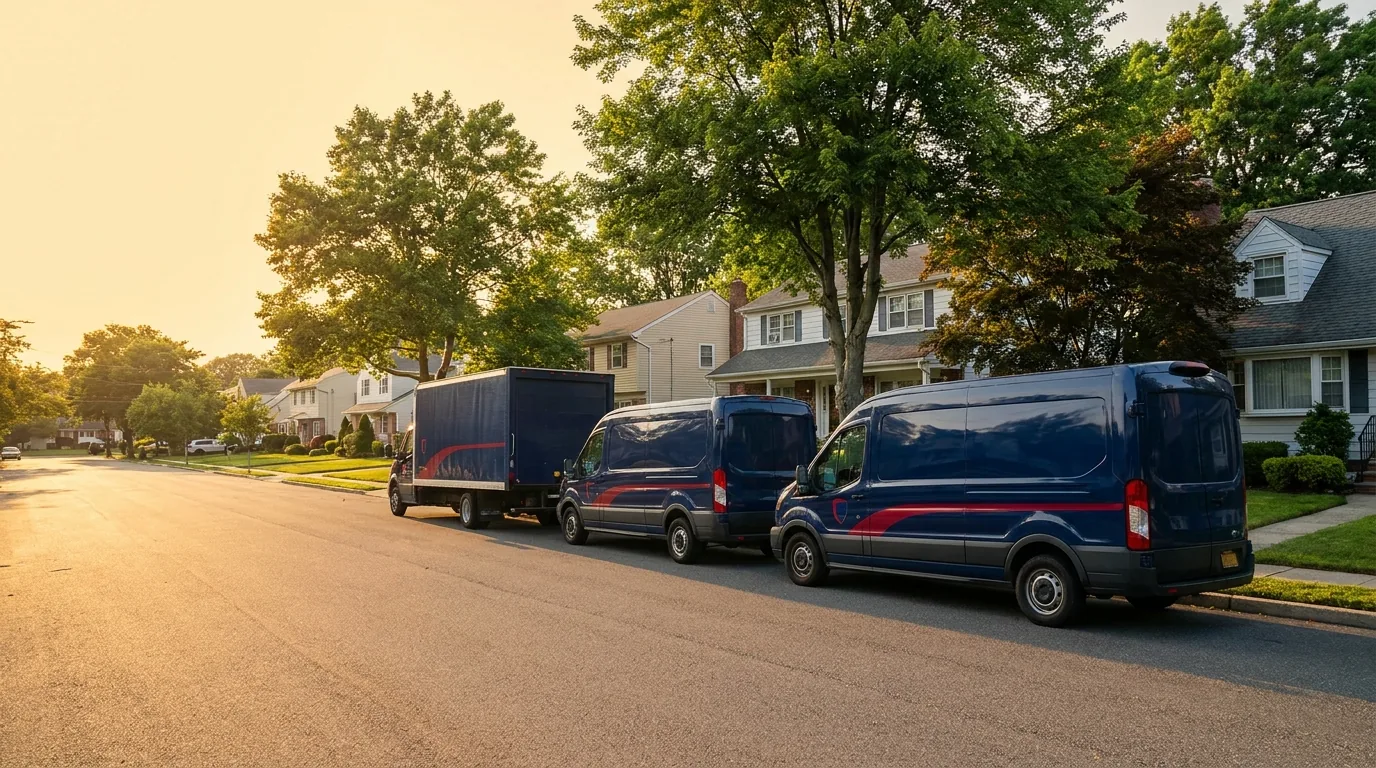
The single most important thing you can do after a flood, fire, or mold discovery is pick the right restoration company before panic picks one for you. That means checking three things before you sign anything: whether the company is certified for the specific type of damage you have, whether they document the loss in a format your insurance adjuster will actually accept, and whether their response timeline matches how fast your problem is spreading. Everything else — the trucks, the uniforms, the website — is secondary.
Why the Stakes Are Higher Than a Normal Contractor Hire
Hiring the wrong plumber to fix a faucet costs you an afternoon. Hiring the wrong restoration company after a burst pipe in your Kenilworth home can cost you months of callbacks, a denied insurance claim, and mold that colonizes drywall within 24 to 48 hours of the initial saturation. Restoration work sits at the intersection of construction, insurance, and public health — and most homeowners are navigating all three for the first time, usually while standing in wet socks at 11 p.m.
The restoration industry has a well-documented problem with storm chasers: out-of-state contractors who show up after a major weather event, collect a large deposit, do partial work, and disappear. New Jersey saw this pattern after several significant nor’easters and the flooding that followed Hurricane Ida. Knowing what to look for protects you from that scenario.
The Credentials That Actually Matter
Not every certification in the restoration world carries equal weight. Here is what to ask for — and what the answers tell you.
IICRC certification (Institute of Inspection, Cleaning and Restoration Certification) is the closest thing the industry has to a universal standard. Technicians certified by the IICRC have been trained on specific protocols — the S500 standard for water damage, the S520 for mold remediation — that govern how drying equipment is placed, how moisture readings are logged, and when a structure is considered dry enough to close up. If a company cannot name the standard they work to, that is a red flag.
Mold-specific licensing matters in New Jersey. The state requires separate licensure for mold assessment and mold remediation — they cannot be performed by the same entity on the same job. If a company offers to both test and remediate your mold problem, ask how they handle that legal separation. A legitimate firm will explain it clearly.
Insurance and workers’ compensation protect you if a technician is injured on your property or if equipment damages something. Ask for a certificate of insurance before work begins, not after.
For fire and smoke damage specifically, ask whether technicians have training in odor control and content restoration — smoke residue behaves differently on porous materials (upholstery, drywall) than on hard surfaces, and the cleaning chemistry is not the same.
How to Vet a Company in the First Phone Call
You can learn most of what you need to know in a five-minute call before anyone sets foot in your home. Work through these questions:
- What certifications do your technicians hold, and can you send documentation? A legitimate company will not hesitate.
- Do you bill insurance directly, or do I pay and get reimbursed? Direct billing means they know how to document a loss. If they ask you to handle the insurance side entirely, that is worth probing.
- Who will be on-site — your employees or subcontractors? Subcontractors are not inherently bad, but you want to know who is in your home and whether they are covered under the same insurance.
- Can you provide a written scope of work before you start? Verbal estimates are not binding. A written scope protects you if the bill expands.
- What does the drying process look like, and how will you document moisture readings? If they cannot describe a monitoring process, they may not have one.
Pay attention to pressure. A company that tells you the damage will be catastrophic if you don’t sign today — without having done a proper assessment — is using urgency as a sales tactic. Legitimate urgency exists in restoration (mold really does grow fast; smoke residue really does bond to surfaces within hours), but it should come with an explanation, not just a clipboard.
Red Flags That Should Make You Walk Away
Some warning signs are subtle. Others are not.
- They ask you to sign over your insurance benefits (an Assignment of Benefits agreement) before explaining what it means. AOB arrangements are legal in some contexts but have been widely abused. Understand exactly what you are signing.
- They cannot produce a local address or a New Jersey contractor registration number. Out-of-state companies operating in NJ after a storm event may not be registered to do business here.
- The estimate is suspiciously low. Restoration equipment — industrial dehumidifiers, air movers, thermal imaging cameras — is expensive to operate. An estimate that seems too good to be true often precedes a change order that is not.
- They discourage you from calling your insurance company first. Your insurer has a right to inspect the damage before major work begins. A company that wants to start immediately without that step may be trying to control the documentation.
- No written moisture log or drying report. For water damage restoration, a daily moisture log is standard practice. It is also what your adjuster will ask for. If a company does not provide one, your claim is harder to close.
What a Legitimate Restoration Process Looks Like
Understanding the actual process helps you recognize when corners are being cut.
For water damage, the first step is extraction — removing standing water with truck-mounted or portable units. Then comes drying, which is not the same as “things look dry.” Structural drying uses calibrated dehumidifiers and air movers placed according to a drying plan, with moisture readings taken at the same points daily until the material reaches its target moisture content. In older New Jersey homes — the kind of wood-framed construction common in Union County neighborhoods — that process can take three to five days even for a contained leak.
For fire and smoke damage, the sequence is more complex: emergency board-up and tarping if the structure is compromised, then soot removal (which requires different chemistry on different surfaces), then odor neutralization using thermal fogging or hydroxyl generators, then content cleaning and pack-out if needed. Skipping odor treatment and going straight to repainting seals smoke residue into the wall — and the smell returns with humidity.
For mold remediation, the process begins with containment to prevent spores from spreading to unaffected areas, followed by removal of colonized materials (often drywall and insulation), HEPA vacuuming, antimicrobial treatment, and a clearance test performed by a separate, licensed mold assessor. That final clearance test is not optional — it is the documentation that the problem is resolved.
Making the Call
If you are in the middle of a water, fire, or mold situation in Kenilworth or the surrounding area and you want a company that can walk you through this process — not just show up with equipment — The Restoration Group is available at (908) 970-8533. Bring your questions. A company worth hiring will answer them.