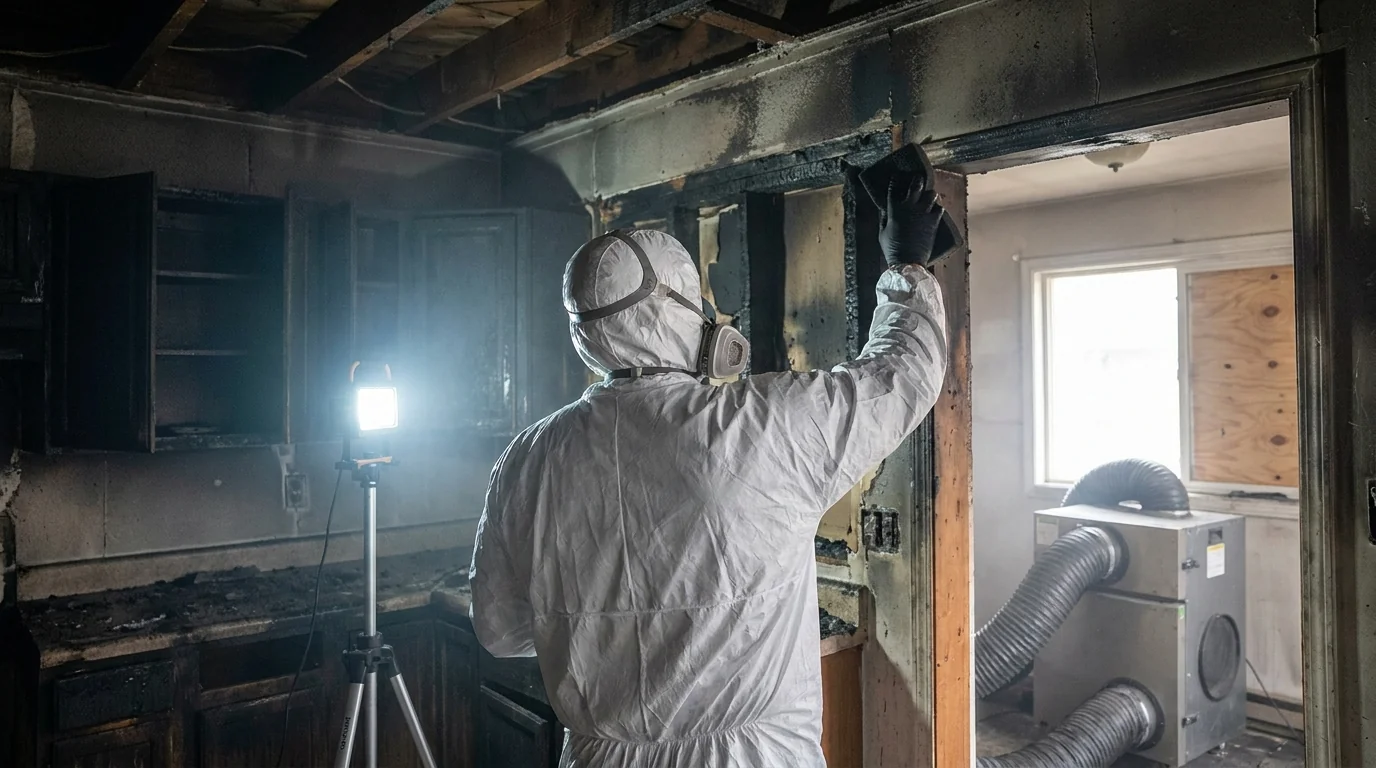
Fire Damage Restoration in Kenilworth
24/7 fire damage restoration in Kenilworth and surrounding areas. IICRC-certified, insurance billing accepted. Call (908) 970-8533.
What fire damage restoration actually involves
The fire is out, but the damage isn’t done. In the hours after a structural fire, soot particles are still migrating — settling into HVAC ducts, embedding in porous surfaces, and reacting with moisture in the air to form acidic residues that etch metal fixtures, yellow paint, and permanently stain grout if left more than 72 hours. The smell of smoke that seems to fade by morning has actually absorbed into wall cavities, subfloor insulation, and the wood framing itself. Fire and smoke restoration is not cleaning — it is a systematic reversal of chemical and physical processes that are still actively happening when the crew arrives.
Fire damage restoration covers four overlapping categories of harm: char and structural damage from direct flame contact, dry soot from fast-burning cellulose materials, wet or oily soot from synthetic materials like carpet, foam, and plastics, and protein residue from kitchen fires. Each type requires different chemistry and different equipment. A crew that treats all soot the same way — wiping surfaces with a general-purpose cleaner — will drive residue deeper into porous materials and leave behind the volatile organic compounds responsible for persistent odor. The work also routinely uncovers secondary water damage from suppression efforts, which must be addressed in parallel to prevent mold colonization within the same structure.
Timeline matters. Galvanized metal begins to corrode within hours of soot exposure. Fiberglass tubs and shower surrounds can discolor permanently within 24–48 hours. Chrome fixtures pit. Hardwood floors warp as suppression water works into the grain. A response measured in hours — not days — changes what can be saved and what has to be replaced.
Our process
1. Soot characterization and scope assessment Before a single surface is touched, the crew identifies the fire’s fuel sources and maps the soot types present throughout the structure. Protein soot from a kitchen fire is nearly invisible but leaves a greasy film and an intense odor; it requires enzymatic cleaners and often full cabinet removal. Synthetic soot from burning plastics is thick, oily, and highly acidic, demanding chemical sponges and specific pH-balanced solutions before any wet cleaning begins. Misidentifying soot type at this stage is the single most common error in post-fire restoration.
2. Structural stabilization and contents pack-out If load-bearing elements are compromised or the structure is open to weather, temporary boarding, tarping, and shoring happen before interior work begins. Salvageable contents — furniture, clothing, documents, electronics — are inventoried, photographed, and packed out to a climate-controlled facility for cleaning and deodorization off-site. This protects belongings from cross-contamination during demolition and gives adjusters a documented contents list.
3. Controlled demolition and HEPA vacuuming Char, unsalvageable drywall, insulation, and flooring are removed. HEPA vacuums capture fine particulate from framing, joists, and subfloor before any wet cleaning begins — wet-wiping a surface loaded with loose soot spreads contamination rather than removing it. Air scrubbers with HEPA filtration run continuously throughout this phase to capture airborne particulate.
4. Chemical cleaning and thermal fogging Surfaces are cleaned in sequence using chemistry matched to the soot type identified in step one. After surface cleaning, thermal fogging — which vaporizes a deodorizing solution into the same particle size as smoke — is deployed to penetrate wall cavities, ductwork, and the structural lumber that absorbed odor compounds. Thermal fogging reaches places that no hand-wiping can.
5. Ozone treatment and clearance Once the structure is sealed and occupants and pets are out, ozone generators run for a calculated dwell period based on cubic footage and contamination level. Ozone breaks down the organic molecules responsible for smoke odor at the molecular level rather than masking them. After the dwell period and adequate ventilation, the space is inspected for residual odor and visual soot before reconstruction begins.
What separates a good fire damage response from a bad one
Insurance adjusters who work fire claims regularly know what a thorough scope looks like — and what a rushed one misses. The most common gaps: failing to test HVAC systems for soot infiltration (ducts distribute contamination to every room the system serves), skipping thermal fogging in wall cavities because it adds time, and not documenting pre-existing conditions separately from fire damage, which creates disputes during claim settlement.
A technically sound response also means understanding that smoke travels. In a two-story house, smoke rises and pressurizes upper floors and attic spaces even when the fire was confined to the kitchen. Crews that only clean the rooms with visible char routinely leave contaminated insulation and framing above the ceiling line — a source of odor that returns within weeks once the structure is reoccupied and HVAC circulation resumes.
The IICRC S700 standard for fire and smoke restoration provides the framework for scope development and documentation. Working to that standard means the claim file holds up to adjuster review and the remediation holds up after move-in.
Seasonal and regional considerations
In northern New Jersey, winter fires create a compounding problem: suppression water introduced into a structure during freezing temperatures can freeze inside wall cavities before extraction equipment can reach it, expanding and cracking framing, tile, and plumbing. The freeze-thaw cycle that characterizes Kenilworth winters from December through March means that post-fire water extraction must happen before temperatures drop overnight — not the following morning. Older housing stock in Union County, much of it built before 1970, also presents lead paint and asbestos concerns in materials disturbed during fire demolition, which require separate handling protocols.
Service area
The Restoration Group is based in Kenilworth, NJ and responds to fire damage throughout Union County and surrounding areas, including Cranford, Westfield, Springfield, Roselle, and Clark. City-specific pages cover local details; all work is performed to the same standard regardless of municipality.
If your home or building has sustained fire or smoke damage, the window to limit permanent loss is measured in hours. Call (908) 970-8533 — crews are available 24/7 — to begin smoke and soot removal before residue sets and odor compounds into the structure.
Frequently Asked Questions
What is the difference between protein soot and synthetic soot, and why does it change how cleanup is done?
Why does smoke odor come back weeks after a fire was cleaned?
How does fire damage restoration interact with the suppression water left by firefighters?
What does a fire damage restoration crew document for an insurance claim, and why does it matter?
Can smoke and soot damage spread to parts of the house where there was no visible fire?
Looking for the best fire damage restoration company in Fair Lawn?
The Restoration Group provides licensed and insured fire damage restoration in Fair Lawn, NJ and the surrounding area, and has served local property owners since 2021. We answer calls 24/7 — call (908) 970-8533 for immediate help.
Need Fire Damage Restoration now?
We respond 24/7 across Fair Lawn and surrounding NJ cities.
Related Coverage
- Our Restoration Services
- Contact The Restoration Group
- Fire Damage Restoration in Brooklyn
- Fire Damage Restoration in Cranford
- Fire Damage Restoration in Elizabeth
- Fire Damage Restoration in Jersey City
- Fire Damage Restoration in Kenilworth
- Fire Damage Restoration in Manhattan
- Fire Damage Restoration in Newark
- Fire Damage Restoration in Springfield
- Fire Damage Restoration in Summit
- Fire Damage Restoration in Union
- Fire Damage Restoration in Westfield
- How To Choose a Restoration Company in (Without Getting Burned)
- The Fire Damage Restoration Process, Explained
- How Professionals Remove Smoke Odor (and Why DIY Usually Fails)