Reconstruction Services in Kenilworth
24/7 reconstruction services in Kenilworth and surrounding areas. IICRC-certified, insurance billing accepted. Call (908) 970-8533.
What happens after the damage is gone
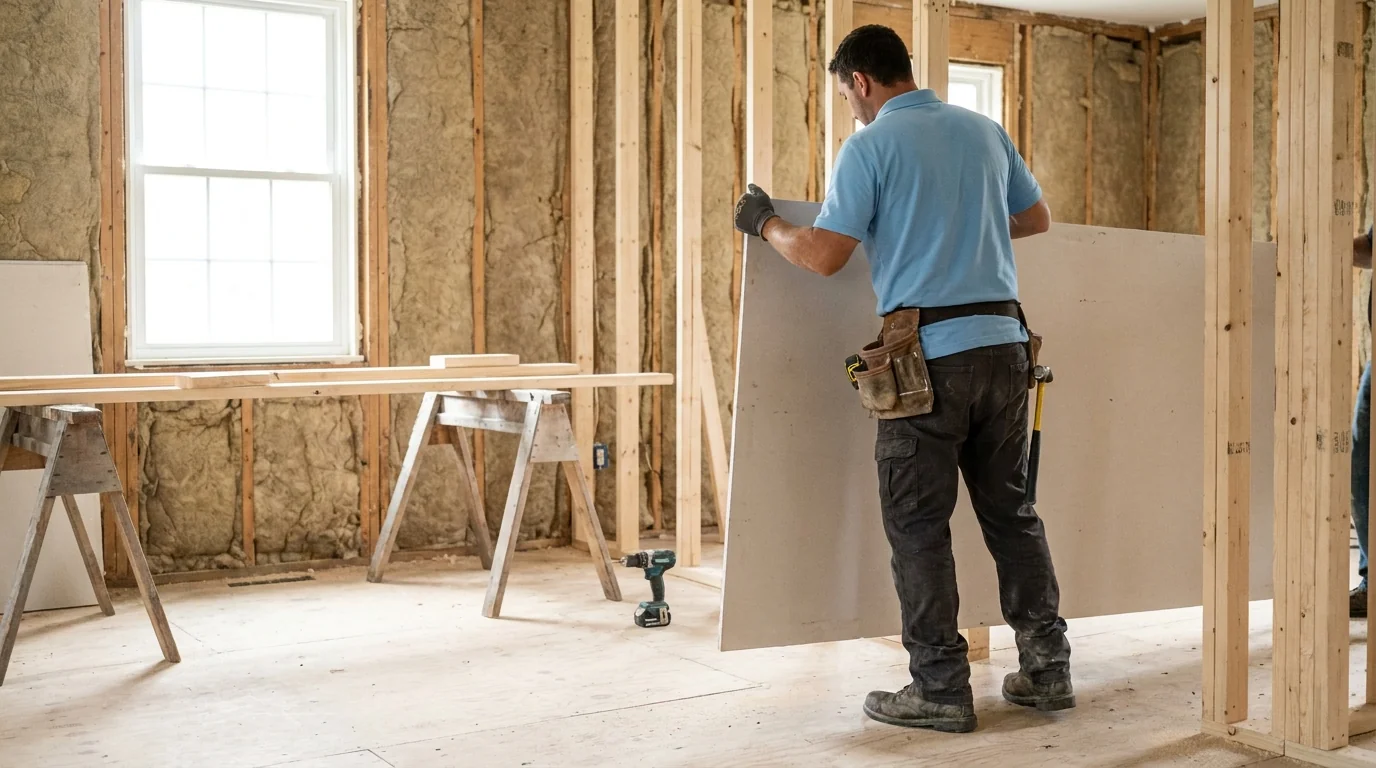
Mitigation stops the bleeding — extraction, drying, demolition of unsalvageable materials. But when the crews pack up and the fans go quiet, you’re often left staring at exposed studs, missing drywall, and subfloor that’s been cut away to the joists. That gap between a stabilized structure and a livable home is exactly where reconstruction services begin. It’s also where projects stall, costs balloon, and homeowners discover that not every contractor who handles damage also knows how to rebuild from it.
What reconstruction services actually involves
Post-damage reconstruction is not a single trade — it’s a coordinated sequence of them. Depending on the scope, a full rebuild can touch structural framing, insulation, vapor barriers, drywall, finish carpentry, flooring, painting, cabinetry, tile, and mechanical rough-ins. The difference between a cosmetic repair and a structural reconstruction is significant: replacing drywall in a bedroom is a few days of work; reframing a load-bearing wall that absorbed fire or flood damage is a permitted, engineered process that requires inspections at multiple stages.
Timeline varies with scope. A single-room rebuild after a contained water loss might run one to two weeks. A fire that burned through a kitchen and into the attic framing can take eight to twelve weeks once permits are pulled and materials are ordered. Supply chain delays on specialty items — custom windows, engineered lumber, specific tile — are a real factor and should be built into any honest schedule from day one.
The work is also documentation-heavy. Insurance carriers require line-item estimates, photo evidence of damaged versus replaced materials, and in many cases a signed scope of work before they release supplemental payments. A reconstruction contractor who doesn’t produce that paperwork in a format adjusters recognize will cost you time and money, regardless of how good the finish work looks.
Our process
1. Scope of work and damage assessment Before a single nail is driven, we walk the structure with the insurance adjuster’s estimate in hand and compare it against what we actually see in the field. Hidden damage — rot behind a shower wall, charred framing inside a soffit, compromised sheathing under a roof — gets documented and added to the scope before work begins, not discovered mid-project and billed as a surprise.
2. Permitting and code compliance Structural reconstruction in New Jersey requires permits for most framing, electrical, plumbing, and HVAC work. As a licensed NJ Home Improvement Contractor, we pull permits, schedule inspections, and ensure the rebuild meets current code — which sometimes differs from what was originally installed, particularly in older Kenilworth housing stock where knob-and-tube wiring or undersized panels may surface during a rebuild.
3. Structural framing and rough-in trades This is the skeleton of the project: replacing damaged joists, studs, headers, and sheathing; coordinating with licensed electricians, plumbers, and HVAC technicians for rough-in work before walls close. Inspections happen here. Nothing gets covered until it passes.
4. Insulation, drywall, and weatherproofing After rough-in inspections clear, insulation goes in — and this is a step where post-disaster rebuilds differ from standard renovation. Moisture readings are confirmed before insulation is installed to prevent trapping residual humidity behind new drywall. Vapor barriers are installed to current code, not to whatever was there before.
5. Finish work and final walkthrough Flooring, paint, trim, cabinetry, tile, and fixtures come last. We match existing finishes where possible and flag where an exact match isn’t achievable — better to know before installation than after. Final walkthrough confirms every line item in the scope is complete and documented for the insurance file.
What separates a good reconstruction response from a bad one
The most common failure point in post-damage rebuilding is a contractor who starts finish work before the structure is actually dry or structurally sound. Drywall installed over framing that’s still holding elevated moisture content will blister, mold, and fail within a season. A good reconstruction contractor verifies moisture readings before any wall closure — not because it’s required on paper, but because callbacks are expensive and mold remediation after a botched rebuild is a claim nobody wants to file.
On fire damage reconstruction specifically, contractors sometimes replace drywall without addressing smoke odor that has penetrated framing and subfloor. New drywall over smoke-saturated studs will off-gas for months. The framing needs to be sealed with an appropriate encapsulant before new material goes up — a step that’s easy to skip and nearly impossible to fix without tearing the work back out.
Insurance adjusters look for itemized documentation, before-and-after photography at each phase, and a final invoice that reconciles with the approved scope. Gaps in that paper trail create disputes and delayed payments. Experienced reconstruction contractors build documentation into the workflow, not as an afterthought.
Seasonal and regional considerations
New Jersey’s freeze-thaw cycle matters for exterior reconstruction. Work that requires open walls or roof decking needs to be sequenced carefully between October and March — moisture intrusion during a rebuild can introduce a new damage claim before the first one is settled. In Kenilworth and the surrounding Union County area, older housing stock from the mid-20th century frequently surfaces lead paint and asbestos-containing materials during demolition phases, which require proper testing and abatement protocols before reconstruction can proceed.
Spring storm season also drives a surge in reconstruction demand across the region. Scheduling early — before the backlog builds — is the single most effective way to compress the timeline between mitigation and a finished, livable space.
Service area
The Restoration Group handles reconstruction services in Kenilworth and throughout Union, Essex, and Middlesex counties, including Springfield, Westfield, Summit, Cranford, Linden, and surrounding communities. City-specific pages cover local permitting offices, utility contacts, and neighborhood housing considerations for each area.
If your structure has been stabilized and you’re ready to move from demo to done, call (908) 970-8533 to get a reconstruction scope of work — a line-item breakdown of what needs to happen, in what order, and what the insurance file will need to support it.
Frequently Asked Questions
What's the difference between mitigation and reconstruction, and do I need separate contractors for each?
How does the reconstruction scope of work affect my insurance settlement?
Do I need permits for post-damage reconstruction, and who is responsible for pulling them?
What happens if additional damage is discovered once walls are opened during reconstruction?
How do I know when framing is dry enough to close walls after a water loss?
Looking for the best reconstruction services company in Fair Lawn?
The Restoration Group provides licensed and insured reconstruction services in Fair Lawn, NJ and the surrounding area, and has served local property owners since 2021. We answer calls 24/7 — call (908) 970-8533 for immediate help.
Need Reconstruction Services now?
We respond 24/7 across Fair Lawn and surrounding NJ cities.
Related Coverage
- Our Restoration Services
- Contact The Restoration Group
- Reconstruction Services in Brooklyn
- Reconstruction Services in Cranford
- Reconstruction Services in Elizabeth
- Reconstruction Services in Jersey City
- Reconstruction Services in Kenilworth
- Reconstruction Services in Manhattan
- Reconstruction Services in Newark
- Reconstruction Services in Springfield
- Reconstruction Services in Summit
- Reconstruction Services in Union
- Reconstruction Services in Westfield