Smoke Damage Restoration in Kenilworth
24/7 smoke damage restoration in Kenilworth and surrounding areas. IICRC-certified, insurance billing accepted. Call (908) 970-8533.
The fire is out, but the damage isn’t done. Smoke travels through wall cavities, settles into HVAC ductwork, and bonds to cool surfaces — often in rooms that never saw a flame. Within 72 hours, acidic soot begins etching chrome fixtures and yellowing painted walls. Within a week, the odor compounds become nearly impossible to remove without professional equipment. What looks like a surface-level cleanup problem is usually a whole-structure contamination problem.
What smoke damage restoration actually involves
Smoke behaves differently depending on what burned. A kitchen grease fire produces a thick, oily protein smoke that coats surfaces in a nearly invisible film — one that smells intensely and resists standard cleaning. A structural fire involving synthetic materials (carpet, insulation, PVC pipe) generates dry, porous soot that travels farther and penetrates deeper into porous substrates like drywall and wood framing. Wildfire smoke cleanup presents its own challenge: fine particulates from vegetation fires infiltrate HVAC systems and soft goods throughout a home even without direct fire contact.
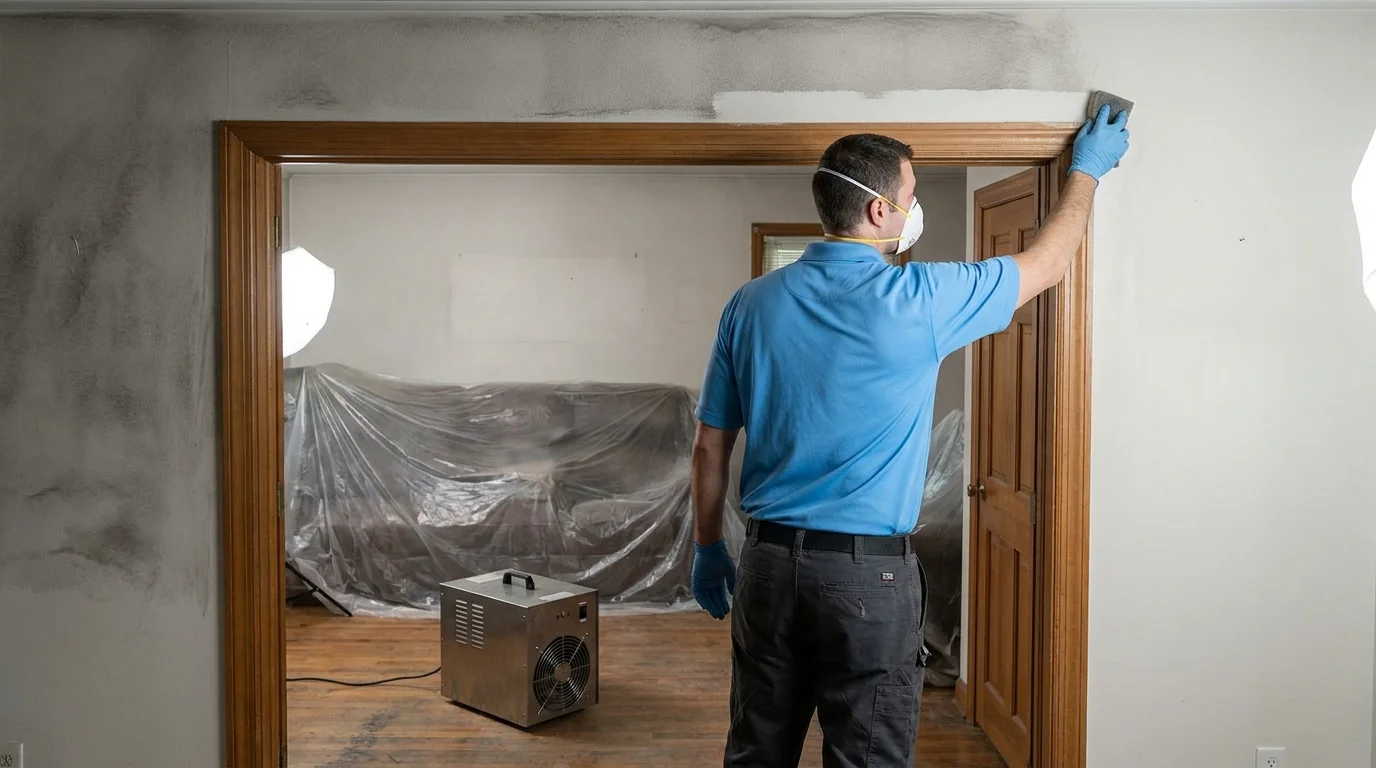
Effective smoke damage restoration addresses all three vectors: surfaces, air, and contents. That means chemical sponge dry-cleaning of soot-coated walls before any wet cleaning begins, thermal fogging or hydroxyl generation to neutralize odor molecules embedded in structural materials, and HEPA-filtered air scrubbing to capture suspended particulates. On larger losses, contents pack-out — carefully inventorying and removing salvageable items for off-site cleaning — protects belongings while the structure is treated. The timeline from first assessment to final clearance typically runs 5 to 14 days depending on the size of the affected area and the smoke type involved.
Our process
-
Soot characterization and scope assessment. Before any cleaning begins, the type of smoke residue is identified — wet/oily protein soot, dry porous soot, or fuel-oil (furnace puff-back) residue. Each requires a different chemistry. Surfaces are tested for pH and residue depth. The HVAC system is inspected immediately, because running the system after a fire distributes soot to every room it serves.
-
Containment and HVAC isolation. Affected zones are isolated with poly barriers to prevent cross-contamination during cleaning. The HVAC system is shut down and sealed at registers until ductwork can be professionally cleaned. This step is frequently skipped by less experienced crews — and it’s the reason odor comes back months later.
-
Dry soot removal and chemical cleaning. Dry chemical sponges remove loose soot from walls, ceilings, and structural surfaces before any moisture is introduced. Wet cleaning with alkaline or acidic solutions (matched to the soot type) follows. Porous materials that cannot be cleaned to an acceptable level — insulation, heavily saturated drywall — are documented and removed.
-
Thermal fogging and hydroxyl treatment. Odor molecules from smoke bond to surfaces at a molecular level. Thermal fogging introduces a deodorizing solvent in a particle size that mimics smoke itself, reaching the same voids smoke penetrated. For occupied or sensitive environments, hydroxyl generators provide an alternative that is safe to run while people are present. Ozone treatment, when appropriate, is used only in unoccupied spaces and followed by thorough ventilation.
-
Clearance verification and documentation. Final air quality readings confirm particulate levels have returned to acceptable baselines. All affected materials, cleaning agents used, and pre/post surface readings are documented in a format insurance adjusters can use directly. Photos are taken at each stage.
What separates a good smoke damage response from a bad one
The most common failure point in smoke damage restoration is treating it like a cleaning job rather than a contamination job. Painting over soot-stained walls without proper chemical cleaning traps odor compounds beneath the surface — they off-gas for months and eventually bleed through new paint. Skipping HVAC inspection means every time the system runs, it redistributes fine particulates the cleaning crew never touched.
Insurance adjusters look for itemized documentation of soot type, affected square footage, cleaning methodology, and materials removed. A restoration company that photographs only the obvious fire damage and skips the smoke migration path through the structure will produce a scope that underpays the claim — leaving the homeowner responsible for the difference. Proper documentation from the first day protects the full value of the claim.
Protein smoke from cooking fires is consistently underestimated. The residue is nearly invisible, but it creates a rancid odor that intensifies with heat and humidity. It requires enzyme-based or alkaline cleaners and often multiple passes — not the general-purpose cleaner a painting contractor might apply before repainting.
Seasonal and regional considerations
In northern New Jersey, the combination of older housing stock and forced-air heating systems creates specific smoke migration patterns. Balloon-frame construction — common in pre-1950s homes throughout Union County — has open wall cavities that run floor to ceiling, allowing smoke to travel vertically through the entire structure from a single-floor fire. Identifying this framing type early changes the scope of work significantly.
Wildfire smoke events, while less common in the Northeast than in western states, have become a seasonal concern. During high-particulate air quality days, fine smoke infiltrates homes through gaps around windows, doors, and HVAC fresh-air intakes — depositing residue inside structures that never experienced a local fire. Post-event HVAC filter inspection and interior air quality testing are worth scheduling after any extended wildfire smoke advisory.
Service area
The Restoration Group is based in Kenilworth, NJ and provides smoke damage restoration services throughout Union County and surrounding communities — including Cranford, Westfield, Clark, Roselle Park, Springfield, and neighboring areas across Essex and Middlesex counties. City-specific service pages detail local response logistics; this page covers the full scope of what the service involves.
If your home or property smells like smoke, has visible soot on walls or ceilings, or recently experienced any fire — even a contained one — call (908) 970-8533 to begin smoke and soot removal. The Restoration Group is available 24/7, holds IICRC Firm Certification #210213, and is licensed in New Jersey as a Home Improvement Contractor. The sooner soot is characterized and treated, the less permanent the damage.
Frequently Asked Questions
What is the difference between protein smoke and synthetic smoke, and why does it change how cleanup is done?
Why does smoke odor come back weeks after a fire even when the house looked clean?
What should I do (and not do) in my home while waiting for the smoke damage crew to arrive?
How does smoke migrate through a structure, and what areas are most commonly missed during cleanup?
What documentation does an insurance adjuster need for a smoke damage claim, and how does the restoration company support that?
Looking for the best smoke damage restoration company in Fair Lawn?
The Restoration Group provides licensed and insured smoke damage restoration in Fair Lawn, NJ and the surrounding area, and has served local property owners since 2021. We answer calls 24/7 — call (908) 970-8533 for immediate help.
Need Smoke Damage Restoration now?
We respond 24/7 across Fair Lawn and surrounding NJ cities.
Related Coverage
- Our Restoration Services
- Contact The Restoration Group
- Smoke Damage Restoration in Brooklyn
- Smoke Damage Restoration in Cranford
- Smoke Damage Restoration in Elizabeth
- Smoke Damage Restoration in Jersey City
- Smoke Damage Restoration in Kenilworth
- Smoke Damage Restoration in Manhattan
- Smoke Damage Restoration in Newark
- Smoke Damage Restoration in Springfield
- Smoke Damage Restoration in Summit
- Smoke Damage Restoration in Union
- Smoke Damage Restoration in Westfield
- The Fire Damage Restoration Process, Explained
- How Professionals Remove Smoke Odor (and Why DIY Usually Fails)