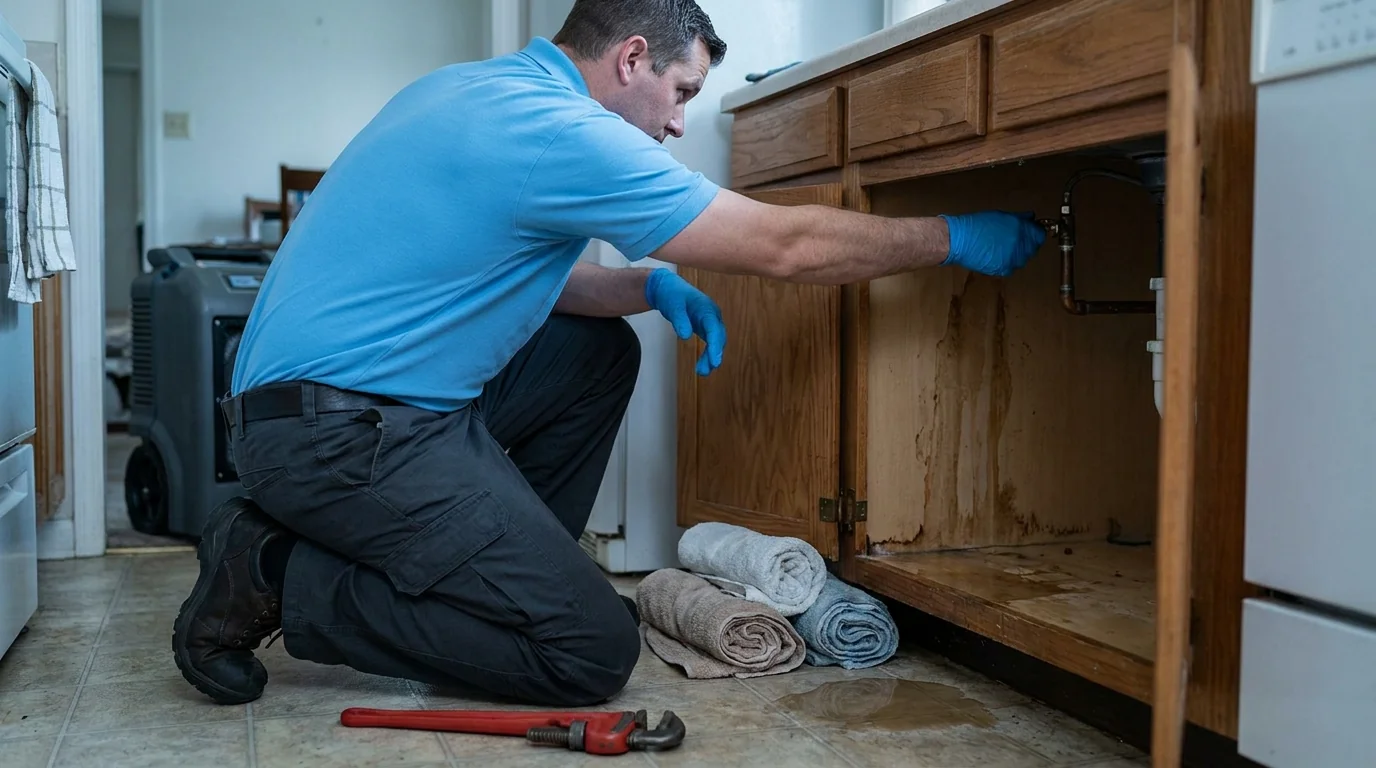
Burst Pipe Cleanup and Repair in Brooklyn
24/7 burst pipe cleanup and repair in Brooklyn, NY. IICRC-certified, insurance billing accepted. Call (908) 970-8533.
Our IICRC-certified technicians are dispatched from our Fair Lawn, NJ headquarters and are typically on-site in Brooklyn within 60 minutes of your call.
Brooklyn’s brownstone belt runs on pipes that were installed when Woodrow Wilson was president — and in January, when temperatures drop hard enough to freeze the exposed supply lines in garden-level apartments and uninsulated cellar spaces, those pipes don’t just drip. They split. A burst pipe inside a Park Slope rowhouse or a Brooklyn Heights co-op can release hundreds of gallons before the water reaches the first-floor hallway, soaking through original plaster, saturating the subfloor, and threatening the shared party wall between you and your neighbor. The Restoration Group responds 24/7 to burst pipe emergencies across Brooklyn, with crews dispatched from our Kenilworth, NJ base around the clock.
Why Brooklyn Properties See Burst Pipe Problems
Brooklyn’s housing stock is one of the oldest in the country. Neighborhoods like Williamsburg and Flatbush are dense with late-19th and early-20th century masonry rowhouses where galvanized steel and cast-iron supply lines were never designed to last this long. Those materials corrode from the inside out, narrowing the pipe bore over decades — and a corroded pipe under pressure fails faster and more completely than a newer copper or PEX line would.
The borough’s geography adds another layer of risk. Coastal neighborhoods from Canarsie south toward Coney Island sit on low-lying fill and clay soils that shift seasonally. That ground movement stresses underground water service lines in ways that aren’t visible until a break floods a basement or drops water pressure without warning. After Hurricane Sandy, many of those areas saw compounding damage to both above-grade plumbing and buried laterals — and some of that infrastructure was patched rather than replaced.
Winter is the acute trigger. When a cold snap follows a stretch of mild weather, uninsulated pipes in cellar apartments and exterior walls that face north or west are the first to freeze. Garden-level units in the ZIP codes around 11215 and 11201 — where below-grade living space is common — see this pattern repeatedly.
Our Burst Pipe Cleanup and Repair Process in Brooklyn
When we arrive, the first priority is stopping ongoing water intrusion. If the building’s main shutoff is in a locked cellar or behind a utility panel that requires super or building management access — common in Brooklyn co-ops and older rental buildings — we work with whoever is on-site to isolate the affected zone as quickly as possible.
From there, the process follows a structured sequence:
- Moisture mapping — thermal imaging cameras and calibrated moisture meters locate water that has migrated behind plaster walls, beneath original hardwood floors, and into subfloor assemblies. In brownstones, water travels laterally through the floor system faster than it does in frame construction, so we map a wider perimeter than the visible wet area.
- Extraction — truck-mounted and portable extractors pull standing water from finished and unfinished spaces, including cellar floors and crawl spaces.
- Structural drying — commercial-grade desiccant and refrigerant dehumidifiers, combined with high-velocity air movers, are positioned to dry the assembly from the inside out. Plaster walls require a longer drying window than drywall — typically 30–50% more time — because the material holds and releases moisture slowly.
- Pipe repair coordination — we work alongside licensed plumbers to ensure the repair is documented before we close up any wall cavities, so your insurer has a complete record of cause and scope.
- Documentation package — moisture readings, photos, drying logs, and a scope of loss formatted for direct submission to your carrier or co-op board’s management company.
As an IICRC Certified Firm (#210213), our drying protocols follow the S500 Standard for Professional Water Damage Restoration, which most major insurers require for claim acceptance.
Reaching Brooklyn from Kenilworth
Our crews cross into Brooklyn via the Goethals Bridge to the Staten Island Expressway and the Verrazzano-Narrows Bridge, or through the Holland Tunnel and across the Brooklyn-Battery Tunnel depending on conditions and the destination neighborhood. Bay Ridge and the southern waterfront neighborhoods are typically the first Brooklyn addresses we reach; Bushwick and the areas north of Prospect Park are accessible via the BQE. Because we operate 24/7, we dispatch at whatever hour the call comes in — there’s no waiting until morning.
Brooklyn Insurance and Co-op Board Coordination
Brooklyn has a high concentration of co-op buildings, and co-op boards carry their own master policies that interact with individual unit owner policies in ways that complicate water damage claims. We’ve worked with management companies and adjusters on enough Brooklyn losses to know that documentation needs to be detailed enough to satisfy both the unit owner’s carrier and the building’s insurer — especially when damage crosses the line between the owner’s responsibility and the building’s responsibility.
For brownstone owners and condo associations, we provide itemized drying logs, before-and-after moisture readings, and photo documentation organized by affected area. If your management company has a preferred format, we can adapt our reporting to match it.
Local Note
In Brooklyn’s brownstone rowhouses, the party wall — the shared masonry wall between two attached buildings — is a silent variable in any burst pipe loss. Water that enters one unit’s wall cavity doesn’t always stay there. We’ve responded to jobs in the Brooklyn Heights area where the moisture readings on the neighbor’s side of the party wall were higher than on the side where the pipe actually broke. Before we finalize a drying plan, we ask about the adjacent unit and, when access is possible, we meter both sides. It’s a step that prevents a closed-out job from reopening as a mold complaint three weeks later.
If you’re dealing with a burst or broken pipe anywhere in Brooklyn — whether it’s a cellar apartment off Flatbush Avenue or a top-floor unit near the Brooklyn Navy Yard — call The Restoration Group at (908) 970-8533. We’ll walk you through the immediate steps, dispatch a crew, and handle the documentation from first contact through final drying readings.
Burst Pipe Cleanup and Repair in Brooklyn: Service Coverage
Frequently Asked Questions
How fast can you arrive for burst pipe cleanup and repair in Brooklyn?
How quickly can The Restoration Group reach a burst pipe emergency in Park Slope or Brooklyn Heights?
Does Brooklyn's co-op structure affect how a burst pipe claim is handled?
Are the older brownstones in Williamsburg and Flatbush more likely to have severe pipe burst damage than newer construction?
What happens to the plaster walls in a Brooklyn brownstone during the drying process?
A pipe broke in my cellar apartment near ZIP code 11215 — is the process different for below-grade spaces?
Will my homeowners insurance cover burst pipe cleanup and repair in Brooklyn?
Burst Pipe Cleanup and Repair response in Brooklyn
Most Brooklyn calls see a technician on-site within 60 minutes from our Fair Lawn headquarters.