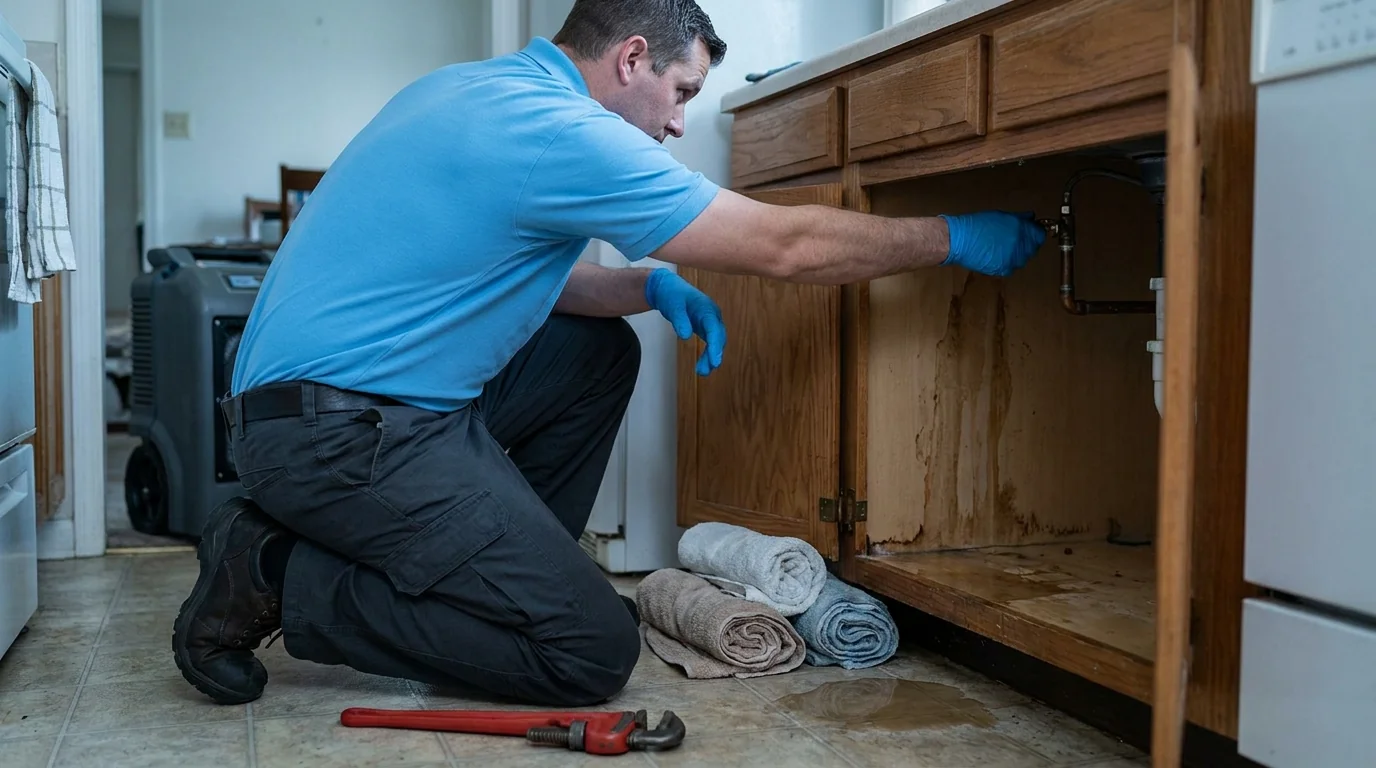
Burst Pipe Cleanup and Repair in Kenilworth
24/7 burst pipe cleanup and repair in Kenilworth and surrounding areas. IICRC-certified, insurance billing accepted. Call (908) 970-8533.
A pipe doesn’t burst gradually — it fails in seconds, and the water that follows doesn’t wait. By the time you hear the rush or notice the ceiling sagging, gallons have already moved behind walls, under subfloor, and into insulation that will hold moisture for weeks if it isn’t pulled and dried correctly. The cleanup isn’t just about mopping up standing water. It’s about stopping secondary damage — swelling framing, buckled hardwood, mold colonization that can begin within 24 to 48 hours of saturation — before it turns a plumbing failure into a gut renovation.
What burst pipe cleanup and repair actually involves
The visible water is rarely the whole problem. When a supply line or drain line lets go, water travels the path of least resistance: through wall cavities, along floor joists, into adjacent rooms on the same level or the floor below. A burst pipe cleanup involves finding all of it — not just the puddle on the kitchen floor.
Professional extraction uses truck-mounted or portable wet-vac systems capable of pulling hundreds of gallons from carpet, pad, and subfloor in a single session. After extraction, the real work begins: drying. Industrial air movers and low-grain refrigerant (LGR) dehumidifiers run continuously, sometimes for three to five days, while technicians track moisture readings in walls, ceilings, and structural cavities with pin-type and non-invasive moisture meters. Thermal imaging cameras reveal wet areas behind drywall that look perfectly dry to the eye.
Depending on how long the water sat and what category it falls into — clean supply-line water is Category 1; water that has contacted soil, insulation, or standing debris can escalate — some materials may need to be removed rather than dried in place. Wet drywall below the flood cut, saturated insulation, and swollen hardwood are common candidates for controlled demolition before drying can be effective.
The pipe repair itself — whether it’s a copper repipe, a PEX splice, or a corroded fitting replacement — is coordinated alongside the drying work so the structure isn’t left open longer than necessary.
Our process
-
Emergency water shutoff and source control. The first call is always stopping the flow. If the main hasn’t been shut off yet, that happens before anything else. We locate and isolate the break, assess line pressure, and confirm the source is secured before extraction begins.
-
Damage mapping and moisture baseline. Using thermal imaging and calibrated moisture meters, we document every affected surface — walls, floors, ceilings, cabinets — and establish baseline readings. This map drives the drying plan and becomes the documentation your insurance adjuster needs.
-
Extraction and controlled demolition. Standing water is extracted with high-capacity equipment. Materials that cannot be effectively dried in place — saturated drywall, soaked insulation, compromised subfloor — are removed to the flood cut line, bagged, and disposed of. Leaving wet materials behind is the single most common reason a burst pipe claim turns into a mold remediation claim months later.
-
Structural drying with daily monitoring. Air movers and LGR dehumidifiers are positioned per IICRC S500 drying principles. A technician returns each day to log moisture readings, adjust equipment placement, and confirm the structure is trending dry. Drying is not declared complete until readings return to pre-loss reference levels — not just when the floor feels dry underfoot.
-
Pipe repair and reconstruction coordination. Once the structure is dry and documented, the failed line is repaired or replaced. We coordinate the scope of any drywall, flooring, or cabinet reconstruction so you have one point of contact from water loss through finished repair.
What separates a good burst pipe response from a bad one
The most common mistake in burst pipe cleanup is stopping at extraction. A shop-vac and a few box fans will remove surface water and create the appearance of dryness while moisture remains trapped in wall cavities and subfloor assemblies. That hidden moisture is where mold begins.
A second failure point is misclassifying the water category. A supply-line break that floods a finished basement and contacts fiberglass insulation, stored materials, or a floor drain can escalate from Category 1 to Category 2 quickly. The cleaning and disposal protocols are different, and so is what an insurance adjuster expects to see documented.
Insurance carriers look for a complete moisture log — daily readings, equipment placement records, and a drying certificate signed by a certified technician. Without that paper trail, adjusters may dispute whether drying was necessary, how long it took, or whether removed materials were actually unsalvageable. The Restoration Group is an IICRC Certified Firm (#210213), and every job produces a documented drying report built to support your claim.
Finally, experienced operators pressure-test repaired lines before closing walls. A patch that holds at ambient pressure can still weep under full supply pressure. Closing drywall over an untested repair is a callback waiting to happen.
Seasonal and regional considerations
In northern New Jersey, burst pipes peak between December and March, when overnight temperatures drop sharply and pipes in uninsulated exterior walls, crawl spaces, and garage ceilings freeze and let go — often after the temperature rebounds and the ice thaws. Older housing stock in communities like Kenilworth, Cranford, and Westfield frequently has copper supply lines in exterior wall cavities that were installed before modern insulation standards, making them especially vulnerable during hard freezes.
The freeze-thaw pattern also means multiple failures can occur in the same structure days apart as temperatures cycle. A thorough inspection after the first break should include adjacent lines in the same chase or wall cavity.
Spring snowmelt and heavy rain events can compound a burst pipe loss when drainage systems are already overwhelmed, pushing Category 1 water toward Category 2 conditions faster than expected.
Service area
The Restoration Group is based in Kenilworth, NJ, and handles burst pipe cleanup and repair across Union, Essex, Middlesex, and Morris counties — including Cranford, Westfield, Summit, Millburn, Springfield, and surrounding communities. City-specific pages cover local details; this page describes how the work is done regardless of address.
If you’re standing in a wet room right now, call (908) 970-8533. The Restoration Group operates 24/7 — a technician will walk you through immediate steps on the phone and get equipment moving toward your property.
Frequently Asked Questions
How quickly does water from a burst pipe get into walls and subfloor, and why does that timeline matter?
What is a 'flood cut,' and when is it necessary after a pipe burst?
My pipe burst in an exterior wall during a freeze. Should I be worried about other pipes in the same wall?
What documentation will my insurance adjuster expect from a burst pipe cleanup?
How is the water category determined after a pipe burst, and why does it affect the cleanup approach?
Looking for the best burst pipe cleanup and repair company in Fair Lawn?
The Restoration Group provides licensed and insured burst pipe cleanup and repair in Fair Lawn, NJ and the surrounding area, and has served local property owners since 2021. We answer calls 24/7 — call (908) 970-8533 for immediate help.
Need Burst Pipe Cleanup and Repair now?
We respond 24/7 across Fair Lawn and surrounding NJ cities.
Related Coverage
- Our Restoration Services
- Contact The Restoration Group
- Burst Pipe Cleanup and Repair in Brooklyn
- Burst Pipe Cleanup and Repair in Cranford
- Burst Pipe Cleanup and Repair in Elizabeth
- Burst Pipe Cleanup and Repair in Jersey City
- Burst Pipe Cleanup and Repair in Kenilworth
- Burst Pipe Cleanup and Repair in Manhattan
- Burst Pipe Cleanup and Repair in Newark
- Burst Pipe Cleanup and Repair in Springfield
- Burst Pipe Cleanup and Repair in Summit
- Burst Pipe Cleanup and Repair in Union
- Burst Pipe Cleanup and Repair in Westfield