Sewage Cleanup and Sanitization in Brooklyn
24/7 sewage cleanup and sanitization in Brooklyn, NY. IICRC-certified, insurance billing accepted. Call (908) 970-8533.
Our IICRC-certified technicians are dispatched from our Fair Lawn, NJ headquarters and are typically on-site in Brooklyn within 60 minutes of your call.
When a sewer line backs up into a garden-level apartment in Park Slope or a cellar unit in Brooklyn Heights, the clock starts immediately — raw sewage carries Category 3 contamination that begins soaking into century-old masonry and original hardwood floors within minutes. Brooklyn’s dense brownstone belt, much of it built between the 1880s and 1920s, sits atop aging combined sewer infrastructure that was never designed for today’s population density or the kind of rainfall events that have become routine since Hurricane Ida turned basement apartments into swimming pools. The Restoration Group responds 24/7 to sewage backup emergencies across Brooklyn, bringing the equipment and documentation that brownstone owners, co-op boards, and commercial landlords actually need.
Why Brooklyn Properties See Sewage Backup More Often
Brooklyn’s sewer problems are structural, not accidental. Much of the borough shares combined sewer lines — the same pipes carry both stormwater and sanitary waste — so a heavy rain event doesn’t just flood streets; it pressurizes the system until it finds the lowest exit point. In rowhouse blocks from Flatbush to Bushwick, that exit point is almost always a ground-floor drain, a toilet in a garden unit, or a floor drain in a finished cellar. The city’s Department of Environmental Protection has been upgrading combined sewer outfalls for years, but the lateral lines connecting individual buildings to the main are the property owner’s responsibility, and many of those laterals are original clay pipe — brittle, root-infiltrated, and overdue for replacement.
Coastal neighborhoods carry a different risk profile. Canarsie and the neighborhoods surrounding the Coney Island boardwalk sit at or near sea level, and storm-surge events like Sandy demonstrated how quickly saltwater and sewage can co-mingle in low-lying areas. Even without a named storm, a king tide combined with a blocked lateral can push sewage back through fixtures in ways that look nothing like a typical clog.
Our Sewage Cleanup and Sanitization Process in Brooklyn
Sewage cleanup in a Brooklyn brownstone is not the same job as sewage cleanup in a suburban ranch house. The process has to account for party walls shared with neighbors, original plaster and lathe that holds moisture differently than modern drywall, and building management companies or co-op boards that require formal documentation before they’ll approve contractor access or release insurance funds.
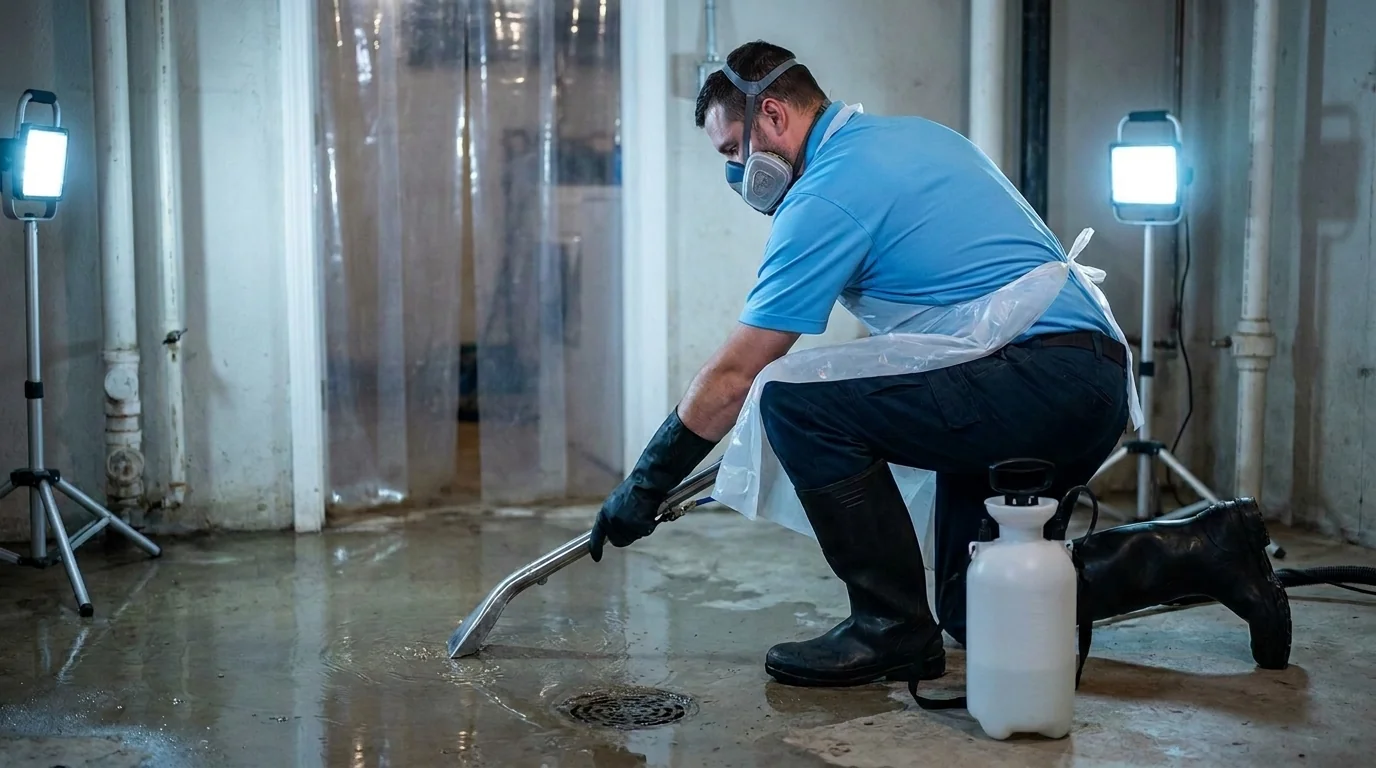
When we arrive, the first priority is containment — stopping the spread of contaminated water and establishing a decontamination perimeter before any material is moved. We extract standing sewage using truck-mounted and portable extraction units, then begin controlled demolition of saturated materials that cannot be safely dried in place: baseboards, lower sections of plaster, subfloor sections where sewage has wicked up from below. Every removed material is catalogued and photographed for your insurance claim.
Sanitization follows extraction. We apply EPA-registered disinfectants to all affected surfaces, including structural cavities, and use HEPA-filtered negative air machines to prevent aerosolized contaminants from migrating into clean areas of the building. Drying is monitored with calibrated moisture meters and thermal imaging — we don’t close a job until readings confirm the structure has returned to pre-loss moisture levels. As an IICRC Certified Firm (#210213), our process follows the S500 standard for water damage and the industry protocols for Category 3 contamination.
Reaching Brooklyn from Kenilworth
Our crews stage out of Kenilworth, NJ, and reach Brooklyn via the Goethals or Outerbridge to the Belt Parkway, or through the Holland Tunnel depending on where in the borough the job is. For addresses in ZIP code 11201 — Brooklyn Heights, DUMBO, and the neighborhoods closest to the Brooklyn Bridge — tunnel routing is typically fastest. Bay Ridge (11209) and southern Brooklyn are generally more accessible via the Belt. We dispatch 24 hours a day, every day, so a call at 2 a.m. gets the same crew mobilization as a call at noon.
Brooklyn Insurance and Building Management Coordination
Brooklyn’s housing stock creates insurance and access complications that don’t exist in single-family markets. Co-op boards in Brooklyn Heights and brownstone owners throughout the Park Slope historic district often require advance notice before any contractor begins work — even in an emergency. We’re accustomed to making those calls, coordinating with building supers and management companies, and producing the scope-of-work documentation that carriers and boards require before approving repairs.
For commercial properties and multi-unit buildings, we can bill most major carriers directly and provide line-item estimates formatted for adjuster review. We keep a photographic record of every affected area, every removed material, and every moisture reading taken during drying — the kind of file that holds up when an adjuster questions the scope.
Local Note
Brooklyn brownstones built before 1930 frequently have cellar floors that are not poured concrete — they’re brick or stone rubble fill, sometimes with a thin concrete skim coat added decades later. When sewage backs up into these spaces, the contamination doesn’t stay on the surface; it wicks into the fill material and the mortar joints of the foundation walls. Standard extraction gets the visible water, but true sanitization in these spaces requires fogging and longer dwell times for disinfectant, and drying timelines can run 30–40% longer than a comparable job in a building with a sealed concrete slab. If you’re in a pre-war building and a restoration crew tells you the job will be done in 48 hours, ask them how they’re monitoring moisture in the foundation walls.
If sewage has backed up into your Brooklyn property, call The Restoration Group at (908) 970-8533. We’ll walk you through the immediate steps to take before we arrive, dispatch a crew, and handle the documentation your insurer and building management will need — so you’re not managing three separate conversations while standing in contaminated water.
Sewage Cleanup and Sanitization in Brooklyn: Service Coverage
Frequently Asked Questions
How fast can you arrive for sewage cleanup and sanitization in Brooklyn?
How quickly can The Restoration Group reach a sewage backup in Flatbush or Bushwick?
Brooklyn's combined sewer system backed up into my garden apartment during a rainstorm — is that covered by homeowner's or renter's insurance?
My Park Slope brownstone has original plaster walls and hardwood floors — will sewage cleanup damage them further?
Does a co-op board in Brooklyn Heights need to approve sewage cleanup work before you can start?
How long does sewage sanitization typically take in a Brooklyn basement or cellar apartment?
Sewage Cleanup and Sanitization response in Brooklyn
Most Brooklyn calls see a technician on-site within 60 minutes from our Fair Lawn headquarters.