Water Damage Restoration in Cranford
24/7 water damage restoration in Cranford, NJ. IICRC-certified, insurance billing accepted. Call (908) 970-8533.
Our IICRC-certified technicians are dispatched from our Fair Lawn, NJ headquarters and are typically on-site in Cranford within 60 minutes of your call.
Cranford’s nickname — the Venice of New Jersey — captures the beauty of the Rahway River winding through town, but it also explains why water damage restoration is the most urgent home-repair call in Union County. Hurricanes Floyd, Irene, and Ida each put entire blocks underwater here, and the flooding doesn’t stop between named storms: overwhelmed storm sewers push water into basements across Sunny Acres and Cranford West every time a heavy nor’easter stalls over the area. When that happens, the clock starts immediately — mold colonies can establish in porous materials within 24 to 48 hours, and the 1920s and 1930s colonial and cape-cod homes that line most streets in 07016 have full basements, balloon-frame walls, and original plaster that hold moisture far longer than modern construction.
Why Cranford Properties See Repeated Water Damage
Two separate flood mechanisms hit Cranford, and most homeowners eventually deal with both. Properties along Riverside Drive and the Rahway River Parkway face direct overbank flooding — the river simply rises above its banks and flows into finished living space. The rest of town, including neighborhoods farther from the river like Lincoln Park East, floods from below: storm sewers back up, sump pits overflow, and water infiltrates through foundation walls and floor drains. That combination means a single heavy rain event can trigger calls from opposite ends of town for completely different reasons.
The housing stock compounds the problem. Pre-war colonials were built without modern waterproofing membranes, and many have never had their drainage systems updated. Older clay sewer laterals crack and allow groundwater intrusion. Unfinished stone or cinder-block basement walls wick moisture even after standing water is removed. Any crew that treats a Cranford basement the same way it treats a 2015 construction slab is going to leave hidden moisture behind — and that moisture becomes a mold problem within days.
Our Water Damage Restoration Process in Cranford
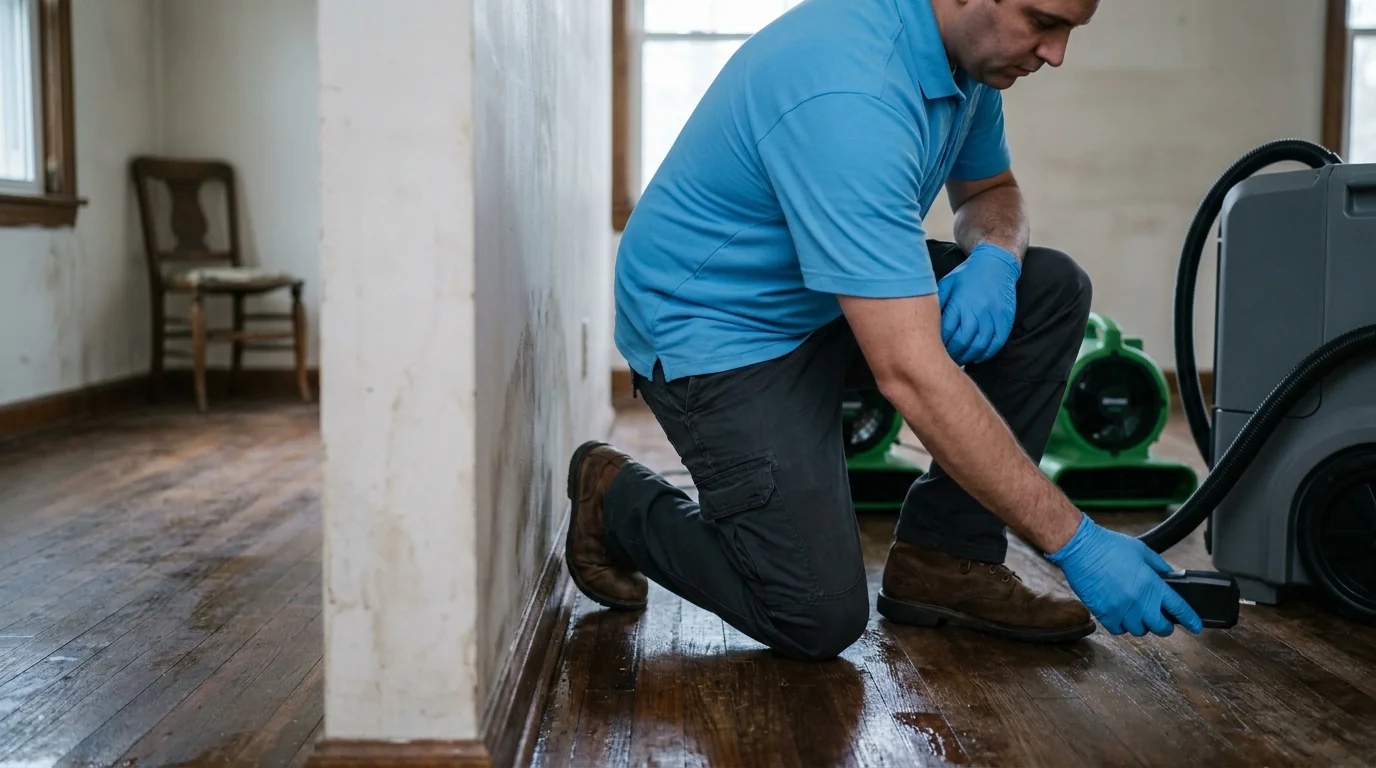
The first priority on any water loss is stopping ongoing intrusion and removing standing water. We use truck-mounted and portable extraction units to pull water from flooring, carpet, and wall cavities, then deploy industrial-grade desiccant dehumidifiers and air movers calibrated to the square footage and material types in the affected space. In Cranford’s older homes, that means paying close attention to original hardwood subfloors, plaster-over-lath walls, and the dense cellulose insulation that was common in attic and wall cavities through the mid-century period — all of which retain moisture longer than modern materials and require extended drying cycles verified by daily moisture readings.
Every job is documented with moisture mapping, photo logs, and drying records from day one. That documentation isn’t just good practice — it’s essential for homeowners filing claims with the National Flood Insurance Program (NFIP), which covers a significant share of losses in a designated flood-prone community like Cranford. We organize the paperwork in a format carriers and NFIP adjusters can work with directly, so you’re not reconstructing the loss history from memory weeks after the event. Our team holds IICRC Firm Certification (#210213), and all structural drying follows the S500 standard for water damage restoration.
Reaching Cranford from Kenilworth
Our headquarters sits in Kenilworth, one town over, which puts us within a short drive of virtually every address in Cranford under normal traffic conditions. We operate 24 hours a day, seven days a week, so whether the call comes in during a 2 a.m. storm surge along the Rahway River Parkway or a weekend afternoon pipe burst near Nomahegan Park, a crew can be dispatched immediately. Cranford’s grid is straightforward from our side: we typically come in via South Avenue or Centennial Avenue depending on where in town the loss is located.
Cranford Insurance and NFIP Coordination
Because Cranford sits in one of New Jersey’s most flood-affected corridors, many homeowners carry both a standard homeowner’s policy and a separate NFIP flood policy — and the two coverages handle different parts of the same loss. Homeowner’s policies often cover sudden discharge events like burst pipes or appliance failures; NFIP policies cover rising water from external flooding. We document losses in a way that separates the cause and extent of damage clearly, which matters when two adjusters are reviewing the same property. We work directly with most major carriers and can coordinate adjuster site visits around our drying schedule.
Local Note
One thing that surprises homeowners in the Riverside Drive area after a flood: the river deposits a fine silt layer across basement floors and lower wall surfaces that looks like dried mud but behaves differently during cleanup. That silt contains organic material that accelerates mold growth and can interfere with adhesion if walls are primed before the substrate is fully clean and dry. We treat silt-affected surfaces with an antimicrobial application after extraction and before any drying equipment is positioned — a step that matters specifically in riverfront flood scenarios and that gets skipped when crews are working fast without local experience.
If your home or property in Cranford has taken on water — whether from the Rahway River, a failed sump pump, or a burst supply line — call The Restoration Group at (908) 970-8533. We’ll assess the damage, begin extraction, and build the documentation trail you’ll need to get your home dry and your claim moving.
Water Damage Restoration in Cranford: Service Coverage
Frequently Asked Questions
How fast can you arrive for water damage restoration in Cranford?
How quickly can The Restoration Group reach the Riverside Drive area after a flood call?
My Cranford home flooded during Hurricane Ida and now I'm seeing it again — does prior flood history affect how you approach the job?
What's the difference between NFIP coverage and my homeowner's policy for a Cranford flood loss?
How long does structural drying typically take in Cranford's pre-war homes?
Do homes near Nomahegan Park or in Sunny Acres face different water damage risks than riverfront properties?
Will my homeowners insurance cover water damage restoration in Cranford?
Water Damage Restoration response in Cranford
Most Cranford calls see a technician on-site within 60 minutes from our Fair Lawn headquarters.