Odor Removal and Deodorization in Elizabeth
24/7 odor removal and deodorization in Elizabeth, NJ. IICRC-certified, insurance billing accepted. Call (908) 970-8533.
Our IICRC-certified technicians are dispatched from our Fair Lawn, NJ headquarters and are typically on-site in Elizabeth within 60 minutes of your call.
The combined-sewer backups that roll through Elizabethport after a heavy rain, the cooking-fire smoke that soaks into the plaster walls of a century-old two-family on Elmora Avenue, the diesel and chemical drift that settles near the Port Newark-Elizabeth Marine Terminal corridor — odors in Elizabeth don’t behave the way they do in newer suburban construction, and they don’t respond to store-bought sprays. When a smell has worked its way into the bones of a building, it takes calibrated professional equipment and a team that understands what they’re walking into.
Why Elizabeth Properties See Persistent Odor Problems
Elizabeth’s housing stock tells the story. The city’s two- and three-family frame homes — the kind packed tight across Peterstown and Midtown — were built in the early 1900s with old-growth lumber, horsehair plaster, and minimal vapor barriers. Those materials are extraordinarily porous. A kitchen fire on the second floor doesn’t just scorch the ceiling; smoke particulates migrate through gap-riddled framing into adjacent units, into the basement, and into the attic in a matter of hours. Landlords managing multi-tenant buildings face a compounding problem: one event can displace multiple households and generate liability across several leases.
Low-lying Bayway and Elizabethport add another layer. Tidal flooding and storm-surge events — the kind that became catastrophic during Hurricane Ida — push contaminated water into crawl spaces and basements. When that water recedes, it leaves behind a sewage-and-sediment odor that standard drying alone won’t touch. The smell is embedded in concrete block, floor joists, and subfloor sheathing, and it intensifies every time humidity rises.
Our Odor Removal and Deodorization Process in Elizabeth
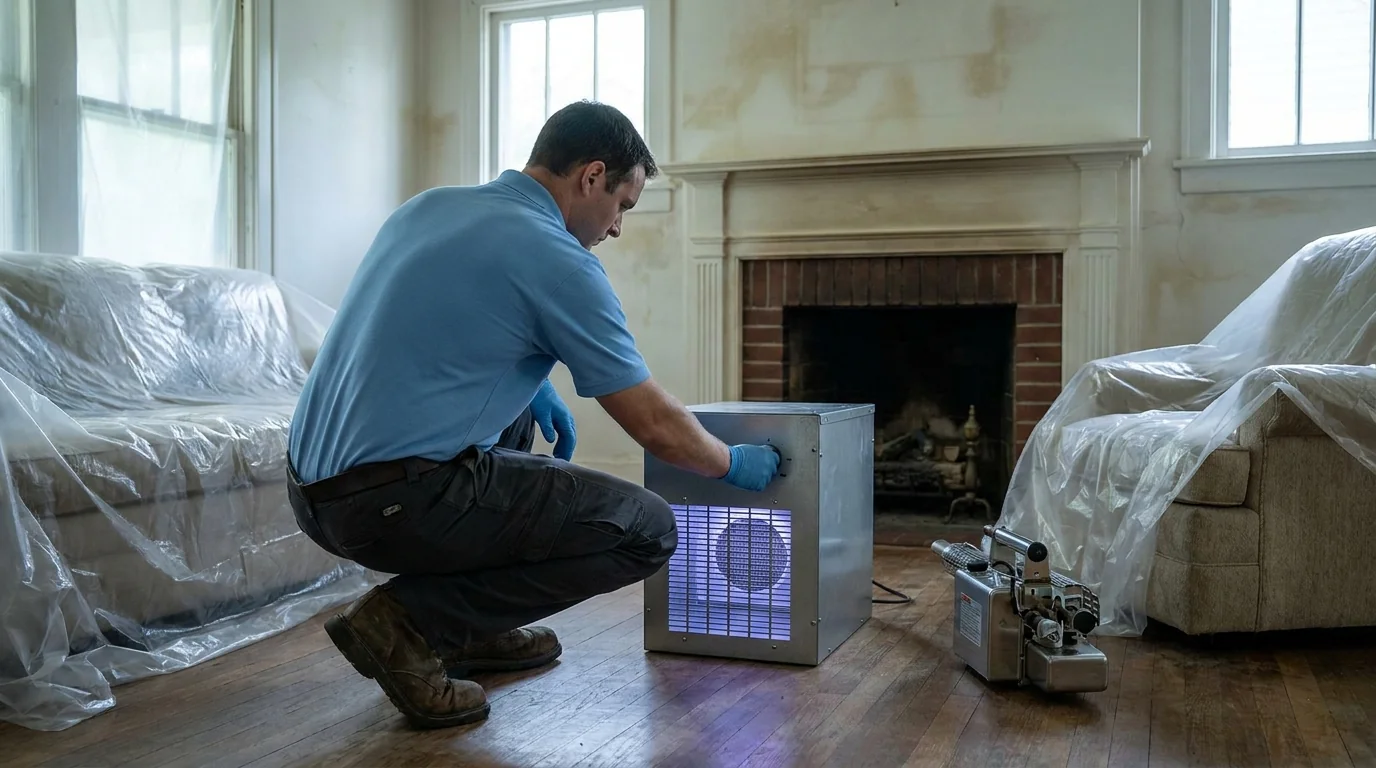
There is no single-method solution for odor work in a city with this range of building types and loss causes. The process starts with source identification — locating the actual contaminated material rather than masking what’s in the air. From there, the approach is layered:
Thermal fogging is particularly effective in Elizabeth’s older frame construction. The fogging agent penetrates the same pathways smoke traveled — wall cavities, subfloor gaps, attic voids — and neutralizes odor compounds at the molecular level rather than coating surfaces.
Hydroxyl generation runs continuously in occupied or semi-occupied buildings where residents or tenants cannot be fully displaced. Hydroxyls break down volatile organic compounds without requiring the space to be sealed and evacuated, which matters when a landlord needs to keep adjacent units habitable.
Ozone treatment is reserved for fully vacated spaces — typically after a severe smoke or sewage loss — where high-concentration ozone can be safely cycled through the structure. This method is aggressive and fast, but it requires strict re-entry protocols.
All work is documented with pre- and post-treatment odor readings, which feeds directly into insurance claims and, when required, landlord-tenant dispute records.
Reaching Elizabeth from Kenilworth
The Kenilworth shop sits roughly ten minutes from Elizabeth via the Garden State Parkway or Route 28, which means response is fast regardless of where in the city the loss is located — from the commercial properties near Jersey Gardens in ZIP code 07201 to the residential blocks of North Elizabeth closer to 07208. Because calls come in around the clock, crews are dispatched at any hour, and the short drive means equipment arrives on-site before conditions deteriorate further.
Equipment & Methods We Use for Odor Removal
The equipment list is calibrated to the loss, not applied by formula. Thermal foggers, hydroxyl generators, ozone machines, and air scrubbers with HEPA and activated-carbon filtration are all on the truck. For sewage-related odors — common after combined-sewer events in Elizabethport and Bayway — enzyme-based treatments are applied directly to affected concrete and wood before any deodorization equipment runs. Skipping that step and going straight to fogging is one of the most common reasons odor jobs fail the first time.
Local Note
In Elizabeth’s older multifamily stock, smoke odor frequently travels farther than the visible char suggests. Plaster walls — standard in pre-1950 construction across Peterstown and Midtown — absorb smoke compounds deeply and release them slowly over weeks as temperatures fluctuate. Crews that scope only the fire-damaged unit often miss the adjacent unit’s shared wall cavity, which has absorbed the same particulates without any visible staining. On Elizabeth jobs, the standard practice is to probe adjacent spaces before finalizing the treatment plan, because a callback three weeks later is far more disruptive than an extra hour of assessment upfront.
If a smell in your Elizabeth property has outlasted every remedy you’ve tried, the source is almost certainly in a place that hasn’t been treated yet. Call The Restoration Group at (908) 970-8533 — the team is available around the clock, and the drive from Kenilworth is short enough that a same-day assessment is realistic for most addresses in the city.
Odor Removal and Deodorization in Elizabeth: Service Coverage
Frequently Asked Questions
How fast can you arrive for odor removal and deodorization in Elizabeth?
How does Elizabeth's combined-sewer system affect odor removal work after a basement backup?
Can smoke odor from a kitchen fire in one unit of an Elmora two-family spread to the other unit?
What deodorization method works best in Elizabeth's older plaster-wall homes?
Will my insurance carrier accept the documentation you provide for an odor removal claim in Elizabeth?
How long does a full odor removal treatment take for a typical Elizabeth multifamily property?
Odor Removal and Deodorization response in Elizabeth
Most Elizabeth calls see a technician on-site within 60 minutes from our Fair Lawn headquarters.