Odor Removal and Deodorization in Brooklyn
24/7 odor removal and deodorization in Brooklyn, NY. IICRC-certified, insurance billing accepted. Call (908) 970-8533.
Our IICRC-certified technicians are dispatched from our Fair Lawn, NJ headquarters and are typically on-site in Brooklyn within 60 minutes of your call.
Brooklyn’s brownstone belt carries a particular kind of smell that’s hard to forget — the damp, mineral-tinged air of a garden-level apartment that flooded during a storm, or the acrid smoke residue that settles into 140-year-old plaster after a kitchen fire in a Park Slope rowhouse. Odors embedded in porous masonry, original woodwork, and century-old subfloors don’t respond to ventilation or off-the-shelf sprays. The Restoration Group dispatches certified odor removal crews to Brooklyn around the clock, equipped with industrial-grade deodorization technology matched to the specific materials and conditions found in this borough’s housing stock.
Why Brooklyn Properties Hold Odors Longer
The same architectural character that makes Brooklyn Heights and Williamsburg desirable — thick masonry walls, plaster-and-lath construction, original hardwood floors, shared party walls — creates a uniquely stubborn odor problem. Porous materials absorb odor molecules at a molecular level, not just on the surface. A smoke event in a Flatbush co-op doesn’t just affect the unit where it started; smoke travels through shared ventilation chases and penetrates adjacent plaster, making the source harder to isolate.
Brooklyn’s coastal geography compounds this. Neighborhoods from Canarsie to Coney Island carry elevated ambient humidity, especially in the months following hurricane season. High relative humidity slows the off-gassing of odor compounds and can reactivate dormant smoke or mold odors in materials that seemed dry. After Hurricane Sandy and again after Ida’s record rainfall turned basement apartments across the borough into wading pools, many Brooklyn property owners discovered that water damage and persistent odor are almost always the same problem wearing two different faces.
Our Odor Removal and Deodorization Process in Brooklyn
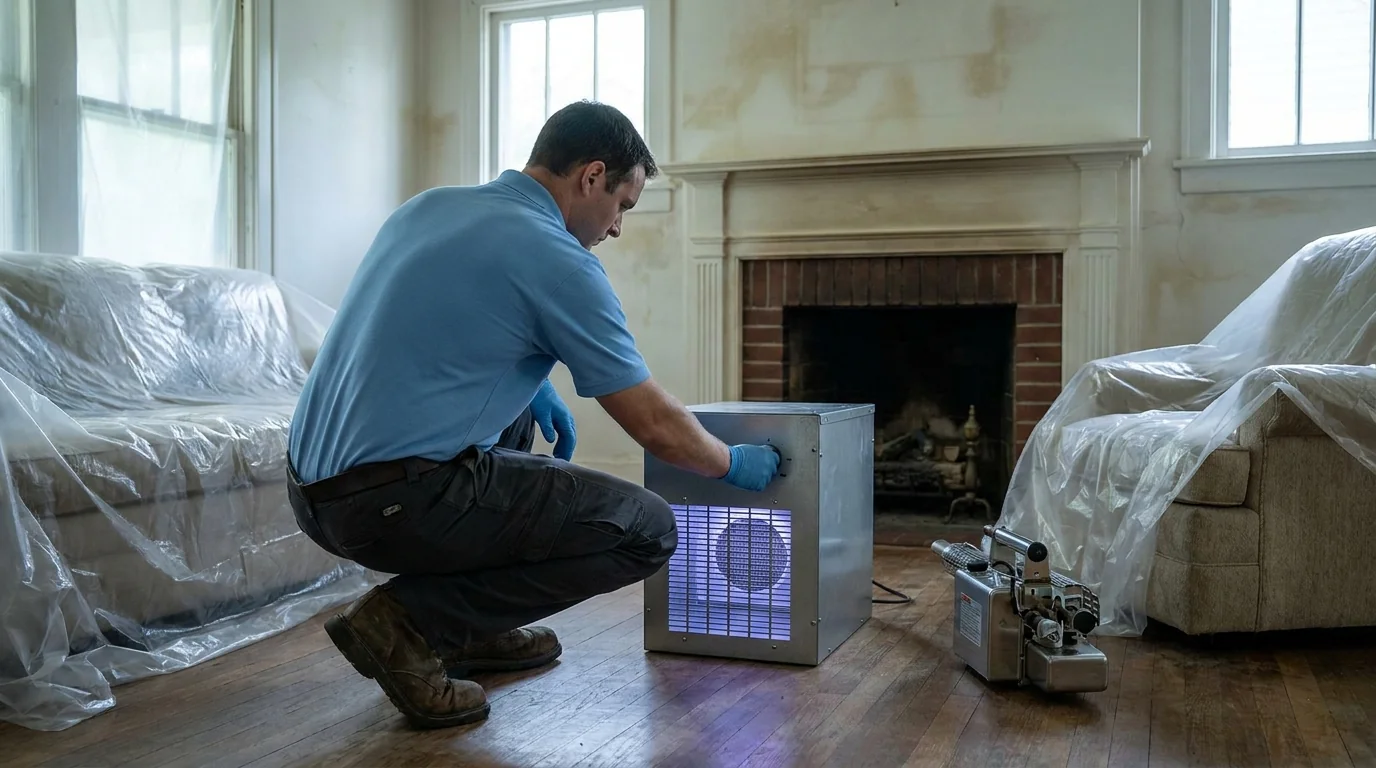
Effective deodorization in Brooklyn’s older building stock requires a layered approach — no single technology eliminates every odor source in a pre-war rowhouse.
Source identification first. We begin with a thorough inspection to locate the origin: charred structural members behind plaster, contaminated HVAC ductwork, saturated subfloor decking beneath original hardwood, or sewer gas infiltrating a cellar apartment through a failed trap. Treating symptoms without finding the source is the single most common reason odor returns.
Thermal fogging penetrates the same microscopic pores that absorbed the odor in the first place. The fogging agent follows the same pathways smoke or sewer gas traveled, neutralizing odor compounds on contact. It’s particularly effective in plaster-wall construction where surface treatments can’t reach.
Hydroxyl deodorization uses UV-generated hydroxyl radicals to break down odor molecules in the air and on surfaces — a safe, residue-free method we use in occupied or partially occupied buildings, including co-op units where neighboring residents may still be present.
Ozone treatment is reserved for unoccupied spaces where a high-concentration application is warranted — typically after severe fire or smoke damage. Ozone is powerful and requires careful containment; in a party-wall building, we seal the treatment area and coordinate timing with building management to prevent exposure to adjacent units.
After treatment, we conduct air quality verification before clearing the space, providing documentation suitable for your insurer or co-op board.
Reaching Brooklyn from Kenilworth
The Restoration Group’s operations hub in Kenilworth, NJ puts crews on the Goethals or Outerbridge to Staten Island, then up the Gowanus Expressway into Bay Ridge and the rest of Brooklyn — or through the Holland Tunnel and across the Brooklyn Bridge depending on traffic. We’re available 24/7, which matters when a smoke event or sewage backup happens at 2 a.m. in an 11215 brownstone and the smell is already spreading to the unit above. Dispatch is live around the clock; call (908) 970-8533 and a coordinator picks up, not a voicemail.
Brooklyn Insurance and Co-op Board Documentation
Co-op and condo boards in Brooklyn routinely require written scope-of-work documentation, before-and-after photos, and third-party verification before approving contractor access or releasing alteration agreements. We build that documentation into every job — not as an add-on, but as standard practice. Our IICRC Certified Firm status (Firm #210213) and detailed job records satisfy most management company requirements and support insurance claims with major carriers. We communicate directly with adjusters when authorized, so you’re not playing telephone between your insurer and your contractor.
Local Note
In Brooklyn’s garden-level and cellar apartments — especially in the brownstone rows running through the Park Slope and Brooklyn Heights historic districts — original coal chutes and abandoned utility penetrations in the foundation wall are a hidden odor pathway that most contractors miss. Sewer gas, exterior mold, and even rodent activity can infiltrate through these unsealed openings and present as a mystery odor that no amount of surface treatment resolves. When we inspect a below-grade Brooklyn unit and can’t immediately identify the odor source, checking those legacy penetrations is one of the first things we do — and it pays off more often than you’d expect.
If your Brooklyn property is carrying a smell that won’t leave on its own — whether it’s smoke from a fire, the aftermath of a flooded basement, or something harder to name — call The Restoration Group at (908) 970-8533. We’ll identify the source, apply the right combination of treatments for your building’s materials, and give you the documentation you need to move forward.
Odor Removal and Deodorization in Brooklyn: Service Coverage
Frequently Asked Questions
How fast can you arrive for odor removal and deodorization in Brooklyn?
Can you reach a Canarsie or Flatbush address quickly for an odor emergency?
Is ozone treatment safe to use in a Brooklyn brownstone with shared party walls and neighboring units?
My Park Slope brownstone has original plaster walls. Does that change how odor removal works?
Will my co-op board in Brooklyn Heights accept your documentation for an odor remediation job?
How does Brooklyn's coastal humidity affect odor removal in neighborhoods like Coney Island or Bay Ridge (ZIP 11209)?
Will my homeowners insurance cover odor removal and deodorization in Brooklyn?
Odor Removal and Deodorization response in Brooklyn
Most Brooklyn calls see a technician on-site within 60 minutes from our Fair Lawn headquarters.