Odor Removal and Deodorization in Cranford
24/7 odor removal and deodorization in Cranford, NJ. IICRC-certified, insurance billing accepted. Call (908) 970-8533.
Our IICRC-certified technicians are dispatched from our Fair Lawn, NJ headquarters and are typically on-site in Cranford within 60 minutes of your call.
Cranford’s nickname — the Venice of New Jersey — tells you everything about why odor problems here are different from anywhere else in Union County. The Rahway River winds directly through town, and after floods like Ida in 2021 put entire blocks underwater, the musty, sulfurous smell that settles into a basement or first floor isn’t just unpleasant — it’s a sign of microbial activity already underway in the walls and subfloor. Whether the source is floodwater, fire smoke, or something else entirely, professional deodorization in Cranford means working around the specific materials, moisture history, and tight lot lines that define this town.
Why Cranford Homes Hold Odors Longer
Most of the housing stock in Cranford — particularly along the Riverside Drive corridor and in the older blocks near Downtown Cranford — was built between 1900 and the 1940s. That era of construction used plaster-and-lath walls, old-growth pine subflooring, and full masonry basements, all of which are far more porous and absorbent than modern materials. When smoke, sewage, or floodwater contacts those surfaces, the odor compounds don’t just sit on top — they penetrate into the substrate and continue off-gassing long after the visible damage is cleaned up.
The repeated flood history compounds this. Homes that have cycled through multiple saturations — Floyd, Irene, and Ida hit many of the same ZIP code 07016 addresses — often have wood framing and concrete block walls that have absorbed organic material over decades. A surface wipe-down or a consumer-grade fogger won’t reach those embedded odor sources. Effective deodorization in these homes requires equipment and chemistry calibrated to penetrate, neutralize, and then verify — not just mask.
Our Deodorization Process in Cranford
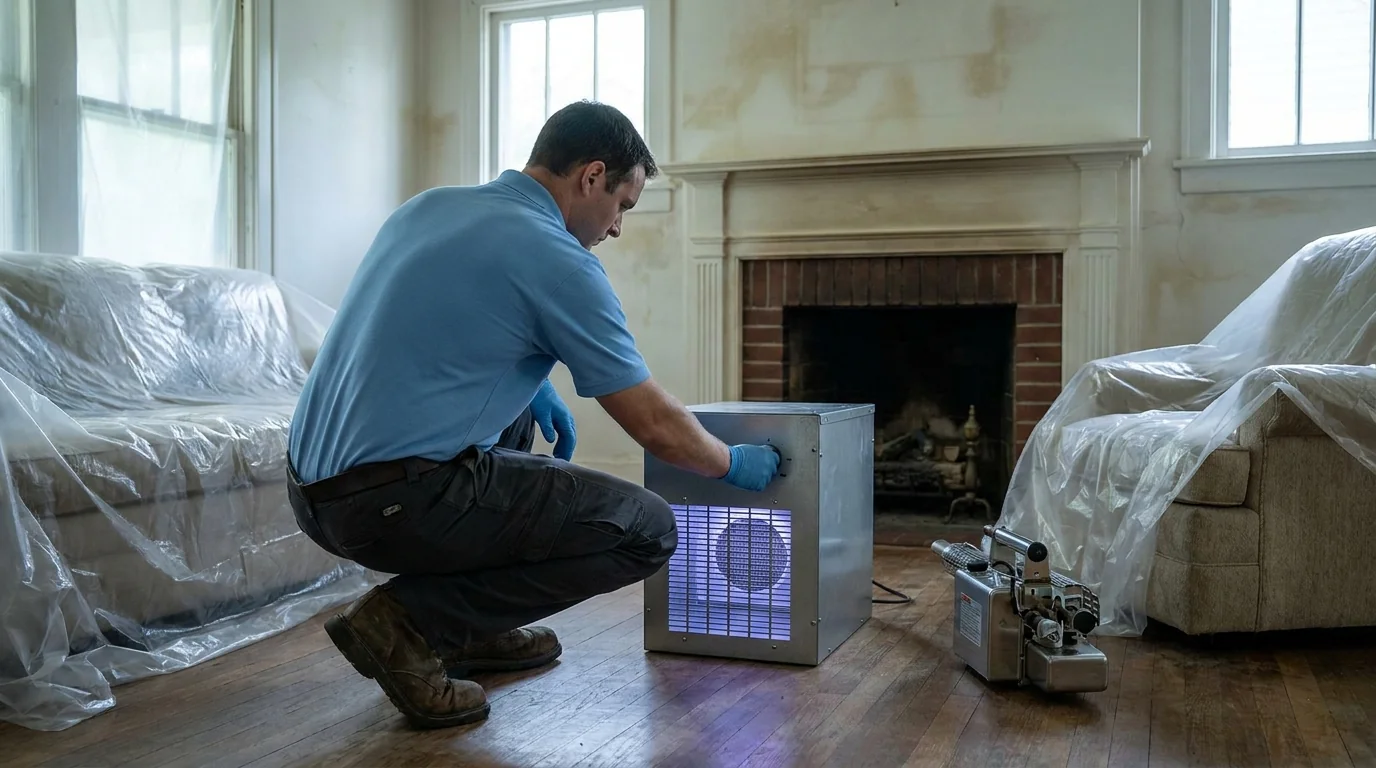
Every job starts with an odor source assessment. We don’t apply treatment until we’ve identified what’s causing the smell, where it’s concentrated, and what building materials are involved. That matters in Cranford because the right technology depends on the substrate: ozone treatment works well in unoccupied spaces with hard surfaces, hydroxyl generators are safer for occupied homes or spaces with sensitive materials, and thermal fogging reaches into wall cavities and under flooring in ways that surface sprays cannot.
Once the source is confirmed and contained, we select the appropriate method — or combination of methods — and document the treatment for your records. For fire-related odor in an older colonial, that often means thermal fogging to drive deodorizing particles into the same porous cavities that smoke penetrated. For post-flood musty odors in a basement, hydroxyl deodorization running alongside structural drying equipment is typically more effective and safer for any contents still in the space. We close out every job with a post-treatment air quality check so you have documentation, not just our word.
Reaching Cranford from Kenilworth
The Restoration Group is headquartered in Kenilworth, one town over from Cranford — a short drive via Boulevard or North Avenue. Because we operate 24/7, we can dispatch to any part of Cranford at any hour, whether that’s a smoke odor call in the Sunny Acres neighborhood after a kitchen fire or a sewage backup smell in a Cranford West basement at 2 a.m. Proximity matters when odor sources are active: the faster treatment begins, the less time volatile compounds have to penetrate deeper into building materials.
Equipment and Methods We Use
The Restoration Group carries a full range of professional deodorization technology on every service vehicle:
- Hydroxyl generators — safe for occupied spaces, neutralize odor molecules through UV-activated chemistry without producing harmful residues
- Thermal fogging — delivers a fine deodorizing mist that follows the same pathways smoke or sewer gas traveled, reaching inside wall cavities and under flooring
- Ozone treatment — highly effective in unoccupied, sealed spaces; we coordinate safe re-entry timing with you
- HEPA air scrubbing — removes particulates and odor-carrying particles from the air column during and after treatment
- Enzyme-based surface treatments — break down the organic compounds in sewage, pet, and floodwater odors at the molecular level
As an IICRC Certified Firm (#210213), our technicians follow industry drying and deodorization standards — which means the process is documented and defensible if your insurance carrier asks questions.
Local Note
One thing we’ve learned working in Cranford’s older neighborhoods: the full masonry basements common in homes near Nomahegan Park and along the Rahway River Parkway retain odor-causing moisture in the block itself, not just in the air or on surfaces. After a flood or sewer backup, the concrete block can stay damp for weeks even after the floor is dry — and that slow off-gassing is what homeowners often mistake for a mold problem when it may be the block releasing absorbed organic material. We probe the block walls directly during our assessment rather than relying on ambient air readings alone, which changes the treatment plan and prevents callbacks.
If you’re dealing with a persistent smell in a Cranford property — whether it followed a flood, a fire, a long-vacant space, or something you haven’t been able to identify — call The Restoration Group at (908) 970-8533. We’ll assess the source, explain the method, and get the work done right the first time.
Odor Removal and Deodorization in Cranford: Service Coverage
Frequently Asked Questions
How fast can you arrive for odor removal and deodorization in Cranford?
My Riverside Drive home has flooded more than once — will old odors from previous floods make the current treatment harder?
How quickly can you reach the Sunny Acres or Cranford West areas after an after-hours call?
Does the age of Cranford's housing stock — the 1900s-1940s colonials and capes — change which deodorization method you use?
Will my insurance carrier accept your documentation for an odor removal claim tied to a flood or fire loss in Cranford?
Is ozone treatment safe to use in a home near Nomahegan Park where we have pets and plants?
Odor Removal and Deodorization response in Cranford
Most Cranford calls see a technician on-site within 60 minutes from our Fair Lawn headquarters.