Odor Removal and Deodorization in Kenilworth
24/7 odor removal and deodorization in Kenilworth, NJ. IICRC-certified, insurance billing accepted. Call (908) 970-8533.
Our IICRC-certified technicians are dispatched from our Fair Lawn, NJ headquarters and are typically on-site in Kenilworth within 60 minutes of your call.
The 1920s and 1930s capes and colonials packed into Kenilworth’s 07033 ZIP code were built before vapor barriers were standard, which means smoke, sewage, and mold odors don’t just linger in the air — they absorb into plaster walls, wood framing, and the concrete block foundations that underpin nearly every full basement in the borough. When a sump pump fails during a Black Brook cloudburst or a water heater lets go in a South Kenilworth colonial, the resulting odor problem is rarely surface-level. Eliminating it takes more than an air freshener and an open window.
Why Kenilworth Properties See Persistent Odor Problems
Kenilworth’s housing stock is its biggest odor-risk factor. The borough’s prewar capes and colonials were built with old-growth lumber, horsehair plaster, and clay sewer laterals — materials that absorb and hold odorous compounds far more aggressively than modern construction. When Tropical Storm Ida pushed storm water through Black Brook’s drainage system in September 2021, basements across the borough flooded. Many homeowners dried out the visible water but never addressed the musty, organic odor that had already embedded itself into the framing and concrete.
The Monroe Avenue industrial corridor and the redeveloping former Merck campus — now known as The Park — add a commercial dimension to odor work in Kenilworth. Fire events and chemical spills in light-industrial spaces produce complex odor compounds that require a different treatment protocol than a residential smoke loss. The older galvanized supply lines common in North Kenilworth homes are also prone to slow leaks behind walls, creating hidden moisture pockets where microbial odors can develop for months before anyone notices.
Our Odor Removal and Deodorization Process in Kenilworth
Effective odor removal isn’t a single step — it’s a sequence calibrated to what caused the odor and what the structure is made of.
Source removal first. No deodorization method works if the contaminated material is still present. We identify and remove or clean the odor source — charred wood, sewage-saturated insulation, smoke-coated surfaces — before any treatment begins.
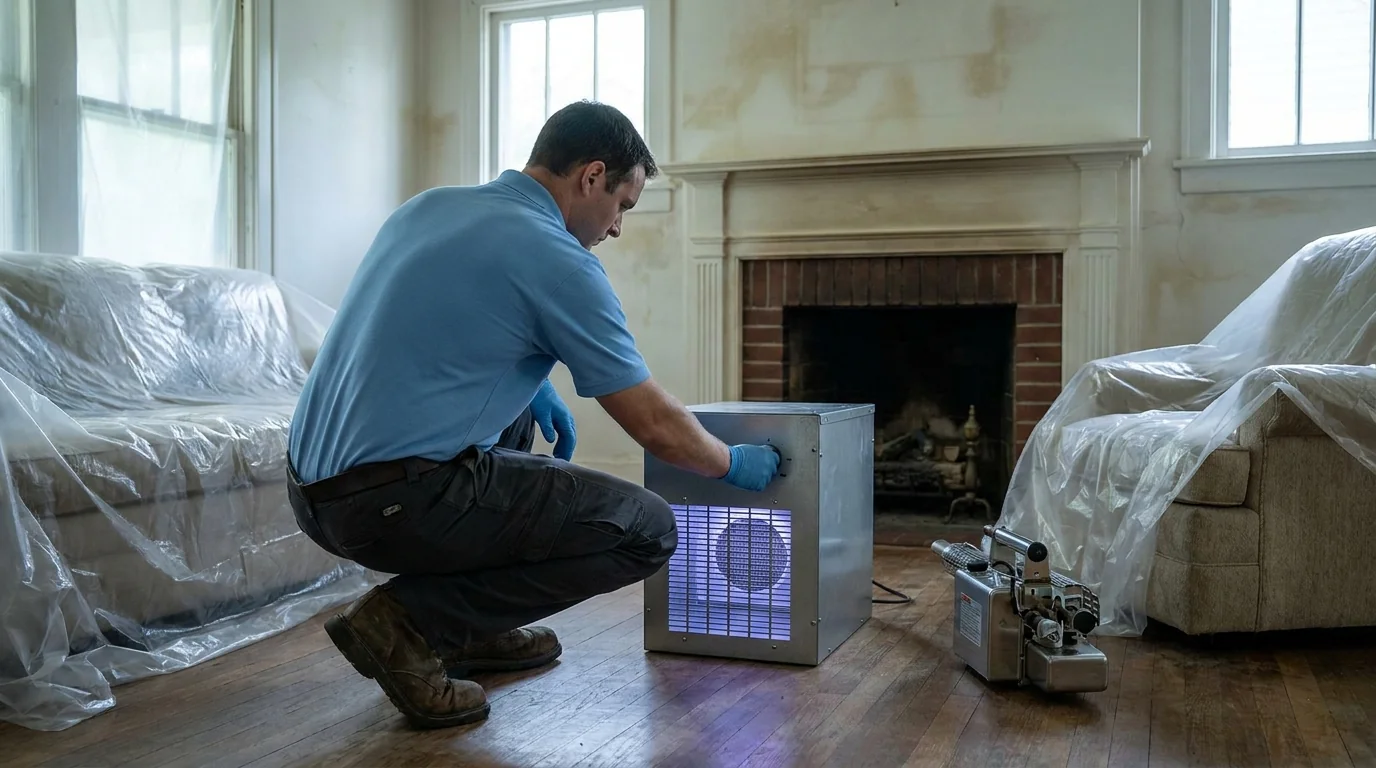
Thermal fogging for penetrating odors. In Kenilworth’s older homes, smoke and fire odors follow the same pathways that heat and air traveled during the event — into wall cavities, attic spaces, and subfloor voids. Thermal fogging produces a deodorizing vapor that penetrates those same spaces, neutralizing odor compounds at the molecular level rather than masking them.
Ozone and hydroxyl treatment. For spaces that can be safely vacated, ozone generators oxidize odor-causing molecules in the air and on surfaces. For occupied or sensitive environments — a commercial unit at The Boulevard business district, for example, or a home with pets — hydroxyl generators accomplish the same chemistry without requiring evacuation.
Final verification. We don’t close a job based on smell alone. We document pre- and post-treatment conditions, which matters when you’re working with an insurance adjuster on a smoke or water claim.
As an IICRC Certified Firm (#210213), our technicians follow industry-standard protocols for each treatment method — the right tool for the right odor source, not a one-size approach.
Equipment and Methods We Use for Odor Removal
The method drives the outcome. Here’s how we match equipment to the odor type:
- Thermal fogging — best for smoke and fire odors in porous materials; the fog follows the same paths the smoke traveled.
- Ozone generation — highly effective for strong biological odors (sewage backup, decomposition) in unoccupied spaces; requires re-entry protocols.
- Hydroxyl generation — safe for occupied spaces; slower than ozone but appropriate when evacuation isn’t practical.
- Air scrubbing with activated carbon filtration — used during and after treatment to capture airborne odor particles and VOCs, particularly relevant after fire losses where combustion byproducts linger.
- Encapsulant sealers — applied to concrete or masonry surfaces (common in Kenilworth’s block-wall basements) when odor has penetrated beyond what surface cleaning can address.
Local Note: What Kenilworth’s Plaster Walls Mean for Odor Treatment
Here’s something that comes up regularly in the prewar housing stock between the Galloping Hill border and South Kenilworth: horsehair plaster walls absorb smoke and moisture odors differently than modern drywall. Plaster is denser and slower to release absorbed compounds, which means a single ozone or fogging pass often isn’t enough. In our experience working in these homes, a second treatment cycle — sometimes with an extended dwell time — is frequently necessary to achieve a complete result. Homeowners who’ve had a previous contractor declare the job done, only to have the odor return when temperatures rise in summer, are often dealing with this exact issue. We flag it upfront rather than after the fact.
Reaching Kenilworth Around the Clock
Our headquarters is on S 31st Street in Kenilworth, which means when a call comes in from the Boulevard corridor or a North Kenilworth address, we’re not dispatching from across the county. We operate 24/7, so whether a sewage backup odor surfaces at 2 a.m. or smoke odor from a weekend kitchen fire needs same-day treatment, we can respond. For commercial properties near Garden State Parkway Exit 138 or along the Monroe Avenue corridor, we can also coordinate after-hours access to minimize business disruption.
If you’re dealing with an odor problem in Kenilworth — smoke, sewage, mold, or something you can’t identify — call (908) 970-8533. We’ll assess the source, explain the treatment approach, and give you a straight answer on timeline and cost before any work begins.
Odor Removal and Deodorization in Kenilworth: Service Coverage
Frequently Asked Questions
How fast can you arrive for odor removal and deodorization in Kenilworth?
How quickly can you reach a South Kenilworth address after an after-hours odor emergency?
Kenilworth's older homes have horsehair plaster walls — does that affect how long odor treatment takes?
After the Ida flooding in 2021, many Kenilworth basements still have a musty smell — is that treatable now?
What's the difference between ozone treatment and hydroxyl deodorization, and which is right for my Kenilworth home?
Will my homeowner's insurance cover odor removal after a fire or sewage backup in Kenilworth?
Odor Removal and Deodorization response in Kenilworth
Most Kenilworth calls see a technician on-site within 60 minutes from our Fair Lawn headquarters.