Smoke Damage Restoration in Manhattan
24/7 smoke damage restoration in Manhattan, NY. IICRC-certified, insurance billing accepted. Call (908) 970-8533.
Our IICRC-certified technicians are dispatched from our Fair Lawn, NJ headquarters and are typically on-site in Manhattan within 60 minutes of your call.
Smoke doesn’t stop at your front door in Manhattan — it travels through shared ductwork, seeps under fire-rated corridor doors, and settles into the plaster of pre-war walls that have been absorbing decades of city air. Whether a kitchen fire on the Upper East Side left soot coating every surface in a 1920s co-op, or a building-wide alarm triggered sprinklers that pushed smoke residue into a Midtown high-rise’s HVAC system, the cleanup is rarely as simple as wiping down countertops. The Restoration Group responds 24/7 and is an IICRC Certified Firm (#210213), bringing structured, documented restoration to one of the most process-driven real estate environments in the country.
Why Manhattan Properties Face Distinct Smoke Damage Challenges
The density that defines Manhattan also defines how smoke damage spreads. In a Chelsea walk-up or a Financial District condo tower, a single-unit kitchen fire can push smoke particulate through elevator shafts, stairwells, and the negative-pressure zones created by exhaust fans on adjacent floors. Pre-war buildings — the kind that line the blocks of the Upper West Side and Harlem — were constructed with plaster-and-lath walls that absorb odor compounds differently than modern drywall. Smoke molecules bind to the calcium in aged plaster and to the horsehair binders still present in some pre-1940 walls, which means standard surface wiping leaves odor sources intact behind the finish coat.
High-rise construction also means that smoke from a lower floor can be drawn upward through stack effect — the natural pressure differential between a building’s base and its roof — depositing fine soot on floors that never saw a flame. In commercial spaces near Times Square or Grand Central Terminal, that soot lands on fabric partitions, acoustic tile, and HVAC filter media that can recirculate particles for weeks if the system isn’t properly cleaned and sealed.
Our Smoke Damage Restoration Process in Manhattan
Every job begins with a scope assessment that maps the smoke migration path, not just the room of origin. We use thermal imaging and air sampling to trace where particulate traveled, then build a room-by-room remediation plan before a single surface is touched.
From there, the process moves through four stages:
- Containment and ventilation — negative-air machines with HEPA filtration isolate the affected zone and prevent cross-contamination into clean areas of the building.
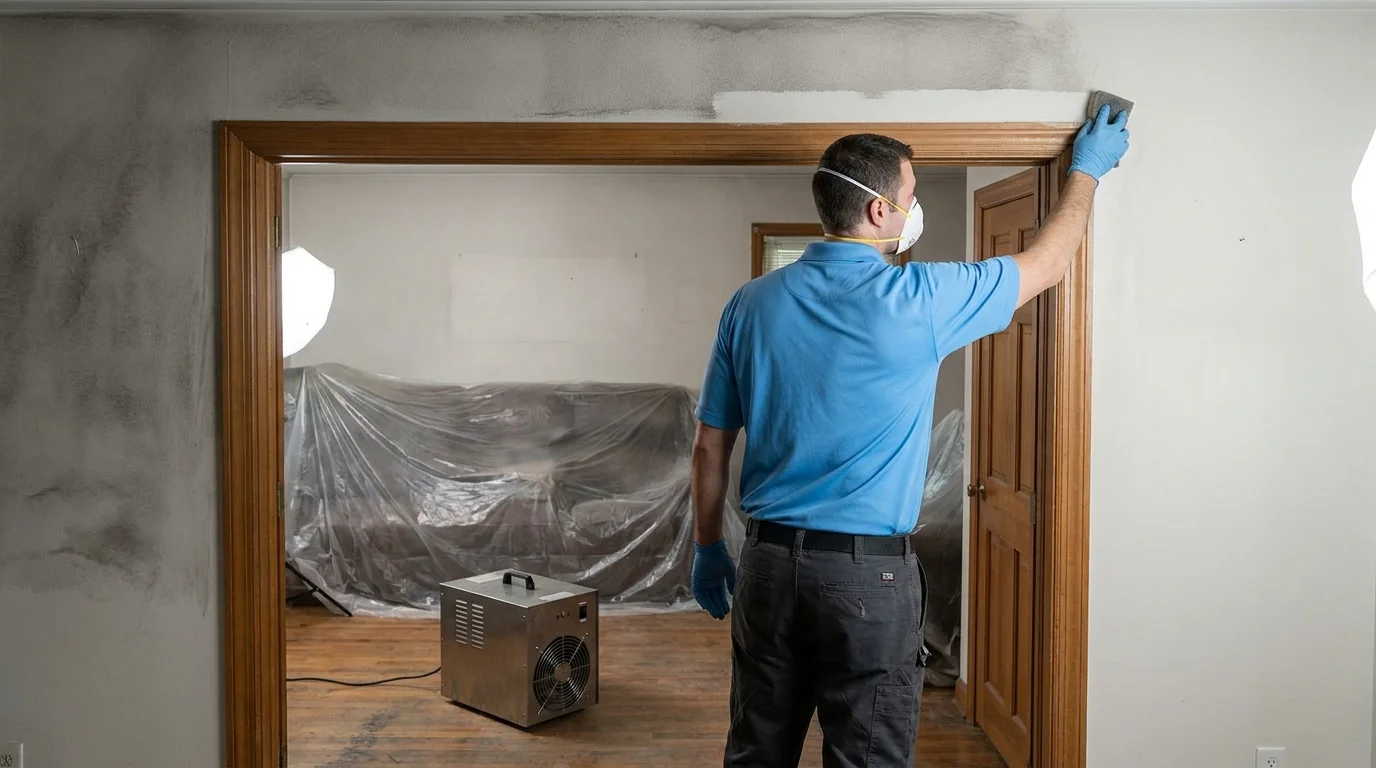
- Dry soot removal — chemical sponges and HEPA-vac equipment lift loose carbon particles from walls, ceilings, and contents before any wet cleaning is applied. Applying liquid cleaners to dry soot drives it deeper into porous surfaces.
- Chemical neutralization — alkaline smoke residue requires pH-matched cleaning agents. We match the chemistry to the surface: different formulations for plaster, painted drywall, wood millwork, and fabric.
- Deodorization — hydroxyl generators and thermal fogging reach the cavities and HVAC pathways where odor compounds hide. In buildings with shared air-handling units, we coordinate with the building’s facilities team before introducing any fogging agent into the system.
All affected materials are documented with photographs and moisture or soot readings logged by unit, which is exactly what resident managers and managing agents in Manhattan co-ops and condos require before they’ll sign off on a restoration.
Reaching Manhattan from Kenilworth
The Restoration Group is based in Kenilworth, NJ, with direct access to Manhattan via the Lincoln Tunnel and the Holland Tunnel depending on the destination borough. For jobs in ZIP codes like 10001 (Midtown/Chelsea) or 10038 (Financial District), our crews are on the road within minutes of your call — 24 hours a day. We carry certificates of insurance formatted to New York building requirements, and we’re accustomed to coordinating freight-elevator reservations and after-hours building access with doormen and resident managers, because in Manhattan, that coordination is part of the job.
Manhattan Insurance and Building Coordination
Smoke damage claims in New York City often involve multiple parties: the unit owner’s HO-6 policy, the building’s master policy, and sometimes a neighbor’s carrier if the fire originated in an adjacent unit. We document losses in a format that works for all three — itemized scope of work, photographic evidence organized by room and surface type, and moisture or soot baseline readings that adjusters can compare against post-remediation clearance readings.
For co-op boards and condo associations, we provide the unit-by-unit logs and certificate of insurance that boards require before authorizing work. We’ve worked inside the approval processes that Manhattan buildings run on, and we don’t ask building staff to bend their procedures to fit ours.
Local Note
In pre-war Manhattan buildings — particularly the large co-op towers on the Upper East Side and the older walk-ups throughout Harlem — the original plaster walls often contain multiple layers of oil-based paint applied over decades. Smoke odor binds to the oils in those paint layers, not just the surface, which means standard alkaline cleaning removes visible soot but leaves odor sources locked in the substrate. On these properties, we apply a shellac-based sealer to encapsulate the odor compounds in the wall before any finish coat goes on — skipping that step is the single most common reason a smoke-damaged Manhattan apartment still smells like fire six months after the work is done.
If your property in Manhattan has been touched by smoke — from a kitchen fire, an electrical fault, or smoke migration from another unit — call The Restoration Group at (908) 970-8533. We’ll assess the full scope of the damage, document it for your building’s management and your insurer, and restore the space to pre-loss condition.
Smoke Damage Restoration in Manhattan: Service Coverage
Frequently Asked Questions
How fast can you arrive for smoke damage restoration in Manhattan?
Can you respond to a smoke damage emergency in a Manhattan high-rise in the middle of the night?
How does smoke damage restoration work differently in a Manhattan co-op versus a standard house?
Smoke from a fire in the unit below mine traveled up into my Upper West Side apartment — am I responsible for the cleanup cost?
Why does my apartment still smell like smoke even after a cleaning crew wiped everything down?
How long does smoke damage restoration typically take in a Manhattan apartment?
Will my homeowners insurance cover smoke damage restoration in Manhattan?
Smoke Damage Restoration response in Manhattan
Most Manhattan calls see a technician on-site within 60 minutes from our Fair Lawn headquarters.