Reconstruction Services in Newark
24/7 reconstruction services in Newark, NJ. IICRC-certified, insurance billing accepted. Call (908) 970-8533.
Our IICRC-certified technicians are dispatched from our Fair Lawn, NJ headquarters and are typically on-site in Newark within 60 minutes of your call.
When a fire tears through a brick three-family in the Ironbound or a burst riser soaks three floors of a University Heights apartment building, the mitigation crew is only half the story. Getting the structure back to code — framed, insulated, drywalled, and inspected — is where most property owners hit a wall. Newark’s dense pre-war housing stock, its layered permitting process through the city’s Department of Engineering, and New Jersey’s strict contractor licensing requirements mean reconstruction here is a different animal than a suburban gut-and-rebuild. The Restoration Group handles both sides of that equation from our Kenilworth shop, fifteen minutes up McCarter Highway.
Why Newark Properties See Reconstruction Challenges Others Don’t
Newark’s building stock is overwhelmingly pre-1950 — load-bearing masonry walls, balloon-frame two- and three-families, and Forest Hill’s grand colonials with plaster-and-lath interiors. When fire or water damages one of these structures, reconstruction isn’t just a cosmetic exercise. Balloon framing, common in the city’s older stock, allows fire and smoke to travel vertically inside wall cavities with almost no resistance, meaning structural damage often extends well beyond the room where the fire started. In the Ironbound, where buildings sit close together along streets that flood from combined sewer backups during heavy rain, we regularly find that water intrusion has been working on a foundation or rim joist for years before a visible loss event finally forces a full assessment.
Newark also sits in Essex County’s jurisdiction for certain code reviews, but the city runs its own inspections, and the two timelines don’t always align. Reconstruction projects that require both structural and electrical permits can stall at the inspection queue if the sequencing isn’t planned correctly from day one. We factor that into every project schedule.
Our Reconstruction Process in Newark
Every project starts with a scope document that photographs existing conditions, catalogs affected materials, and maps what needs to come out versus what can be stabilized. That documentation matters doubly in Newark because insurance carriers handling losses in dense urban markets want itemized line-item estimates, not ballpark figures.
From there, the process moves in a deliberate sequence:
- Structural assessment and temporary stabilization — shoring, board-up, and weather protection so the building envelope is secure before any finish work begins.
- Permit application and scheduling — we file with Newark’s Division of Construction and Inspections and build the inspection milestones into the project timeline upfront.
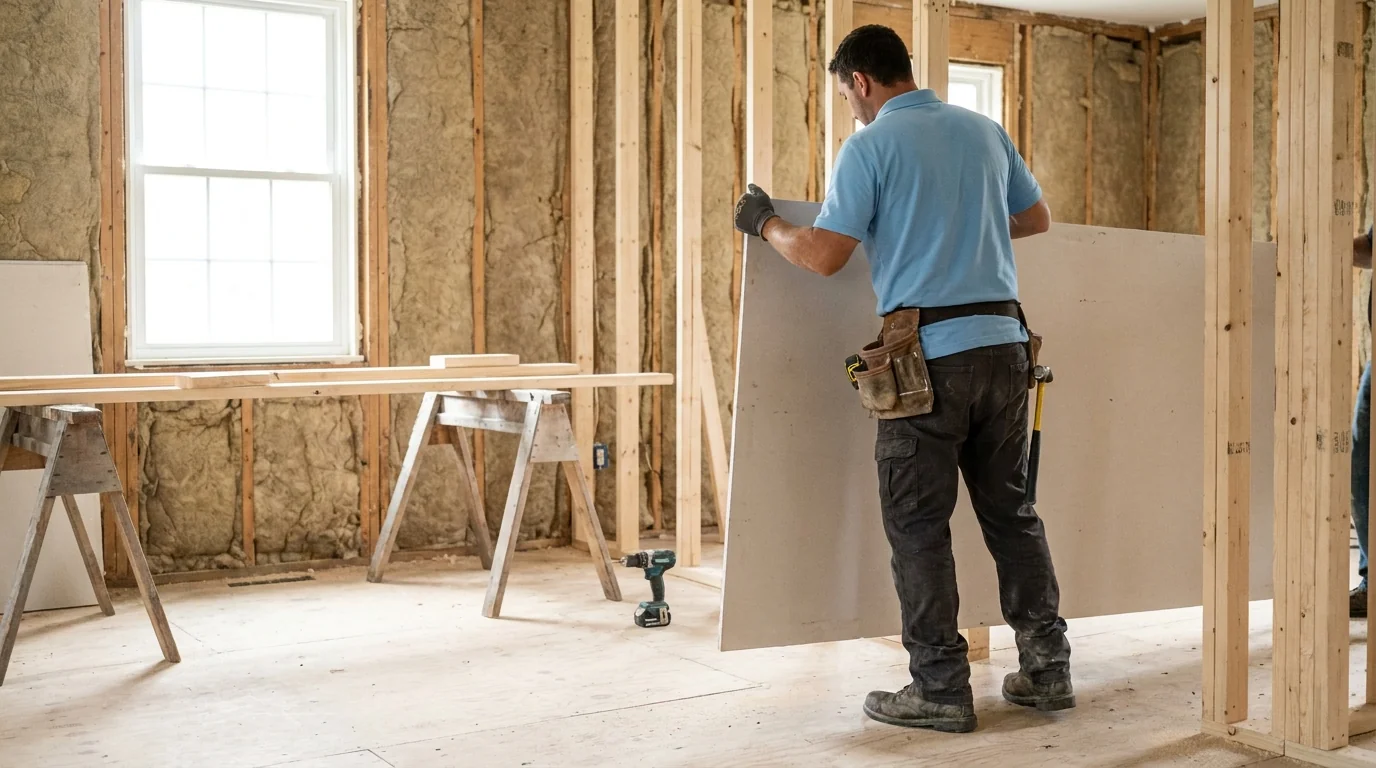
- Framing and systems rough-in — structural repairs, new framing where required, and coordination with licensed subs for electrical, plumbing, and HVAC rough-in.
- Insulation and air sealing — older Newark buildings are notoriously under-insulated; reconstruction is the right moment to bring wall and ceiling assemblies up to current energy code.
- Finish work and final inspection — drywall, paint, flooring, trim, and a final walk-through with the city inspector before the certificate of occupancy is issued.
For landlords managing multifamily properties near Newark Penn Station or in the arena district around the Prudential Center, we can phase work to keep uninvolved units occupied throughout the project.
Reaching Newark from Kenilworth
Our Kenilworth headquarters puts us on the Garden State Parkway or Route 22 east and into Newark in roughly 15 minutes under normal conditions. We answer calls 24/7, so whether a property manager is dealing with a fire loss at 2 a.m. or a structural collapse discovered during a morning walkthrough, we can dispatch for emergency stabilization and board-up the same night. Neighborhoods like Vailsburg and Weequahic, which sit closer to the western and southern edges of the city, are typically a straight shot down the Parkway without the tunnel congestion that can slow response to the waterfront.
Newark Insurance and Documentation Coordination
Commercial and residential carriers operating in New Jersey’s urban markets are accustomed to scrutinizing reconstruction estimates closely — particularly on older properties where pre-existing conditions complicate the line between storm or fire damage and deferred maintenance. We produce Xactimate-formatted estimates, maintain a full photo log from demolition through final inspection, and can meet with an adjuster on-site at any point in the project. For properties in ZIP code 07105 — which covers much of the Ironbound — flood-related reconstruction claims sometimes involve both a homeowner’s carrier and a separate NFIP (National Flood Insurance Program) policy, and we’re familiar with the documentation each program requires.
Local Note
One thing that catches out-of-market contractors in Newark: the city’s combined sewer system means that basement reconstruction after a sewage backup event requires documentation that the space was properly remediated before any new framing or insulation goes in. Newark’s inspectors have seen enough shortcuts that they look for this specifically. We sequence our projects so that remediation sign-off is in hand before reconstruction materials ever touch the floor — it protects the property owner from a failed inspection and protects the finished work from being condemned months later.
If you’re managing a post-damage rebuild anywhere in Newark — from a Forest Hill colonial to a commercial building near Branch Brook Park — call The Restoration Group at (908) 970-8533. We’ll walk the property, produce a documented scope, and get the permits moving before another week passes.
Reconstruction Services in Newark: Service Coverage
Frequently Asked Questions
How fast can you arrive for reconstruction services in Newark?
How does Newark's permitting process affect reconstruction timelines?
Are Ironbound properties more complicated to reconstruct after a flood loss?
Can you phase reconstruction in a multifamily building so tenants aren't all displaced at once?
What's different about reconstructing a pre-war Newark home versus newer construction?
How do you handle reconstruction estimates for insurance carriers covering Newark commercial properties?
Reconstruction Services response in Newark
Most Newark calls see a technician on-site within 60 minutes from our Fair Lawn headquarters.