Odor Removal and Deodorization in Summit
24/7 odor removal and deodorization in Summit, NJ. IICRC-certified, insurance billing accepted. Call (908) 970-8533.
Our IICRC-certified technicians are dispatched from our Fair Lawn, NJ headquarters and are typically on-site in Summit within 60 minutes of your call.
The century-old plaster walls and deep finished basements that give Summit its architectural character also make odor problems stubbornly persistent. When a clay sewer lateral backs up beneath a Franklin School area home, or a burst radiator line soaks the millwork in an older Northside colonial, the odor doesn’t just sit on surfaces — it migrates into horsehair plaster, old-growth oak flooring, and the dense insulation packed into walls during mid-century renovations. Standard spray-and-pray deodorization won’t touch it. Getting rid of it requires understanding how Summit’s specific building stock holds and releases odor-causing compounds.
Why Summit Properties Develop Persistent Odor Problems
Summit’s elevation along the Watchung ridge spares it from the Passaic River flooding that hammers lower Union County towns, but the city’s steep topography creates its own odor pathways. Stormwater channeling into lower levels, aging cast-iron drain stacks, and century-old clay sewer laterals running beneath the root systems of mature street trees are a reliable recipe for sewage backups — and sewer gas is among the most difficult odors to neutralize because it bonds chemically to porous materials. The 1890s–1930s homes that line the streets near Reeves-Reed Arboretum and along Springfield Avenue downtown typically have plaster-and-lath construction, meaning odor molecules penetrate deeper into wall cavities than they would in modern drywall. Add finished basements with original wood paneling and you have multiple layers of porous substrate that require sequential treatment, not a single pass.
Fire and smoke odors compound the challenge. Older knob-and-tube or early Romex wiring in unimproved attic spaces occasionally causes smoldering events that produce low-temperature smoke — the type that deposits the heaviest, stickiest soot residue and leaves a persistent acrid smell even after visible char is removed. That residue follows air currents into every connected cavity before a homeowner even notices the smell.
Our Odor Removal and Deodorization Process in Summit
Every job starts with a source audit. We locate and eliminate the odor source before any deodorization technology is deployed — skipping this step is why DIY treatments fail. Once the source is confirmed, we select the treatment method based on the specific odor type, the substrate, and the home’s construction.
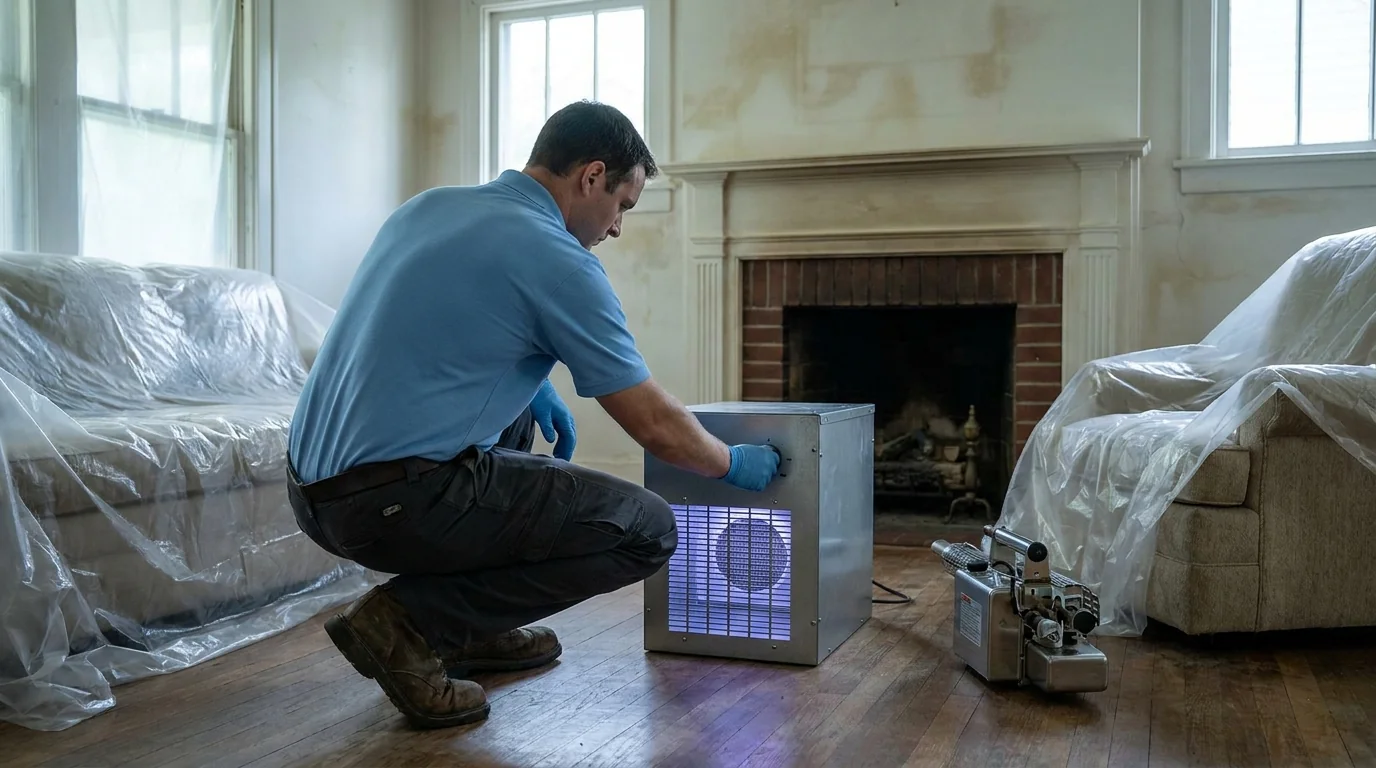
Thermal fogging is particularly effective in Summit’s older homes because the fogging agent penetrates the same pathways the odor followed — wall cavities, subfloor voids, plaster pores — and neutralizes odor molecules on contact rather than masking them. For smoke odor removal following a fire or smoldering event, thermal fogging combined with content treatment addresses both structural surfaces and furnishings simultaneously.
Hydroxyl deodorization is our preferred method when occupants or pets cannot vacate the property, or when sensitive materials — antique millwork, original hardwood floors, period-correct cabinetry — require a gentler approach. Hydroxyl generators produce no ozone, create no off-gassing risk, and can run continuously in occupied or semi-occupied spaces. For Summit homeowners who are particular about their finishes (and they should be), this matters.
Ozone treatment is reserved for unoccupied spaces where high-concentration exposure is safe and the odor load is severe — a basement that held standing sewage water for several days, for example. We seal the space, run the treatment cycle, then ventilate thoroughly and verify with air sampling before re-occupancy.
All methods are calibrated to the IICRC S520 and relevant odor control standards, and our team holds IICRC Certified Firm status (#210213).
Equipment and Methods Matched to Summit’s Housing Stock
Odor removal in a 4,000-square-foot 1920s Summit home with plaster walls, a finished walk-out basement, and original hardwood throughout every floor is a different technical problem than odor removal in a 1990s colonial. The porosity of the substrate determines dwell time, the number of treatment passes, and whether content packing is necessary to protect furnishings during fogging cycles.
We use commercial-grade hydroxyl generators, thermal foggers, and ozone units sized for large residential footprints — not the undersized equipment that consumer rental units offer. Moisture mapping with thermal imaging runs alongside odor treatment because residual moisture from the event that caused the odor (a backup, a burst pipe, a suppression system activation) will regenerate odor if left unaddressed. In Summit’s deep basements, we routinely find secondary moisture pockets behind original stone foundation walls that a surface reading would miss entirely.
Local Note
Something we’ve learned working in Summit’s 07901 ZIP: the plaster walls in pre-war homes near the Brayton School area and Downtown Summit often have multiple layers of wallpaper beneath the painted finish. Those layers act like a sponge for smoke and sewer odors, holding volatile compounds long after the surface smells clean. When we encounter this construction, we extend our hydroxyl treatment cycles and re-test before clearing the job — a step that adds time but prevents callbacks weeks later when the odor resurfaces as the home heats up in summer or the furnace kicks on in winter.
If you’re managing a property near the Summit train station or coordinating restoration from out of the area, we provide written documentation of treatment methods, equipment logs, and post-treatment air quality readings — the kind of paper trail that satisfies both insurance adjusters and discerning property owners.
Odor problems in Summit’s older homes don’t resolve themselves, and they don’t respond to consumer products. Call The Restoration Group at (908) 970-8533 — we’re available around the clock, and we’ll assess the source, recommend the right treatment method, and protect the finishes and furnishings that make your Summit property worth restoring correctly.
Odor Removal and Deodorization in Summit: Service Coverage
Frequently Asked Questions
How fast can you arrive for odor removal and deodorization in Summit?
How quickly can The Restoration Group reach a Summit home for an odor emergency?
Summit's older homes have plaster walls and original hardwood — will deodorization treatments damage those surfaces?
A clay sewer lateral backed up into my Franklin School area basement — how do you handle the odor after a sewage event?
Will my homeowner's insurance cover professional odor removal in Summit?
What's the difference between ozone treatment and hydroxyl deodorization, and which is right for a Summit home?
Odor Removal and Deodorization response in Summit
Most Summit calls see a technician on-site within 60 minutes from our Fair Lawn headquarters.