Storm Damage Restoration in Summit
24/7 storm damage restoration in Summit, NJ. IICRC-certified, insurance billing accepted. Call (908) 970-8533.
Our IICRC-certified technicians are dispatched from our Fair Lawn, NJ headquarters and are typically on-site in Summit within 60 minutes of your call.
Summit’s hilltop geography and century-old housing stock create a specific kind of storm vulnerability that flat-lot suburbs don’t face. When a nor’easter or fast-moving summer squall rolls through Union County, the steep grades running off the Watchung ridgeline funnel sheets of stormwater directly toward foundation walls and lower-level entries — and in the 1890s–1930s Colonials and Tudors that define neighborhoods like the Franklin School area and Northside, that water meets slate roofs, copper gutters, plaster walls, and deep finished basements that demand a very different recovery approach than modern construction.
Why Summit Properties See Distinctive Storm Damage Patterns
Elevation protects Summit (07901) from the river flooding that batters communities downstream, but it creates its own set of problems. Steep lot grades concentrate runoff at the lowest point of each property — usually a rear foundation wall or a side-entry basement stair. Original clay sewer laterals running beneath century-old street trees along streets like Springfield Avenue downtown back up under surge conditions, pushing water back through floor drains just when homeowners think the storm has passed.
Older slate and clay-tile roofs handle wind differently than asphalt shingles. A slate field that has survived 90 winters can lose individual tiles in a single gust, leaving underlayment exposed for hours before the damage is even noticed. Once water finds a gap, it travels along rafter lines and into plaster ceiling systems — soaking structural lath before any visible staining appears on the surface below. Meanwhile, the large canopy trees that make the Brayton School area and the blocks near Reeves-Reed Arboretum so appealing become liabilities in high-wind events: falling limbs puncture roofs, crush copper gutters, and occasionally shear through the older uninsulated supply and radiator lines tucked into exterior walls of wing additions.
Our Storm Damage Restoration Process in Summit
Every storm response in Summit begins with a full moisture map — not just the obvious wet spot, but the entire envelope of the affected structure. Plaster walls release moisture slowly and unevenly; thermal imaging and calibrated moisture meters placed at multiple depths give us a real picture of what’s saturated versus what’s merely damp. That distinction matters because it sets the drying timeline and determines whether original plaster can be preserved or must be replaced.
Once we understand the scope, the process moves in parallel tracks:
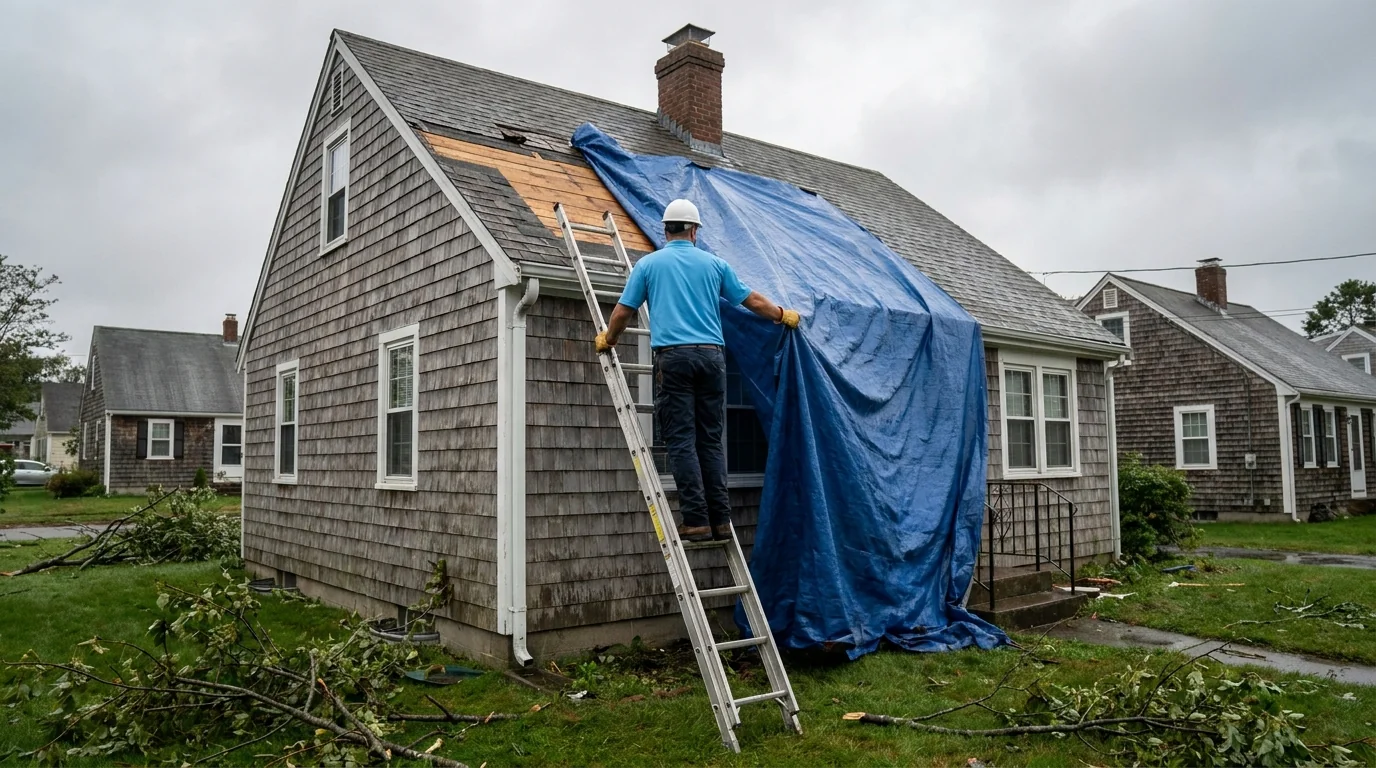
- Emergency stabilization: tarping and board-up for any roof or wall breach, temporary drainage diversion if stormwater is still entering.
- Water extraction and structural drying: truck-mounted extraction for standing water, followed by desiccant and refrigerant dehumidification sized to the cubic footage of the affected space. In Summit’s deep finished basements, we routinely deploy additional low-profile air movers to reach under built-in cabinetry and behind wainscoting.
- Contents protection: high-value furnishings, millwork, and hardwood floors get padded, elevated, and climate-controlled on-site or moved to a controlled environment. We document condition before and after — critical for insurance and for homeowners who care about period-correct finishes.
- Reconstruction to match: when structural materials must come out, replacement matches the original. Plaster is replicated with three-coat systems; millwork profiles are sourced or milled to spec. The goal is a repair that a knowledgeable buyer wouldn’t notice.
All drying is performed to IICRC S500 standards, and we carry our IICRC Certified Firm credential (#210213) through every phase of the job.
Reaching Summit from Kenilworth
The Restoration Group operates out of Kenilworth, roughly 6–7 miles from central Summit via Route 22 or the Garden State Parkway connector to Springfield Avenue. Because we run 24/7, a call at 2 a.m. after a storm clears reaches a live dispatcher who can mobilize a crew — not a voicemail box. For addresses near the Summit train station or along the New Providence border, we typically stage equipment on the street side to avoid blocking narrow driveways on steep lots; on tighter residential blocks in the Franklin School area, we coordinate with the homeowner on access before the truck arrives.
Insurance Coordination for Summit Storm Claims
Most Summit storm claims involve homeowners’ policies with ordinance-or-law riders — relevant here because bringing a pre-1940 structure back to code after structural damage can add meaningful cost that a basic dwelling coverage limit won’t fully address. We photograph and document every affected material before anything is removed, produce a line-item scope in the format carriers expect, and communicate directly with adjusters to reduce back-and-forth delays. We are a licensed NJ Home Improvement Contractor under the NJ Division of Consumer Affairs, which some carriers require before approving repair scopes.
Local Note
One pattern we’ve seen repeatedly in Summit’s older wing additions — the kind added to Colonials in the 1940s and 1950s along the Northside blocks — is that storm-driven wind pressure forces water through original single-pane casement windows and into wall cavities that were never insulated. The water doesn’t reach the floor; it sits inside the wall at the sill plate level and wicks into the original hardwood subfloor beneath. By the time a homeowner notices a soft spot or a cupped floor board, the cavity has been wet for days. If you’ve had a significant wind event and your floors feel slightly springy near exterior walls, that’s worth a moisture check before the damage compounds.
When a storm leaves your Summit home with a damaged roof, a flooded basement, or a fallen tree through a wall, the recovery window matters. Mold colonization in a wet plaster cavity can begin within 24–48 hours, and Summit’s dense older housing stock doesn’t forgive delayed drying. Call The Restoration Group at (908) 970-8533 — we’re available around the clock, and we’ll have eyes on your property and a clear plan in place before the next weather system moves through.
Storm Damage Restoration in Summit: Service Coverage
Frequently Asked Questions
How fast can you arrive for storm damage restoration in Summit?
How quickly can The Restoration Group reach a home in the Franklin School or Brayton School area after a storm?
Summit's older slate roofs and plaster walls — does that change how long the drying process takes?
Are homes near Reeves-Reed Arboretum and the large-canopy tree corridors at higher risk for storm damage?
Does Summit's clay sewer lateral problem affect storm damage restoration work inside the home?
Will my Summit homeowner's policy cover reconstruction to period-correct finishes — original plaster, custom millwork profiles — or only standard replacement materials?
Will my homeowners insurance cover storm damage restoration in Summit?
Storm Damage Restoration response in Summit
Most Summit calls see a technician on-site within 60 minutes from our Fair Lawn headquarters.