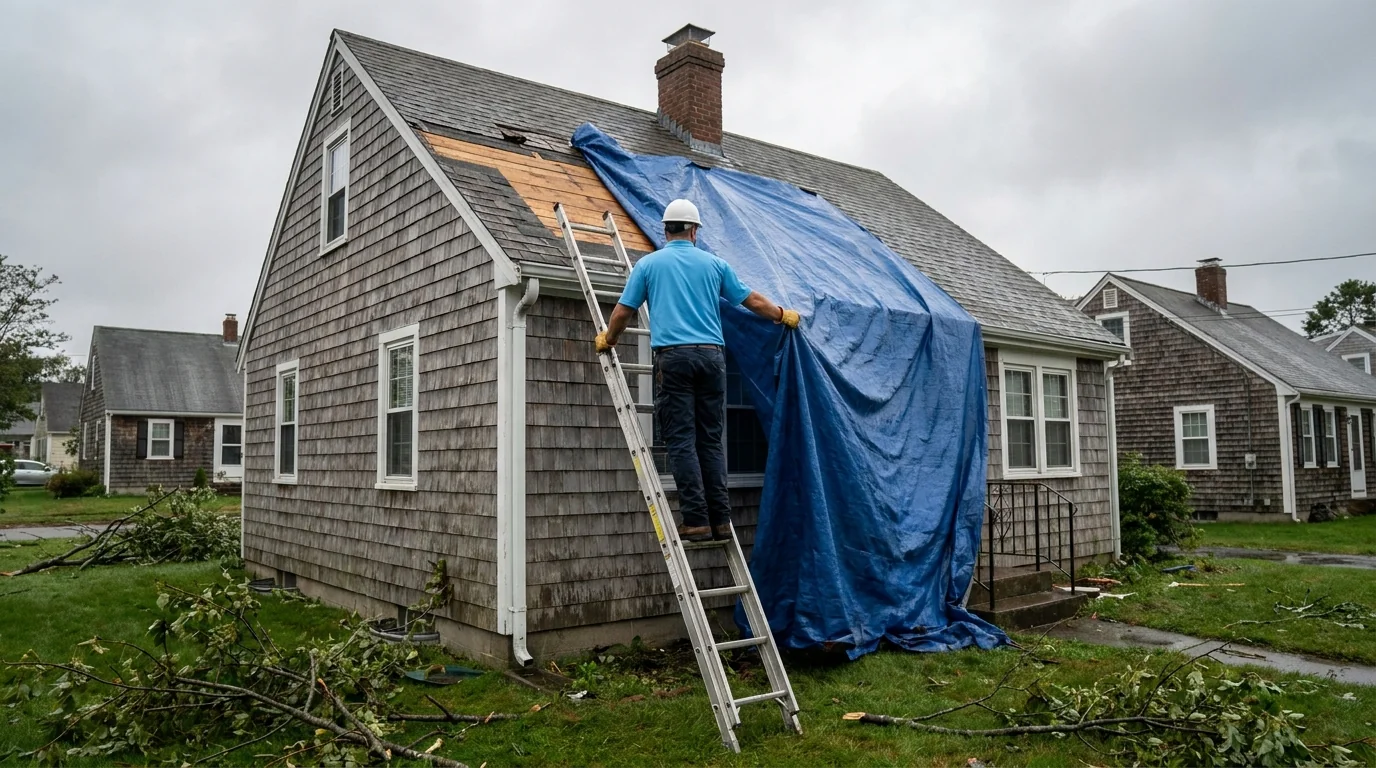
Storm Damage Restoration in Cranford
24/7 storm damage restoration in Cranford, NJ. IICRC-certified, insurance billing accepted. Call (908) 970-8533.
Our IICRC-certified technicians are dispatched from our Fair Lawn, NJ headquarters and are typically on-site in Cranford within 60 minutes of your call.
Cranford’s nickname — the Venice of New Jersey — captures something real: the Rahway River doesn’t just border the town, it runs through the middle of it, and when a nor’easter or a remnant tropical system pushes that river over its banks, whole blocks between Riverside Drive and Nomahegan Park can be underwater within hours. Storms here aren’t abstract weather events. Hurricanes Floyd, Irene, and Ida each left their mark on this ZIP code (07016), and many homeowners in Cranford have been through the cleanup cycle more than once. The Restoration Group is based in Kenilworth, one town over, and our crews know exactly what post-storm Cranford looks like — and what it takes to dry it out properly.
Why Cranford Properties Face Repeat Storm Damage
Cranford’s flood exposure comes from two directions at once, which is what makes it unusually difficult to manage. Properties along Riverside Drive flood from the Rahway River itself — direct inundation that can push several feet of water into finished basements before the storm has even passed. The rest of town — Sunny Acres, Lincoln Park East, Downtown Cranford — tends to flood from storm sewer backups. When the combined sewer system gets overwhelmed by a fast-moving storm, water comes up through floor drains and basement windows rather than in through the door.
The housing stock compounds the challenge. Most of Cranford’s residential neighborhoods were built between 1900 and the 1940s — full-basement colonials and capes with original stone or poured-concrete foundations, often with older waterproofing that was never designed to handle the kind of rainfall intensity we now see regularly. These foundations wick moisture slowly and release it slowly, which means drying timelines in Cranford run longer than they would in a newer suburb. Older framing, plaster-and-lath walls in some homes, and knob-and-tube electrical in a handful of pre-war houses all factor into how we approach each job.
Our Storm Damage Restoration Process in Cranford
Every storm job starts with a thorough site assessment before any equipment goes in. We document the water intrusion source, the affected materials, and the moisture readings room by room — not because it’s paperwork, but because Cranford homeowners frequently file with the National Flood Insurance Program (NFIP) or a private flood carrier, and those claims require detailed, timestamped documentation to process correctly.
From there, the process moves through four stages:
1. Water extraction and debris removal. Standing water comes out first — sump pump failures during storms are common in Cranford’s older basements, and we carry truck-mounted extraction units capable of handling significant volume quickly. Tree debris and wind-driven material are cleared from entry points to stop ongoing intrusion.
2. Structural drying. We deploy industrial desiccant dehumidifiers and high-velocity air movers calibrated to the specific materials in the space. In Cranford’s older homes, plaster walls and original hardwood subfloors require more conservative drying protocols than modern drywall — push too hard and you crack the plaster; move too slow and you invite mold colonization, which can begin within 24 to 48 hours in wet conditions.
3. Mold prevention and monitoring. Moisture readings are logged daily until affected materials reach dry standard per IICRC S500 guidelines. If readings indicate mold risk, we treat proactively rather than waiting for visible growth.
4. Structural repair and reconstruction. Once materials are dry and documented, we handle the repair work — framing, insulation, drywall, flooring — so you’re working with one contractor through the full scope rather than coordinating a separate rebuild crew.
Reaching Cranford from Kenilworth
Our Kenilworth headquarters puts us immediately adjacent to Cranford — North Michigan Avenue to South Avenue gets a crew to Downtown Cranford in minutes under normal conditions. Because we operate 24/7, a call at 2 a.m. during an active storm gets the same response as a call at noon. We’re familiar with the access quirks that matter during emergencies: the Rahway River Parkway corridor can become impassable during major flood events, and we route accordingly to reach Riverside Drive addresses from the west when the parkway is underwater.
Cranford Insurance Coordination
Cranford’s repeat flood history means a meaningful portion of homeowners here carry NFIP policies in addition to standard homeowners coverage — and those two policies cover different things, which creates coordination complexity after a major storm. We work directly with both types of carriers, provide the moisture logs and photo documentation adjusters require, and can speak to the scope of work in the format each carrier expects. We’re an NJ Licensed Home Improvement Contractor, which matters when insurers require licensed contractors for structural repair line items.
Local Note
One thing that surprises homeowners near the Cranford Canoe Club and along the lower Riverside Drive corridor: after a major flood event, the river deposits a fine silt layer on hard surfaces and into HVAC systems that isn’t always visible once it dries. That silt carries bacteria and organic material, and if it gets into ductwork or settles behind baseboards, it becomes an odor and air quality problem weeks after the water is gone. We inspect and clean HVAC intakes as a standard step on river-flood jobs in this part of town — it’s the kind of detail that doesn’t show up on a generic storm damage checklist but matters specifically here.
If a storm has already hit your Cranford home, the clock on mold and structural damage is running. Call The Restoration Group at (908) 970-8533 — we’re available around the clock and can have a crew on-site in Cranford to assess the damage and start the drying process before conditions get worse.
Storm Damage Restoration in Cranford: Service Coverage
Frequently Asked Questions
How fast can you arrive for storm damage restoration in Cranford?
How quickly can The Restoration Group reach the Riverside Drive area during or after a major storm?
Cranford has flooded repeatedly — Floyd, Irene, Ida. Does that history affect how you approach a storm damage job here?
Are homes in Sunny Acres and Lincoln Park East more vulnerable to storm sewer backup flooding than river flooding?
How long does structural drying typically take in Cranford's older colonial and cape-style homes?
Does Cranford's NFIP flood insurance cover storm damage restoration and reconstruction, or just the water removal?
Storm Damage Restoration response in Cranford
Most Cranford calls see a technician on-site within 60 minutes from our Fair Lawn headquarters.