Storm Damage Restoration in Kenilworth
24/7 storm damage restoration in Kenilworth and surrounding areas. IICRC-certified, insurance billing accepted. Call (908) 970-8533.
A severe storm can leave a house looking structurally intact while hiding the damage that will cost you the most: a roof deck saturated overnight, insulation that has absorbed two inches of rain, a basement wall bowing from soil pressure after a tree root ball shifted. The visible debris — broken branches, stripped shingles, shattered glass — is the easy part. The problems that develop in the 24 to 72 hours after the storm passes are what turn a manageable repair into a major rebuild.
What storm damage restoration actually involves
Storm damage is rarely a single category of loss. A single event can combine structural damage (roof framing, window openings, exterior walls), water intrusion (rain through the breached envelope, rising groundwater, overwhelmed gutters), and sometimes fire or electrical hazard from downed lines. Effective restoration means triaging all of those simultaneously rather than treating them as separate work orders.
On the structural side, that means tarping and board-up within hours of the storm — not days — to stop ongoing water entry before drying equipment can even be staged. On the water side, it means deploying truck-mounted extraction units for standing water, then industrial air movers and desiccant or refrigerant dehumidifiers calibrated to the material type: open-cell spray foam dries on a different timeline than fiberglass batt, and both behave differently than wet OSB sheathing. Moisture readings are taken at the substrate level, not just the surface, because a floor that feels dry underfoot can still be holding 30 percent moisture content in the subfloor below.
Timeline for a typical storm response: emergency securing (tarps, board-up) within the first several hours; water extraction and equipment placement within the first 24 hours; structural drying monitored over 3 to 5 days for most residential losses, longer for Category 2 or 3 water intrusion or dense assemblies like brick veneer or double-wythe block.
Our process
-
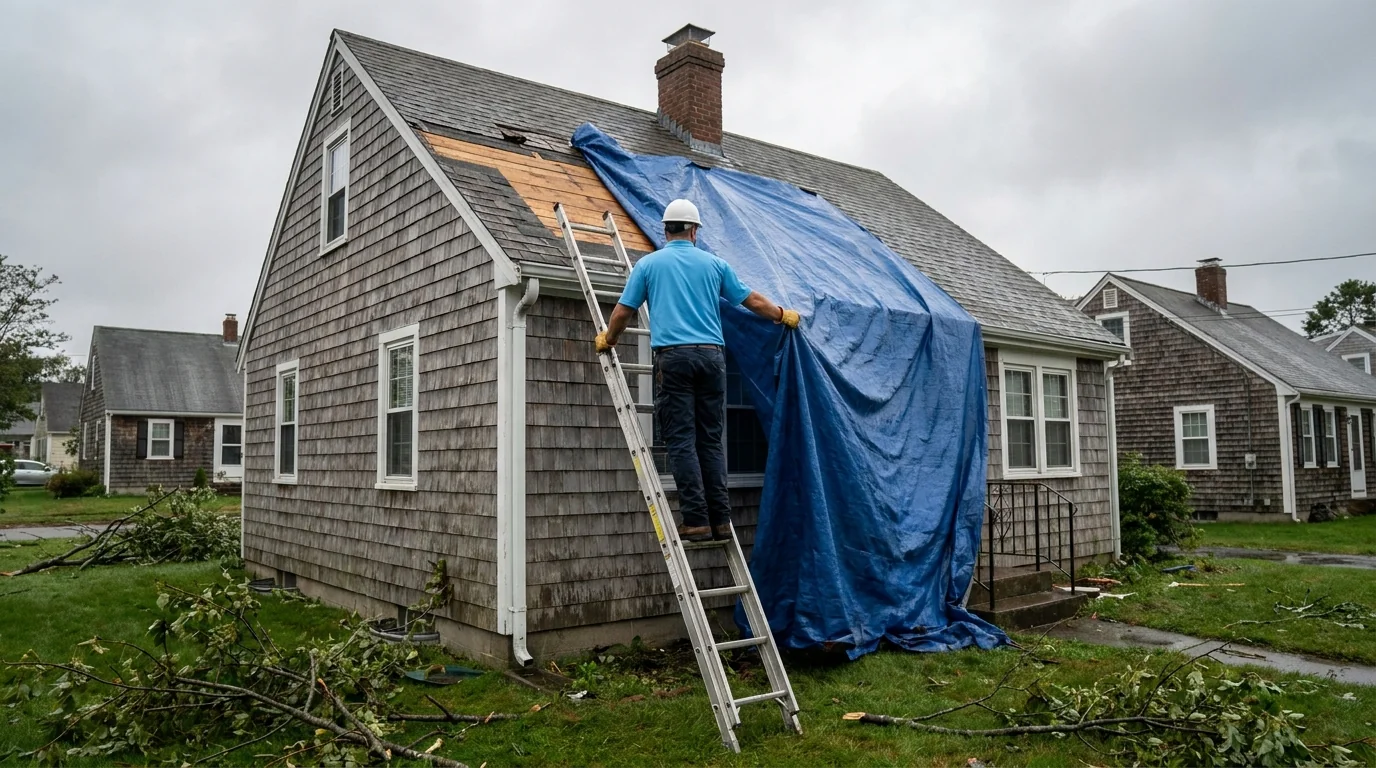
Emergency site securing. Before any restoration work begins, the structure has to stop taking on additional damage. That means emergency tarping of breached roof sections, board-up of broken windows and doors, and a rapid assessment of any electrical or gas hazard from the storm. We document the pre-mitigation condition with photographs and written notes — this record becomes the foundation of your insurance claim.
-
Damage scoping and moisture mapping. A visual inspection alone misses most of what matters. We use thermal imaging and calibrated moisture meters to map water intrusion behind walls, under flooring, and inside insulated cavities. Structural damage — compromised rafters, cracked masonry, shifted foundation elements from uprooted trees — is documented separately with measurements and photographs that match the format insurance adjusters use.
-
Water extraction and controlled drying. Standing water is extracted first. Then drying equipment is placed based on the moisture map, not just in the rooms that look wet. Airflow is engineered to move moisture from materials into the air column and then out of the building via dehumidification. Daily moisture readings confirm drying progress and determine when equipment can be safely removed — we do not pull equipment on a fixed calendar schedule.
-
Debris removal and structural stabilization. Tree limbs, roofing material, insulation, and damaged finish materials are removed and disposed of properly. Where structural members are compromised — a rafter cracked by a fallen limb, a header deflected by wind load — temporary shoring is installed before any finish work begins.
-
Reconstruction scope and handoff. Once the structure is dry and stabilized, we develop a written scope of repair that covers everything from sheathing replacement to finish carpentry. As an NJ Licensed Home Improvement Contractor, we can carry the project through to completion rather than handing you off to a separate rebuild crew mid-claim.
What separates a good storm damage response from a bad one
The most common mistake in storm damage restoration is treating the visible damage as the complete loss. An adjuster who walks a storm-damaged property and writes an estimate based only on what is visible — missing shingles, broken windows, surface water staining — will underestimate the claim significantly. Saturated wall cavities, compromised roof sheathing, and mold that begins colonizing wet insulation within 48 to 72 hours of the storm are not visible from the street.
A second common failure is premature equipment removal. Drying to industry standards means reaching the dry standard for each specific material assembly, confirmed by instrument readings. Pulling dehumidifiers because the floor feels dry to the touch, or because a fixed number of days have passed, leaves residual moisture that feeds mold growth behind walls for months.
On the insurance side, adjusters look for a complete moisture map, a photo log that documents pre-mitigation conditions, and a scope of work that separates storm-caused damage from pre-existing conditions. Gaps in that documentation give carriers grounds to reduce or dispute the claim. Our IICRC Certified Firm status (Firm #210213) means our documentation format and drying methodology align with the standards adjusters and third-party reviewers use to evaluate claims.
Seasonal and regional considerations
New Jersey’s storm season runs longer than most homeowners expect. Nor’easters from October through April can deliver wind-driven rain and wet snow loads that stress roofs and gutters that handled summer convective storms without issue. Tropical systems and their remnants push significant rainfall totals through the region from June through November. In Kenilworth and the surrounding Union County communities, older housing stock — colonials and split-levels built in the 1950s through 1970s — often has roof assemblies and drainage details that were not designed for the rainfall intensities current climate patterns are producing.
Winter storm damage carries an added complication: ice damming. When heat escapes through an under-insulated attic, it melts snow at the roof surface, which refreezes at the cold eaves and backs water under shingles. The resulting intrusion can saturate wall top plates and ceiling assemblies without any visible exterior breach — a pattern that is easy to misdiagnose and expensive to miss.
Service area
The Restoration Group is based in Kenilworth, NJ, and responds to storm damage throughout Union County and the surrounding region, including Cranford, Westfield, Springfield, Summit, Roselle, and neighboring communities. City-specific pages for each area link back here for full service details.
If a storm has left your home or property exposed, call (908) 970-8533 to begin emergency securing and get a damage assessment started — available 24/7, any day of the year.
Frequently Asked Questions
What should I do in the first hour after storm damage while I wait for a restoration crew?
How does a storm damage claim differ from a standard water damage claim, and does the cause of water entry affect my coverage?
How do you find water intrusion that isn't visible after a storm?
What is ice damming, and how is it different from a standard roof leak?
How do you handle a storm loss that involves both structural damage and water intrusion at the same time?
Looking for the best storm damage restoration company in Fair Lawn?
The Restoration Group provides licensed and insured storm damage restoration in Fair Lawn, NJ and the surrounding area, and has served local property owners since 2021. We answer calls 24/7 — call (908) 970-8533 for immediate help.
Need Storm Damage Restoration now?
We respond 24/7 across Fair Lawn and surrounding NJ cities.
Related Coverage
- Our Restoration Services
- Contact The Restoration Group
- Storm Damage Restoration in Brooklyn
- Storm Damage Restoration in Cranford
- Storm Damage Restoration in Elizabeth
- Storm Damage Restoration in Jersey City
- Storm Damage Restoration in Kenilworth
- Storm Damage Restoration in Manhattan
- Storm Damage Restoration in Newark
- Storm Damage Restoration in Springfield
- Storm Damage Restoration in Summit
- Storm Damage Restoration in Union
- Storm Damage Restoration in Westfield
- Storm Damage Insurance Claim Checklist (Use This Before You Call Your Insurer)