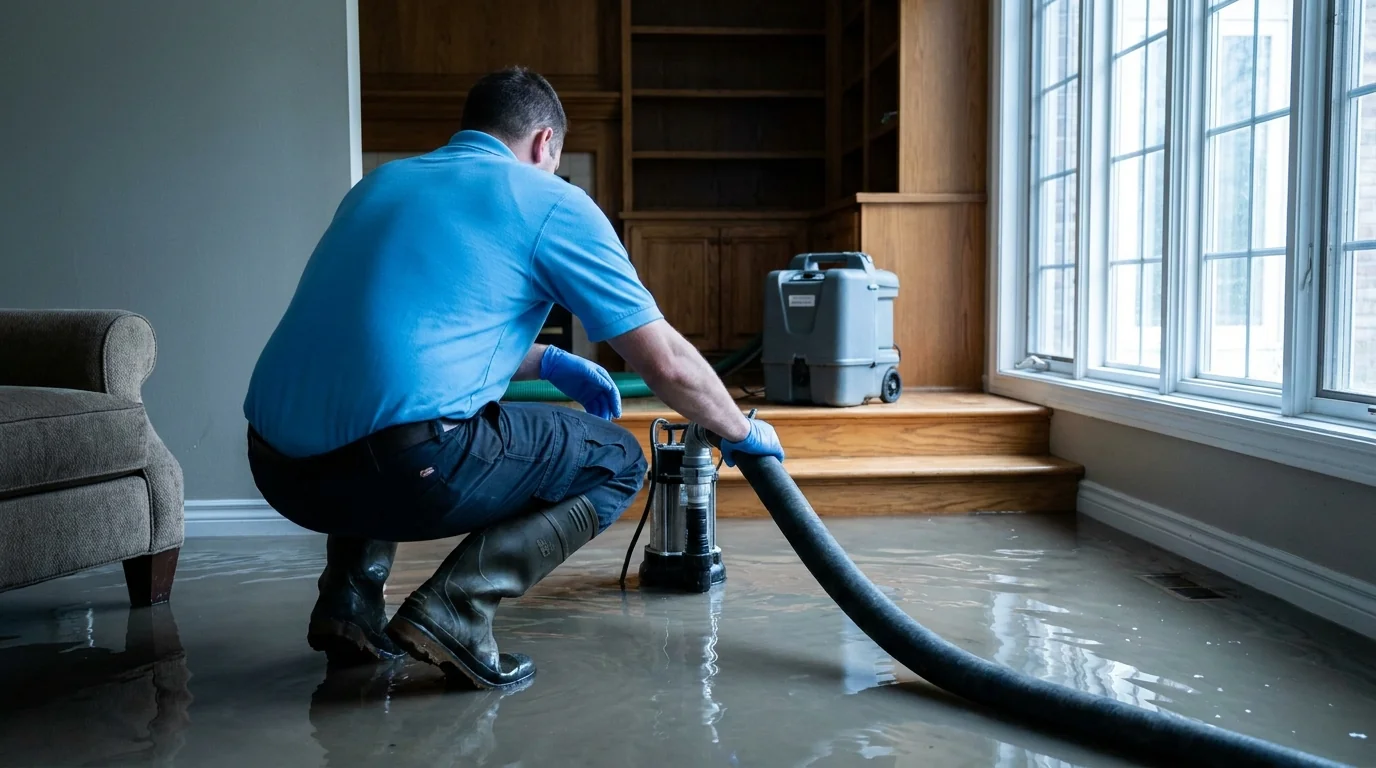
Flood Damage Restoration in Jersey City
24/7 flood damage restoration in Jersey City, NJ. IICRC-certified, insurance billing accepted. Call (908) 970-8533.
Our IICRC-certified technicians are dispatched from our Fair Lawn, NJ headquarters and are typically on-site in Jersey City within 60 minutes of your call.
Jersey City sits at the edge of Newark Bay and the Hudson River, and that geography is not abstract when water is rising in your basement. From the low-lying blocks of Bergen-Lafayette and Greenville — where combined-sewer backups turned Ida into a citywide event — to the stacked high-rise units along the Exchange Place waterfront, flood damage here follows patterns shaped by century-old infrastructure, tidal exposure, and a building stock that ranges from 1890s brownstone cellars to glass-tower mechanical rooms. The Restoration Group responds 24/7 and brings the documentation discipline that Jersey City’s landlords, condo boards, and carriers actually need.
Why Jersey City Properties See Flood Damage Differently
Two very different building worlds share one city, and each one fails in its own way.
In the Heights, Bergen-Lafayette, and Greenville, the housing stock is predominantly pre-1920 brick rowhouses and frame construction sitting on shallow, clay-heavy soil that sheds water rather than absorbing it. When a heavy rain event overwhelms the combined sewer system — as happened repeatedly after Tropical Storm Ida — groundwater and sewage backflow enter through floor drains, mortar joints, and century-old window wells. That water carries contaminants classified as Category 3 under IICRC standards, which changes the entire scope of cleanup: affected materials require controlled removal, not just drying.
At Newport and along the Exchange Place waterfront, the failure mode is different but the stakes are equally high. A single supply-line rupture or riser failure in a high-rise can cascade through six or eight stacked units before anyone notices. Building management needs unit-by-unit moisture mapping and written documentation for the association’s insurer — not a verbal summary, but a defensible report with thermal imaging logs and moisture readings by room.
Sandy’s surge in 2012 made clear how exposed Jersey City’s low-lying ZIP codes are, including 07305 in the southern reaches of the city. Many of those same blocks flooded again with Ida. Repetitive loss addresses here are not rare edge cases — they are a known pattern.
Our Flood Damage Restoration Process in Jersey City
The first thing we do on arrival is classify the water source, because that determines everything downstream. Clean water from a supply line is handled differently from a sewer backup, and both are handled differently from storm surge carrying sediment and contaminants.
Once the source is controlled and the water class is confirmed, we extract standing water using truck-mounted and portable extraction units, then begin systematic moisture mapping with thermal imaging cameras and calibrated moisture meters. In older rowhouse construction common to Journal Square and Bergen-Lafayette, we pay particular attention to original hardwood subfloors and plaster-on-lath walls, both of which trap and hold moisture in ways that standard drywall does not.
Drying equipment — industrial desiccant dehumidifiers and high-velocity air movers — is placed according to a drying plan, not scattered at random. We monitor readings daily and adjust the equipment layout as materials dry. Every reading is logged with a timestamp, creating the documentation trail that insurance adjusters and HOA boards require before authorizing repairs.
For Category 3 losses involving sewage, we follow EPA and IICRC protocols for contaminated material removal, antimicrobial treatment, and air quality control before any reconstruction begins.
Jersey City Insurance and HOA Coordination
Dense multifamily ownership in Jersey City means that flood losses rarely involve just one party. A basement flood in a Bergen-Lafayette two-family affects both units and potentially a shared party wall. A pipe failure at a Newport high-rise involves the unit owner, the condo association, the building’s master policy, and sometimes a commercial tenant below.
As an IICRC Certified Firm (#210213) and NJ Licensed Home Improvement Contractor, we produce the scope-of-loss documentation that adjusters need to process claims without repeated site visits. We photograph affected materials before removal, log moisture readings by room and by date, and provide a written drying report at job close. For condo associations, we can generate unit-by-unit summaries formatted for the association’s insurer rather than a single combined report that obscures which unit bears which cost.
Reaching Jersey City from Kenilworth
From our Kenilworth headquarters, the most direct route into Jersey City runs via the NJ Turnpike and Routes 1 and 9 into the city’s western neighborhoods — Journal Square, The Heights, and Bergen-Lafayette are typically reachable without navigating the Hudson waterfront tunnel traffic. For Downtown Jersey City and the Newport waterfront, we route through the Holland Tunnel or via Routes 1&9 depending on time of day. Because we operate 24/7, we can dispatch during overnight hours when the Turnpike corridor moves freely, which matters when standing water is actively damaging flooring and walls.
Local Note
In Jersey City’s pre-war rowhouses — particularly the brick construction common to The Heights and Bergen-Lafayette — original basement floors are often bare concrete poured directly over rubble fill, with no vapor barrier beneath. After a sewer backup or heavy-rain intrusion, that slab wicks moisture upward for days after the standing water is gone. Crews who pull moisture readings only from the walls and miss the slab itself will sign off on a job that continues to feed humidity into the space, setting the stage for mold growth within 48 to 72 hours. We always include slab readings in our monitoring protocol on pre-1940 construction, and we extend the drying period accordingly.
If your Jersey City property has taken on water — whether it’s a rowhouse cellar in Greenville or a high-rise unit near Grove Street PATH plaza — call The Restoration Group at (908) 970-8533. We’ll assess the loss, document it thoroughly, and get the drying process started before secondary damage compounds the claim.
Flood Damage Restoration in Jersey City: Service Coverage
Frequently Asked Questions
How fast can you arrive for flood damage restoration in Jersey City?
How quickly can you reach a flooded property in Downtown Jersey City or the Newport waterfront area?
Are Bergen-Lafayette and Greenville basements at higher risk for sewage contamination during flood events?
Our Newport high-rise had a riser failure that affected multiple units. Can you document each unit separately for the condo association's insurer?
How long does flood drying typically take in Jersey City's older rowhouse construction?
Does Jersey City's 07305 ZIP code face any specific flood risk factors that affect the restoration scope?
Will my homeowners insurance cover flood damage restoration in Jersey City?
Flood Damage Restoration response in Jersey City
Most Jersey City calls see a technician on-site within 60 minutes from our Fair Lawn headquarters.