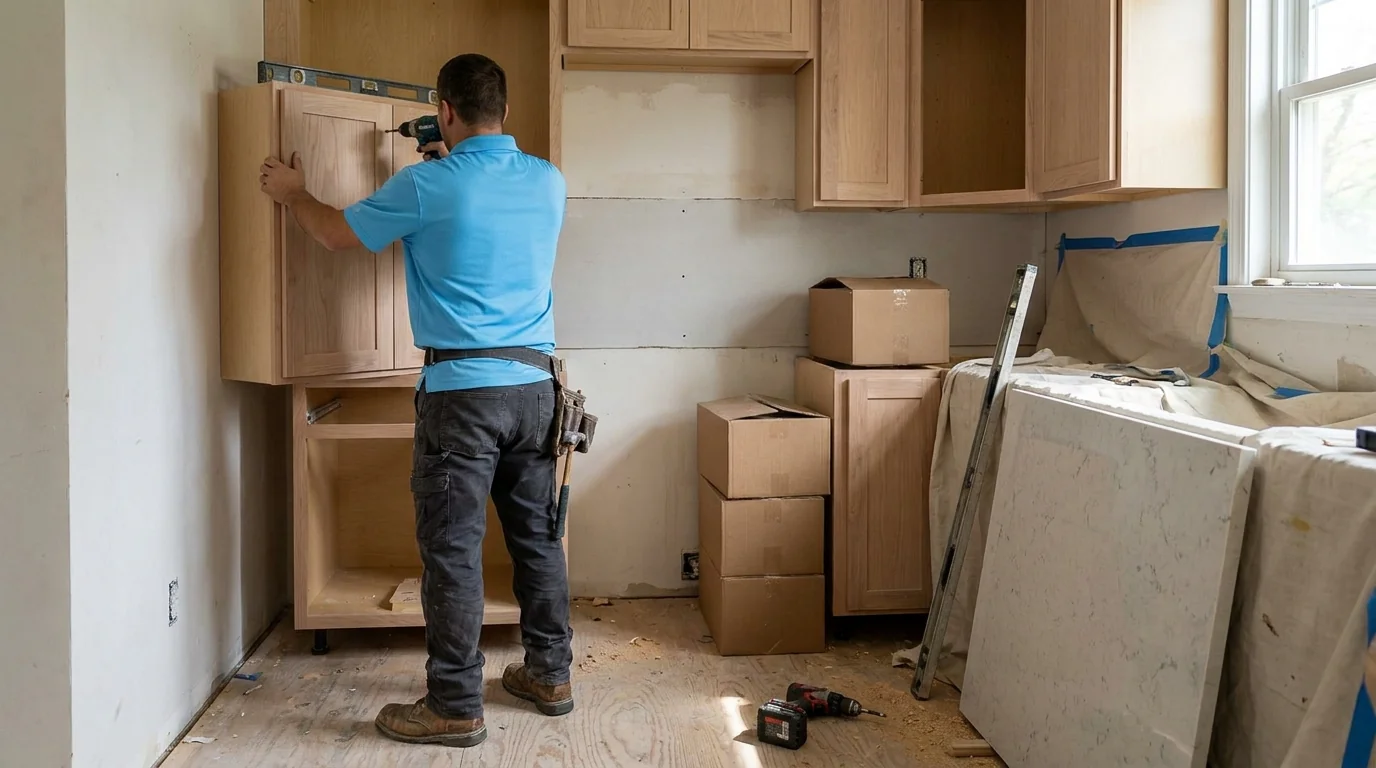
Renovations, Remodels and General Contracting in Manhattan
24/7 renovations, remodels and general contracting in Manhattan, NY. IICRC-certified, insurance billing accepted. Call (908) 970-8533.
Our IICRC-certified technicians are dispatched from our Fair Lawn, NJ headquarters and are typically on-site in Manhattan within 60 minutes of your call.
Renovating in Manhattan is nothing like renovating anywhere else. Whether you’re gutting a pre-war co-op kitchen on the Upper East Side or rebuilding a water-damaged retail interior in Chelsea after a burst riser soaked three floors overnight, every project here runs through a layer of approvals, building staff, and board requirements that simply don’t exist in most markets. The Restoration Group brings general contracting experience calibrated to that reality — from permit coordination with the NYC Department of Buildings to freight-elevator scheduling with resident managers who guard their loading docks like a second job.
Why Manhattan Buildings Make Renovation Work Different
Manhattan’s housing stock is vertical by necessity, and that vertical density creates cascading consequences. A failed washing-machine hose on the 14th floor of a Midtown high-rise doesn’t just damage one unit — it soaks ceilings on thirteen floors below it, triggering multi-unit insurance claims, board notifications, and a reconstruction scope that touches common areas, individual apartments, and sometimes the building’s mechanical systems. Pre-war co-ops built before 1940 — common from the Upper West Side through Harlem — often have original plaster ceilings, cast-iron radiator risers, and load-bearing masonry walls that require a different approach than modern stick-frame construction. Opening a wall to replace plumbing in a 1928 co-op means understanding what’s behind it before the first cut.
Post-storm rebuilds add another layer. Hurricane Sandy’s surge flooded the Financial District and Lower East Side with saltwater that corroded framing, wicked into masonry, and left behind contamination that standard drywall replacement alone couldn’t fix. More recently, the remnants of Ida overwhelmed storm drains from Harlem to Chelsea, pushing water through basement slabs and up through floor drains in ground-floor commercial spaces. When the rebuild follows a major loss event, the general contracting scope has to account for what the water left behind — not just what it destroyed.
Our Renovation and General Contracting Process in Manhattan
Every project starts with a documented scope — room by room, surface by surface — because Manhattan buildings require it. Managing agents and co-op boards want line-item detail before they approve alteration agreements, and insurance carriers want the same documentation before they release funds. We photograph existing conditions, produce written estimates that align with your adjuster’s format, and submit the alteration agreement paperwork your building requires.
During construction, we coordinate directly with your resident manager on freight-elevator windows, noise ordinance hours (NYC Local Law limits construction noise before 7 a.m. and after 6 p.m. on weekdays), and waste removal through the building’s designated service entrance. For commercial clients — restaurants, retailers, and offices in ZIP codes like 10001 and 10016 — we schedule the heaviest work overnight or on weekends to limit lost operating days. Every subcontractor we bring on-site carries certificates of insurance that meet your building’s specific requirements, because a COI that doesn’t name the co-op corporation correctly gets the job shut down before the first tool is unpacked.
For post-damage rebuilds, we work from the IICRC-certified moisture documentation already in the file — drying logs, moisture maps, and affected-material inventories — so the rebuild scope matches the actual loss, not an estimate from the hallway.
Manhattan Insurance and Board Coordination
In Manhattan co-ops and condos, the renovation approval chain runs through at least two parties: your insurance carrier and your building’s board or management company. We’re familiar with both sides. On the insurance side, we document the loss with photographs, measurements, and material specs that match the line items adjusters use, which shortens the back-and-forth on supplements. On the building side, we prepare the alteration agreement exhibits — scope of work, subcontractor list, insurance certificates — in the format most Manhattan managing agents expect.
For larger losses that cross unit lines, we can coordinate with the building’s insurance carrier separately from the individual unit owner’s carrier, keeping the two claims from tangling each other’s timelines.
Local Note
One thing that catches out-of-market contractors in Manhattan: many pre-war buildings in ZIP code 10021 and surrounding Upper East Side blocks have wet-column plumbing chases — vertical shafts shared by multiple units — that are technically common property even when they run through your kitchen wall. Opening that chase for a pipe repair or a kitchen remodel requires written board approval and, in some buildings, a licensed plumber holding a NYC Master Plumber license specifically (not just a state license). We know to flag this before demolition starts, not after.
If you’re rebuilding after a loss or planning a renovation in a Manhattan co-op, condo, or commercial space, call The Restoration Group at (908) 970-8533. We handle the coordination that Manhattan buildings demand — from the alteration agreement to the final inspection — so you’re not managing three separate conversations while your unit sits unfinished.
Renovations, Remodels and General Contracting in Manhattan: Service Coverage
Frequently Asked Questions
How fast can you arrive for renovations, remodels and general contracting in Manhattan?
How does the NYC Department of Buildings permitting process affect renovation timelines in Manhattan?
Can you handle a kitchen or bathroom remodel in a Upper East Side co-op that requires an alteration agreement?
We had flood damage in our Financial District office after a storm event — how does the rebuild scope differ from a standard commercial renovation?
What should I know about noise ordinance rules for renovation work in Manhattan residential buildings?
How do you handle projects where water damage crossed into a neighboring unit in a Midtown high-rise?
Will my homeowners insurance cover renovations, remodels and general contracting in Manhattan?
Renovations, Remodels and General Contracting response in Manhattan
Most Manhattan calls see a technician on-site within 60 minutes from our Fair Lawn headquarters.
Nearby & Related
- Renovations, Remodels and General Contracting in Kenilworth
- Restoration Services in Manhattan
- Fire Damage Restoration in Manhattan
- Mold Remediation in Manhattan
- Renovations, Remodels and General Contracting in Brooklyn
- Renovations, Remodels and General Contracting in Cranford
- Contact The Restoration Group