Mold Inspection and Testing in Springfield
24/7 mold inspection and testing in Springfield, NJ. IICRC-certified, insurance billing accepted. Call (908) 970-8533.
Our IICRC-certified technicians are dispatched from our Fair Lawn, NJ headquarters and are typically on-site in Springfield within 60 minutes of your call.
Springfield’s west branch of the Rahway River doesn’t announce itself until it’s too late — ask anyone whose finished basement flooded during Ida, when Route 22 turned into a moving waterway and low-lying homes across the township took on water faster than sump pumps could handle it. That standing water doesn’t just dry and disappear. Within 24 to 48 hours, mold begins colonizing drywall, wood framing, and carpet backing, and in many Springfield homes the damage hides behind finished walls for months before anyone notices the musty smell or the discoloration creeping along a baseboard. A professional mold inspection and testing assessment is how you find out what’s actually there — and what isn’t.
Why Springfield Properties Are Particularly Vulnerable to Hidden Mold
The housing stock in 07081 tells a specific story. Colonials and capes built between the 1920s and 1950s — common throughout the Springfield Center and Baltusrol area — were constructed with minimal vapor barriers, balloon-frame cavities that channel moisture vertically through walls, and crawl spaces that sit close to the water table coming off the Watchung ridges. When those homes flood, water wicks into structural cavities that a visual inspection alone will never reveal.
Newer townhome complexes toward the Millburn line present a different challenge: shared wall assemblies and common mechanical chases mean a moisture problem in one unit can seed mold growth in an adjacent one. Owners often don’t realize their indoor air quality issue originates next door until testing identifies the spore signature.
Springfield’s climate compounds the problem year-round. Humid summers push relative humidity well above the 60% threshold where mold thrives, and the Watchung ridge geography creates pockets of reduced airflow in low-lying neighborhoods. Homes near Meisel Avenue Park, which sits in one of the township’s flatter drainage corridors, see this effect regularly.
Our Mold Inspection and Testing Process in Springfield
A mold assessment isn’t a single swab and a phone call. The process we follow is methodical and calibrated to the conditions we actually find in Springfield homes.
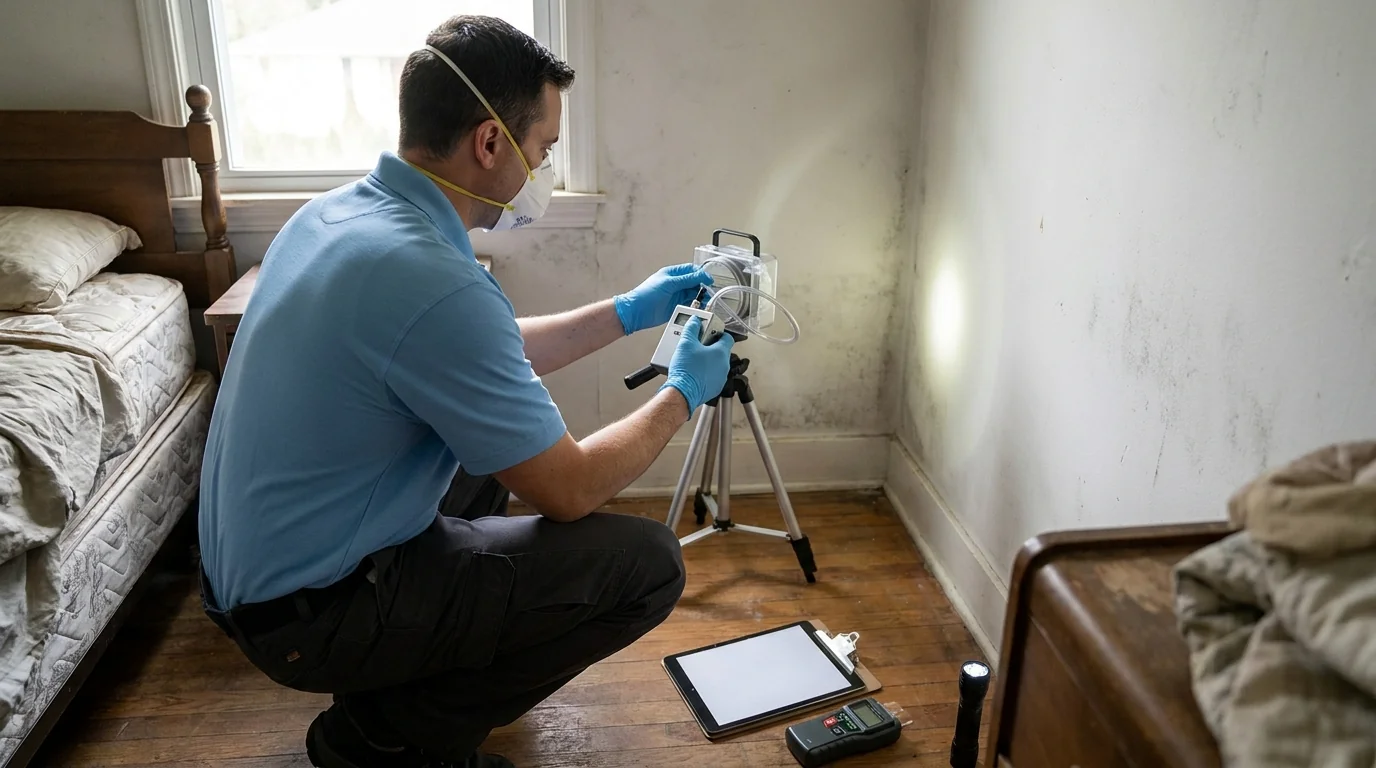
Visual inspection first. We walk the structure systematically — basement, crawl space, mechanical room, attic, and any area with a documented or suspected water intrusion history. In older Springfield colonials, we pay particular attention to chimney chases, plaster ceiling junctions, and the rim joist area above the foundation, all common concealment points for mold that goes undetected for years.
Moisture mapping. Using non-invasive moisture meters and thermal imaging, we map elevated readings throughout the structure. This step is critical in Springfield’s finished-basement homes, where mold can be actively growing behind drywall that looks and feels dry on the surface.
Air sampling and surface testing. We collect air samples from affected areas and an outdoor control sample, then send them to an accredited third-party laboratory. Depending on what the visual inspection reveals, we may also take tape-lift or bulk samples from suspect surfaces. Lab results typically return within 24 to 48 hours and identify the specific mold genera present — information that matters for remediation planning and for any insurance documentation you’ll need.
Written assessment report. You receive a clear written report with lab results, moisture readings, photographs, and a scope of findings. If remediation is warranted, the report gives you — and your insurance adjuster — a documented baseline.
The Restoration Group is an IICRC Certified Firm (#210213) and a licensed NJ Home Improvement Contractor, and we carry the documentation insurers expect to see when a mold claim moves forward.
Reaching Springfield from Our Kenilworth Base
Our team operates 24/7 and reaches Springfield quickly via Route 22 west from Kenilworth — the same corridor that flooded during Ida and that we know well. The Route 22 commercial strip and Morris Avenue corridor are straightforward runs; residential streets in the Baltusrol area and Mountain Avenue corridor add a few minutes but are well within our standard response range. When you call (908) 970-8533, you’re not waiting for a dispatcher to locate a subcontractor — you’re reaching a team that’s made this drive many times.
Local Note: What Springfield’s Older Homes Hide in Plain Sight
One pattern we see repeatedly in Springfield’s pre-1950 housing stock: original horsehair plaster on the interior side of exterior walls acts as a slow-release moisture reservoir. After a flood event or prolonged humidity exposure, that plaster holds water long after the visible surface feels dry to the touch. Standard moisture meters calibrated for drywall can underread these walls significantly. We adjust our baseline thresholds and extend dwell time on readings in homes we identify as plaster-construction — typically anything in Springfield Center built before 1955. It’s a small calibration that prevents a false “all clear” and the mold discovery six months later that follows one.
If you’re in Springfield and you’ve had water in the basement, noticed a persistent musty odor, or recently purchased an older home and want to know what’s behind the walls, a professional mold inspection and testing assessment is the right starting point. Call (908) 970-8533 or reach out online — we’ll schedule promptly and give you a clear picture of what’s actually happening in your home.
Mold Inspection and Testing in Springfield: Service Coverage
Frequently Asked Questions
How fast can you arrive for mold inspection and testing in Springfield?
Are homes in the Baltusrol area more prone to hidden mold than newer Springfield construction?
My Springfield basement flooded during a storm — how long do I have before mold becomes a serious problem?
Does Springfield's location near the Rahway River's west branch affect what types of mold are typically found in local homes?
What does a mold inspection report include, and will it satisfy a Springfield insurance adjuster?
Can mold in one unit of a Springfield townhome complex spread to neighboring units, and how does testing account for that?
Mold Inspection and Testing response in Springfield
Most Springfield calls see a technician on-site within 60 minutes from our Fair Lawn headquarters.