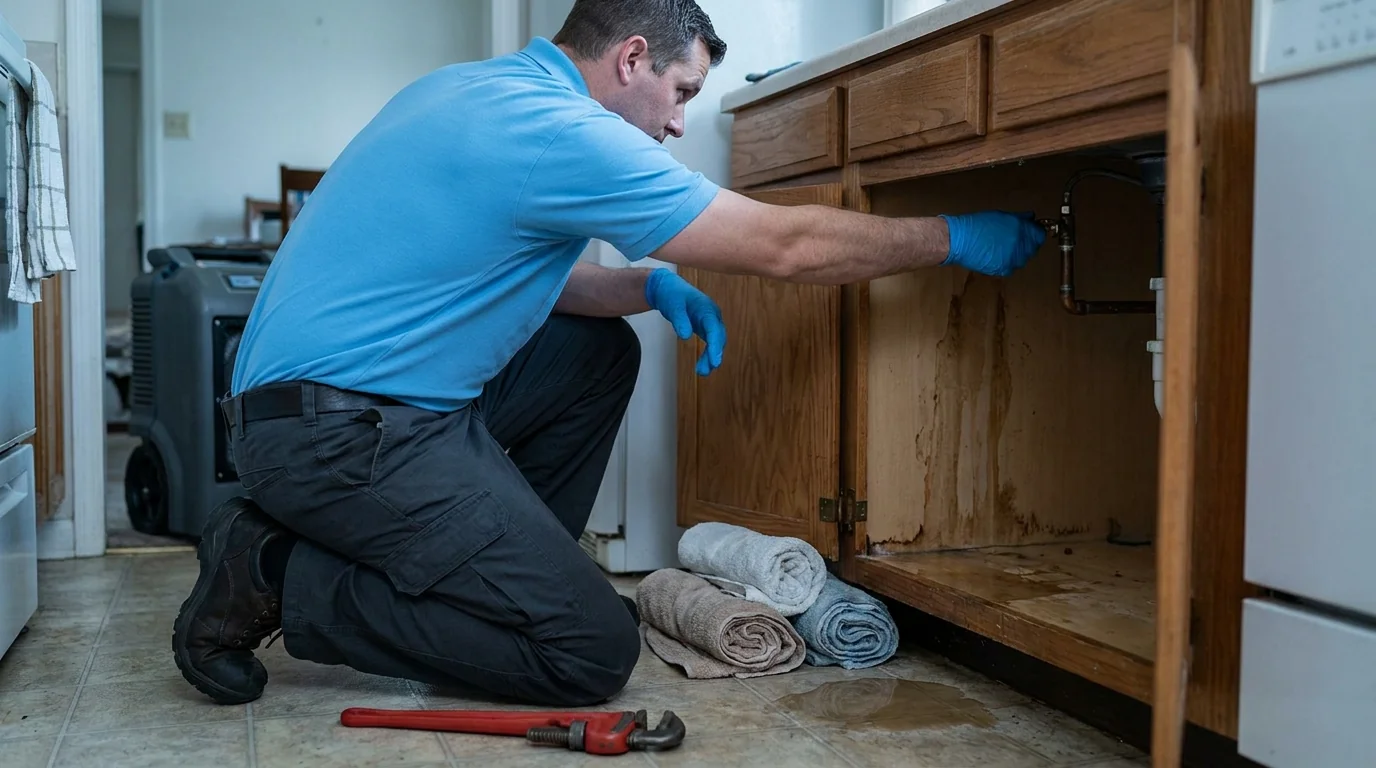
Burst Pipe Cleanup and Repair in Manhattan
24/7 burst pipe cleanup and repair in Manhattan, NY. IICRC-certified, insurance billing accepted. Call (908) 970-8533.
Our IICRC-certified technicians are dispatched from our Fair Lawn, NJ headquarters and are typically on-site in Manhattan within 60 minutes of your call.
When a pipe lets go inside a Manhattan high-rise or pre-war co-op, the damage rarely stays on one floor. Water follows gravity and the path of least resistance — through plaster ceilings, down elevator shafts, behind tile, into the unit below and the one below that. The Restoration Group responds 24/7 to burst pipe emergencies across Manhattan, from Upper East Side brownstones to Financial District office towers, with the documentation and coordination protocols that building managers and co-op boards actually require.
Why Manhattan Properties See Burst Pipe Problems
Manhattan’s building stock spans more than a century of plumbing standards, and that range creates real vulnerability. Pre-war co-ops — the kind that line the Upper West Side and stretch from the 60s up through Harlem — were built with galvanized steel or cast-iron risers that are now well past their design life. Those pipes corrode from the inside out, thinning walls that hold until a hard freeze or a pressure spike finally splits them open. Newer condo towers have their own failure points: flexible washing-machine supply hoses, aging radiator valves, and high-pressure domestic water lines that can fail at fittings.
New York winters add mechanical stress. When temperatures drop below 20°F — which happens several times each winter along the Hudson-facing facades of Midtown and Chelsea — uninsulated sections of pipe near exterior walls or in mechanical rooms are at genuine risk. The city’s building code requires freeze protection in those spaces, but older buildings don’t always comply in practice, and the result shows up in our dispatch queue every January and February.
Our Burst Pipe Cleanup and Repair Process in Manhattan
The first step on any pipe burst call is stopping the source. If the building’s super hasn’t already shut the riser, we coordinate with on-site staff immediately — in a multi-unit building, every minute the water runs adds another affected unit to the loss. Once the flow is stopped, we use thermal imaging cameras and calibrated moisture meters to map exactly how far water has traveled through walls, floors, and ceiling assemblies. In Manhattan’s vertical buildings, that survey often spans three or four floors.
Extraction comes next — truck-mounted and portable units pull standing water from hardwood floors, carpet, and subfloor assemblies. We then place commercial desiccant dehumidifiers and high-velocity air movers in a configuration tuned to the materials present. Drying in pre-war plaster construction takes longer than drywall: plaster is dense, releases moisture slowly, and requires extended monitoring before structural materials reach acceptable readings per the IICRC S500 standard. We log moisture data by unit and by day, which building managers need for their own records and which insurers require before authorizing repairs.
Once the structure is dry, we coordinate the repair phase — replacing damaged sections of supply line, restoring affected drywall or plaster, and returning the space to pre-loss condition.
Manhattan Insurance and Building Coordination
A burst pipe in a co-op or condo building in ZIP code 10021 or 10025 rarely involves just one policy. The unit owner’s HO-6 policy typically covers interior finishes; the building’s master policy may cover the riser itself; and if water crossed into a neighboring unit, a third carrier enters the picture. We document the loss thoroughly from the start — photographs, moisture logs, scope of work by unit — so each claim has what it needs without duplicating effort.
Building managers and managing agents in Manhattan expect more than a cleanup crew. They expect proof of insurance before anyone enters the building, unit-by-unit drying logs for board review, and advance scheduling around freight elevator windows. We carry the certificates and maintain the paper trail. For commercial losses — retail spaces, restaurants, or offices where every closed day represents real revenue — we prioritize overnight mitigation schedules to minimize business interruption.
Local Note
One thing that catches out-of-market contractors in Manhattan: freight elevator access is almost never flexible. Most residential buildings in Chelsea and Midtown restrict equipment moves to specific morning or evening windows, and some require 24-hour notice for oversized loads like desiccant dehumidifiers or extraction units. We confirm elevator scheduling before dispatch, not on arrival — which means equipment is staged and moving the moment access opens rather than sitting in a lobby waiting for a super to make a call.
Getting to Manhattan from Kenilworth
The Restoration Group operates out of Kenilworth, NJ, and reaches Manhattan via the Lincoln Tunnel or the Goethals-to-Holland corridor depending on destination. Midtown and the Upper East Side are typically our fastest routes; the Financial District and Lower East Side add travel time but remain well within our emergency response window. We’re available around the clock — call (908) 970-8533 and a team member will confirm your address, building contact, and access details while the crew is already moving.
When a pipe bursts in your Manhattan building, the difference between a contained loss and a multi-floor disaster is measured in minutes. Call (908) 970-8533 now — our crew will coordinate directly with your building staff, document every affected unit, and get drying equipment in place as fast as Manhattan’s elevator schedules allow.
Burst Pipe Cleanup and Repair in Manhattan: Service Coverage
Frequently Asked Questions
How fast can you arrive for burst pipe cleanup and repair in Manhattan?
How does The Restoration Group handle burst pipe calls in Upper East Side co-ops where the board requires advance notice before any vendor enters?
A pipe burst on my floor and water has reached the unit below me in my Chelsea building — whose insurance pays for what?
Are pre-war buildings in Harlem and the Upper West Side more likely to have severe burst pipe damage than newer construction?
What equipment do you bring for burst pipe water extraction in a high-rise, and how do you get it past building freight restrictions?
How long does the full burst pipe cleanup and drying process typically take in a Manhattan apartment?
Burst Pipe Cleanup and Repair response in Manhattan
Most Manhattan calls see a technician on-site within 60 minutes from our Fair Lawn headquarters.