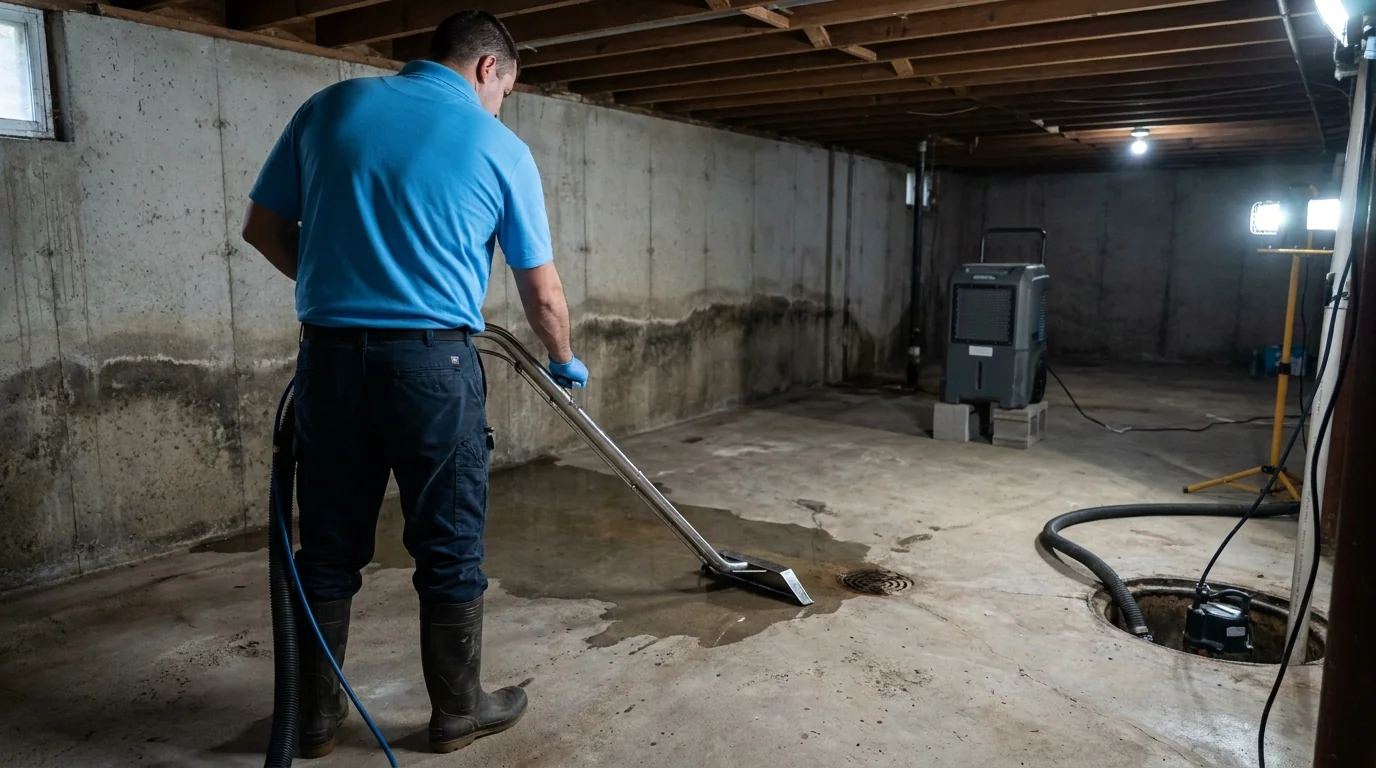
Basement Flooding Cleanup in Jersey City
24/7 basement flooding cleanup in Jersey City, NJ. IICRC-certified, insurance billing accepted. Call (908) 970-8533.
Our IICRC-certified technicians are dispatched from our Fair Lawn, NJ headquarters and are typically on-site in Jersey City within 60 minutes of your call.
When Tropical Storm Ida swept through in 2021, basements from Bergen-Lafayette to The Heights filled with water faster than sump pumps could cycle — and many of those cellars still carry the ghost of that event in the form of residual moisture, compromised block walls, and floor assemblies that were never properly dried. Jersey City’s combination of aging combined-sewer infrastructure, low-lying waterfront blocks, and a dense housing stock that spans everything from 1890s brownstone rowhouses to glass-tower condos at Newport makes basement flooding one of the most common and most complicated water damage calls in Hudson County.
Why Jersey City Properties See Basement Flooding So Often
The city sits on a mix of tidal wetland fill and glacial sediment that drains poorly under heavy rain. When a nor’easter stalls over the area or a fast-moving summer storm drops two inches in an hour, the combined sewer system — which carries both stormwater and sanitary waste in the same pipe — backs up. That backflow enters basements through floor drains, laundry tub standpipes, and cracked clay tile laterals. In older neighborhoods like Greenville and Bergen-Lafayette, those laterals may be original to the building, meaning they’re more than a century old and prone to root infiltration and joint separation.
On the waterfront side, the problem is different but equally persistent. High-rise buildings near Exchange Place and Newport operate on pressurized domestic water systems with copper or PEX risers running through every floor. A single supply-line failure on an upper unit can push water through the slab and into parking-level mechanical rooms or below-grade storage areas before building management is even alerted. In those cases, the flooding is cleaner but the documentation burden is higher — unit-by-unit moisture mapping, drying logs, and written reports that satisfy both the building’s property insurer and the condo association’s requirements.
Our Basement Flooding Cleanup Process in Jersey City
The first thing we do on any flooded basement call is identify the water category before we touch anything. A sewer backup in a Greenville rowhouse carries Category 3 contaminated water — that changes how we handle extraction, what PPE we wear, and which materials can be dried in place versus removed. A burst washing machine hose in a Journal Square co-op is Category 1, which means faster turnaround and lower remediation cost. Misclassifying that distinction costs homeowners money and creates liability.
Once the source is confirmed and stopped, we extract standing water with truck-mounted or portable extraction units, then use thermal imaging cameras to find water that has wicked into the base of block walls, beneath slab-on-grade sections, and inside stud cavities where the basement meets the first-floor framing. We set industrial-grade desiccant or refrigerant dehumidifiers and axial air movers calibrated to the square footage and material composition of the space. Drying progress is logged daily against IICRC S500 standards — that documentation matters whether you’re filing a homeowner’s claim or submitting to a condo board.
Reaching Jersey City from Kenilworth
Our team dispatches from Kenilworth, NJ, and we operate 24/7 — meaning a call at 2 a.m. when a sump pump fails during a nor’easter gets the same response as a weekday afternoon call. The most direct routes into Jersey City run via the New Jersey Turnpike to Routes 1 and 9, with access into downtown neighborhoods through the Holland Tunnel corridor or Routes 139 and 440 depending on the ZIP code. Properties in the 07302 corridor near Grove Street PATH plaza or the Exchange Place waterfront are typically accessible without the congestion that affects midday response; we route accordingly. For addresses in The Heights or Journal Square (07306, 07307), we come in through Routes 3 and 7 or the Pulaski Skyway depending on traffic conditions at the time of dispatch.
Jersey City Insurance and HOA Coordination
Jersey City’s dense multifamily ownership creates a paperwork layer that single-family markets don’t have. Condo associations at waterfront towers typically require a licensed contractor’s written scope of work, moisture readings at project open and close, and sometimes a third-party review before they’ll authorize access to common-area mechanical spaces. Landlords managing rowhouse rentals in ZIP codes 07304 and 07305 often need documentation that satisfies both their own carrier and a tenant’s renters insurance adjuster simultaneously. We prepare moisture maps, photo logs, and drying reports in formats that most major carriers accept, and we can communicate directly with adjusters to keep the claim moving.
Local Note
In Jersey City’s pre-war rowhouse stock — particularly the brick and brownstone buildings common in The Heights and Bergen-Lafayette — basement walls are typically unreinforced concrete block or rubble stone, not poured concrete. These materials are highly absorptive and hold moisture in their cores long after the surface feels dry to the touch. Standard moisture meters read surface conditions and will give a false “dry” reading on block that still holds 15–20% moisture by weight in its interior. We use penetrating probe meters and, when warranted, calcium chloride tests on slab areas to confirm actual dryness before equipment is pulled. Pulling dehumidifiers too early on this building type is one of the most common reasons mold appears weeks after a “completed” cleanup.
If water reached your basement — whether from a sewer backup, a failed sump, a broken supply line, or storm surge — call The Restoration Group at (908) 970-8533. We’re available around the clock, we know Jersey City’s building stock, and we’ll give you a straight assessment of what it takes to dry it correctly.
Basement Flooding Cleanup in Jersey City: Service Coverage
Frequently Asked Questions
How fast can you arrive for basement flooding cleanup in Jersey City?
How quickly can The Restoration Group reach a flooded basement in Downtown Jersey City or the Exchange Place area?
Is a sewer backup in a Bergen-Lafayette or Greenville basement treated differently than a burst pipe?
My Heights rowhouse has stone or block basement walls — does that change how long drying takes?
What documentation does a Jersey City condo association or building manager typically need after a basement flooding event?
How do you handle basement flooding caused by storm surge or heavy rain rather than a plumbing failure — does that affect the insurance claim?
Basement Flooding Cleanup response in Jersey City
Most Jersey City calls see a technician on-site within 60 minutes from our Fair Lawn headquarters.