Storm Damage Restoration in Manhattan
24/7 storm damage restoration in Manhattan, NY. IICRC-certified, insurance billing accepted. Call (908) 970-8533.
Our IICRC-certified technicians are dispatched from our Fair Lawn, NJ headquarters and are typically on-site in Manhattan within 60 minutes of your call.
When a nor’easter stalls over the tristate area or a remnant tropical system drops six inches of rain in an afternoon, Manhattan’s density turns ordinary storm damage into a vertical cascade. A compromised roof membrane on a Chelsea walk-up soaks through five floors before anyone smells the damp; a downed tree limb on the Upper West Side punches through a bay window and leaves a gut-renovated prewar apartment exposed to a second night of rain. The Restoration Group responds 24/7 to storm damage across Manhattan — from the Financial District to Harlem — and we understand how this borough’s building stock, board rules, and sheer density change what “cleanup” actually means.
Why Manhattan Properties Face Unusual Storm Damage Challenges
Manhattan’s exposure to storm damage is shaped by geography and architecture in equal measure. The island sits at the convergence of the Hudson and East Rivers, funneling surge and wind in ways that inland metros don’t experience. Hurricane Sandy’s 2012 surge inundated the Financial District and the Lower East Side with salt-laden floodwater that corroded elevator pits, mechanical rooms, and ground-floor retail well after the visible water receded. Remnant Hurricane Ida in 2021 overwhelmed the city’s aging combined sewer system, backing stormwater into basements from Harlem to Chelsea in under an hour.
Above the waterline, the building stock creates its own complications. Pre-war co-ops — the kind that line Central Park West and fill blocks in the Upper East Side — were built with terra cotta tile, plaster-on-lath walls, and flat or slightly pitched roof assemblies that collect standing water. Modern glass-and-steel towers in Midtown and along the Far West Side deal with curtain-wall failures and mechanical penthouse flooding. Neither problem looks like a suburban ranch house with a leaky shingle roof, and neither responds to the same drying protocols.
Our Storm Damage Restoration Process in Manhattan
Every job starts with a moisture survey before a single piece of equipment is staged. In a multi-unit building, that means walking affected units floor by floor with thermal imaging cameras and pin-type moisture meters, logging readings by unit number and elevation — documentation that resident managers and managing agents expect before they’ll grant continued access or sign off on insurance claims.
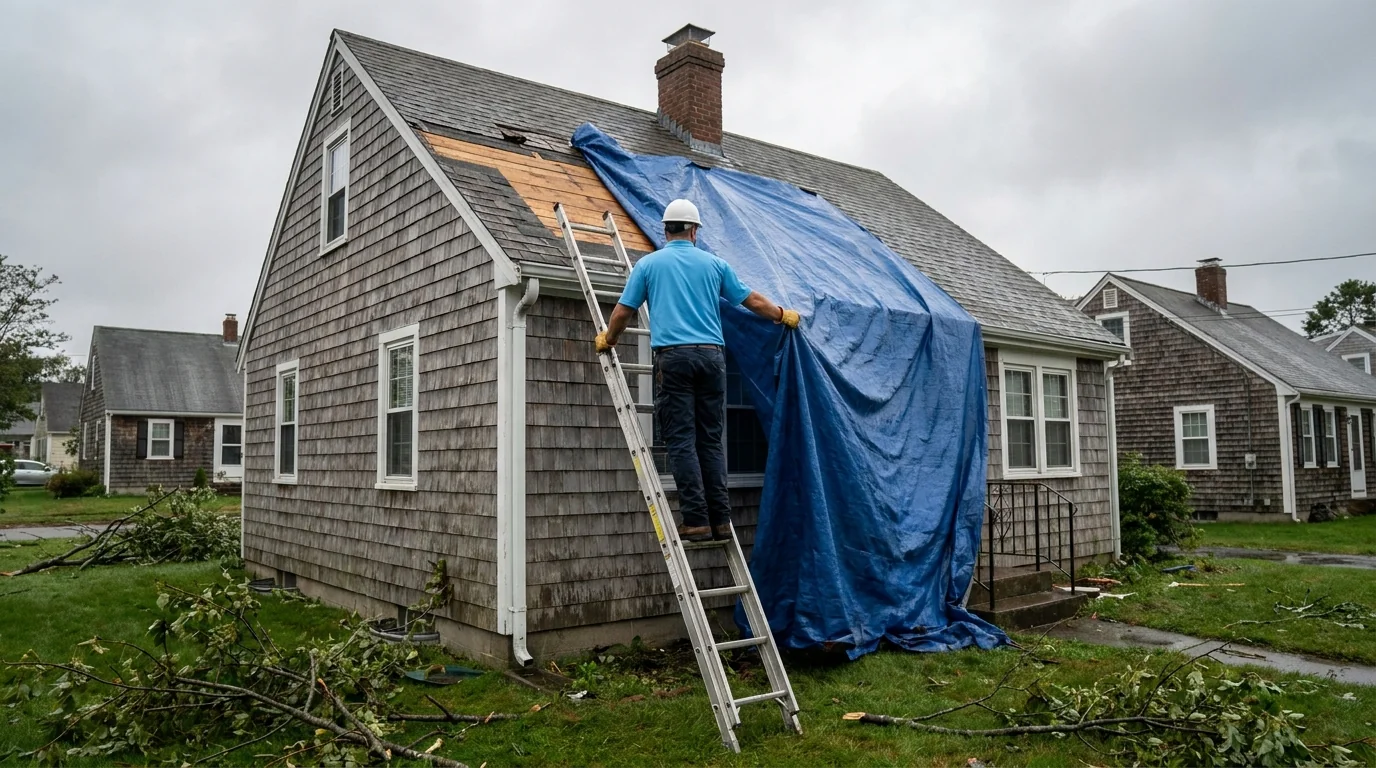
Once the scope is mapped, we extract standing water, remove saturated building materials, and set industrial drying equipment calibrated to the actual volume and construction type. Plaster-on-lath walls common in prewar buildings release moisture more slowly than modern drywall; drying timelines reflect that reality rather than a generic 3-day estimate. Structural repairs — sheathing, framing, window boarding, temporary roof tarping — happen in parallel so the building envelope is closed before the next weather system arrives.
For commercial spaces in Midtown or retail corridors in the Financial District, we schedule the noisiest demolition and equipment staging overnight to minimize disruption. Every closed day in a Manhattan restaurant or office is measurable lost revenue, and our project timelines account for that pressure.
Reaching Manhattan from Kenilworth
The Restoration Group is based in Kenilworth, NJ, which puts crews on the Lincoln Tunnel approach or across the George Washington Bridge depending on the destination borough. For jobs in the ZIP codes 10001 through 10038 — covering everything from Hudson Yards east to the FDR corridor — we dispatch around the clock. Because Manhattan has no curbside staging, our crews confirm freight elevator reservations and loading dock windows before arrival so equipment moves directly to the affected floor without delay in the lobby.
Manhattan Insurance and Board Coordination
Storm claims in Manhattan co-ops and condos almost always involve at least two insurance policies: the building’s master policy and the individual unit owner’s HO-6. Sorting out which carrier covers which layer of damage — structural versus personal property versus betterments — is something adjusters and boards negotiate, and our documentation is built to support that process. We produce unit-by-unit moisture logs, timestamped photographs, and itemized material inventories in the format most major carriers and managing agents request. We also carry certificates of insurance formatted to meet the requirements boards in buildings along Fifth Avenue or in the Upper East Side typically demand before any contractor enters a residential unit.
Local Note
One thing that surprises property managers unfamiliar with post-storm work in Manhattan: the city’s Department of Buildings issues Stop Work Orders on active emergency repairs if permits aren’t pulled within a defined window, even when the work is legitimately urgent. We’ve seen well-intentioned contractors board up a storm-breached facade in Midtown only to have the repair stall for days because the permit paperwork lagged. Our project managers initiate the DOB filing process at intake — not after the crew is already on site — so emergency repairs don’t get frozen mid-job by a compliance gap.
When a storm tears through Manhattan, the damage rarely stays contained to one unit, one floor, or one system. The Restoration Group is available around the clock to assess, stabilize, and restore — whether you’re managing a prewar co-op on the Upper East Side, a ground-floor restaurant near Grand Central Terminal, or a condo tower in the Financial District. Call (908) 970-8533 any time to reach a live dispatcher.
Storm Damage Restoration in Manhattan: Service Coverage
Frequently Asked Questions
How fast can you arrive for storm damage restoration in Manhattan?
How does storm damage restoration work differently in a Manhattan co-op or condo building compared to a single-family home?
Can you respond to storm emergencies in the Financial District or Lower East Side overnight?
The Upper West Side building I manage requires certificates of insurance before any contractor enters. Can you provide those?
How long does storm damage drying take in a prewar Manhattan apartment with plaster walls?
Does New York City's Department of Buildings process affect emergency storm repairs in Manhattan?
Storm Damage Restoration response in Manhattan
Most Manhattan calls see a technician on-site within 60 minutes from our Fair Lawn headquarters.