Odor Removal and Deodorization in Union
24/7 odor removal and deodorization in Union, NJ. IICRC-certified, insurance billing accepted. Call (908) 970-8533.
Our IICRC-certified technicians are dispatched from our Fair Lawn, NJ headquarters and are typically on-site in Union within 60 minutes of your call.
The postwar split-levels and capes that fill Union Township’s streets — particularly the dense blocks running through Vauxhall and Battle Hill — were built in an era when insulation was thin, ventilation was minimal, and basements were finished with whatever materials were on hand. Decades later, those same homes trap odors in ways that newer construction simply doesn’t: smoke from a kitchen fire soaks into original plaster and lathe, pet odors migrate into concrete subfloors, and the musty aftermath of a flooded basement lingers long after the water is gone. If you’re searching for odor removal and deodorization in Union, the problem is rarely just surface-level.
Why Union Properties Hold Odors Longer
Union Township’s housing stock is one of the defining challenges in odor remediation work here. The majority of homes in ZIP code 07083 — and across the 07088 corridor — were built between 1940 and 1965. That means original horsehair plaster on interior walls, cast-iron drain stacks, and semi-finished basements that absorbed moisture and odor-causing compounds for sixty-plus years before anyone called a restoration company.
The flooding history compounds this. Tributaries of the Elizabeth and Rahway Rivers thread through low-lying sections of town, and after Tropical Storm Ida, properties near Morris Avenue and through the Vauxhall neighborhood experienced significant basement intrusion. Standing water that sits even 24 to 48 hours in a finished basement — especially one with older carpet padding and drywall — begins generating microbial odor that no off-the-shelf product can reach. The odor molecules bind to porous materials at a structural level, which is why professional-grade treatment is the only path to a lasting result.
Commercial properties along the Route 22 retail corridor face a different pattern: sprinkler discharges, roof leaks over storage areas, and overnight losses that aren’t discovered until the next morning. Restaurant and retail spaces have their own odor profile — cooking grease, mold, and smoke — that requires a calibrated approach distinct from residential work.
Our Odor Removal and Deodorization Process in Union
Effective odor elimination isn’t a single step. The process begins with a thorough assessment to identify odor sources — not just the obvious ones, but the secondary locations where volatile organic compounds have migrated. In Union’s older homes, that often means checking inside wall cavities, under original hardwood floors, and inside ductwork that hasn’t been cleaned in decades.
From there, the approach is matched to the odor type and the materials involved:
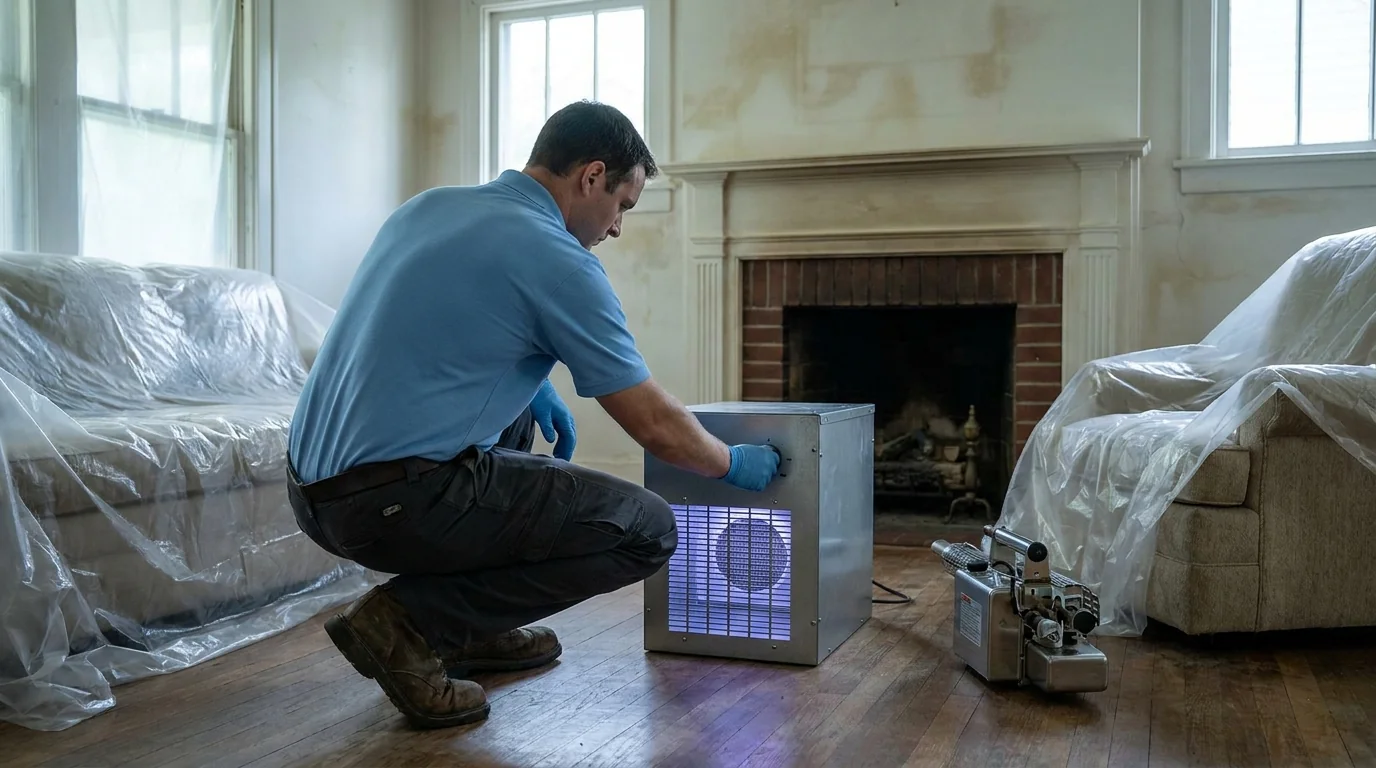
- Thermal fogging penetrates porous surfaces the way the original odor did — as a vapor — neutralizing smoke and fire odor molecules deep inside plaster, wood framing, and fabric. It’s particularly effective in the older construction common throughout Battle Hill and Union Center.
- Hydroxyl deodorization uses UV-generated hydroxyl radicals to break down odor-causing compounds without requiring occupants to vacate. This is often the right choice for occupied commercial spaces or when a homeowner can’t be displaced for an extended treatment window.
- Ozone treatment is a high-concentration option reserved for unoccupied spaces with severe odor contamination. Because ozone at treatment levels is not safe for occupancy during application, we coordinate carefully with homeowners on timing and re-entry.
- Direct application of encapsulants and counteractants addresses residual odor in specific materials — subfloor concrete, HVAC components, and wall surfaces — after primary treatment.
Every job is documented with before-and-after air quality readings so you have a clear record, which also supports insurance claims when odor damage is part of a larger covered loss.
Reaching Union from Kenilworth
The Restoration Group is based in Kenilworth, which shares a direct border with Union Township — crews can be on-site in Union quickly, whether the call comes in at 2 p.m. or 2 a.m. We operate 24/7, so there’s no waiting until business hours to get an assessment started. For properties near Kean University or along the Galloping Hill Golf Course corridor, routing is straightforward via the surface roads connecting the two townships. For addresses deeper in Vauxhall or along the Morris Avenue low spots, we’re familiar with the access patterns and don’t need to navigate blind.
Local Note: What Union’s Plaster Walls Mean for Odor Treatment
One thing that catches contractors unfamiliar with Union’s housing stock off guard: original plaster walls absorb odor compounds differently than modern drywall. Plaster is denser and less permeable on the surface, which sounds like an advantage — but it means odor molecules that do penetrate the surface layer are effectively sealed in. Thermal fogging is often the most effective tool in these homes because the fogging agent can follow the same vapor pathways the original odor used. In homes where the plaster has been skim-coated or painted multiple times over the decades, we sometimes need to extend treatment dwell times to allow full penetration. It’s a detail that matters in a town where a significant portion of the housing stock predates 1960.
If your home or business in Union is dealing with smoke, pet, mold, or flood-related odor that hasn’t responded to cleaning, call The Restoration Group at (908) 970-8533. We’ll assess the source, explain the right treatment method for your specific materials, and get the process started — any time of day.
Odor Removal and Deodorization in Union: Service Coverage
Frequently Asked Questions
How fast can you arrive for odor removal and deodorization in Union?
Are homes in Vauxhall and Battle Hill more difficult to deodorize because of their age?
My basement flooded near Morris Avenue during a heavy storm — now there's a persistent musty smell even though it looks dry. What's happening?
A kitchen fire left smoke odor throughout our Union Center home. How long does smoke odor removal typically take?
What's the difference between ozone treatment and hydroxyl deodorization, and which is right for my Union property?
Does homeowner's insurance in New Jersey typically cover professional odor removal after a covered loss?
Odor Removal and Deodorization response in Union
Most Union calls see a technician on-site within 60 minutes from our Fair Lawn headquarters.