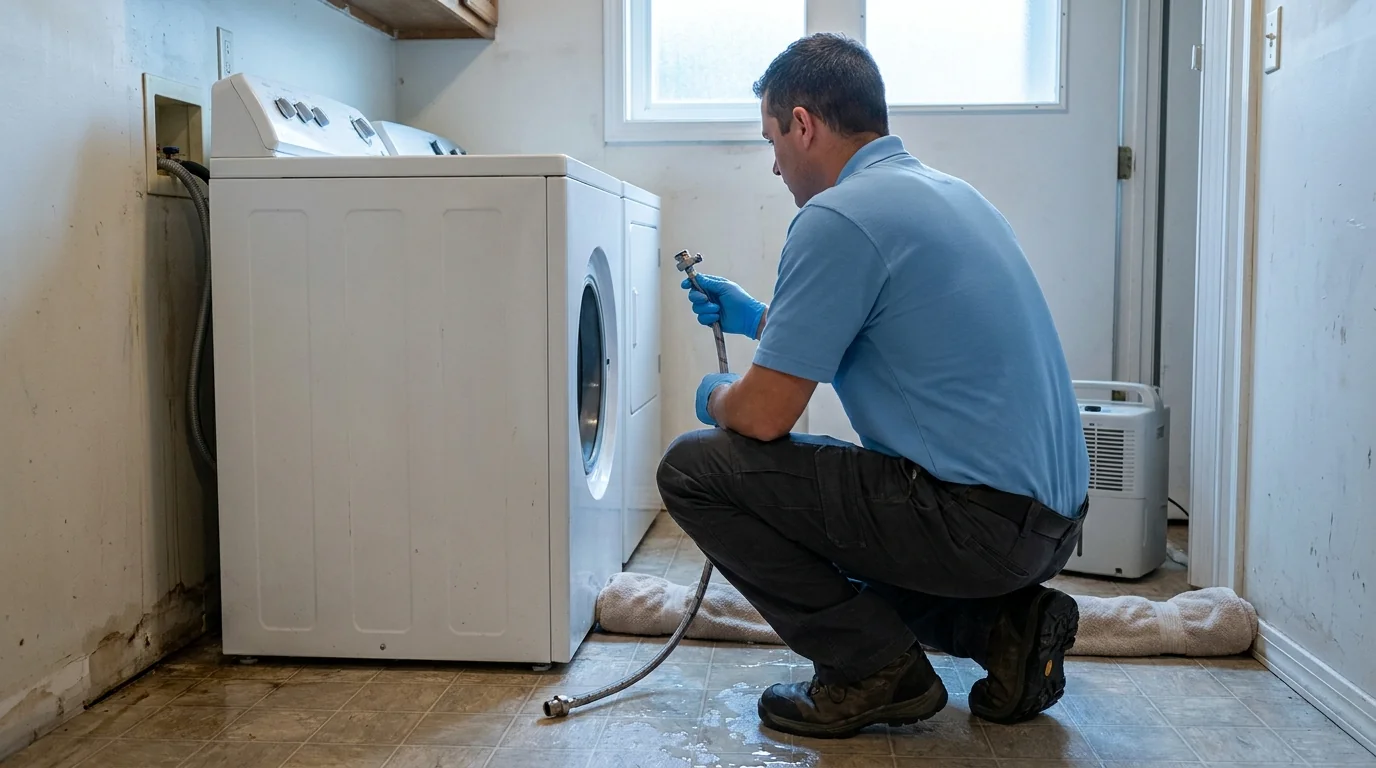
Appliance Leak Cleanup in Manhattan
24/7 appliance leak cleanup in Manhattan, NY. IICRC-certified, insurance billing accepted. Call (908) 970-8533.
Our IICRC-certified technicians are dispatched from our Fair Lawn, NJ headquarters and are typically on-site in Manhattan within 60 minutes of your call.
A refrigerator ice maker line that quietly weeps behind the unit for a week looks like a minor inconvenience — until the water finds the subfloor seam in a pre-war Upper East Side co-op and the unit below calls their resident manager about a brown stain spreading across the ceiling. In Manhattan’s stacked, densely occupied buildings, appliance leaks rarely stay contained to one apartment, and the clock between a failed hose and a neighbor’s damaged ceiling is shorter than most people expect. The Restoration Group responds 24/7 to appliance leak emergencies across Manhattan, from dishwasher floods in Chelsea walk-ups to water heater failures in Midtown high-rises.
Why Manhattan Buildings Are Especially Vulnerable to Appliance Leaks
The physics of vertical living work against you when an appliance fails. A washing machine hose that bursts on the 14th floor of a condo tower doesn’t drain into a yard — it migrates through floor assemblies, saturates insulation, and shows up as ceiling damage on floors 13, 12, and sometimes lower before anyone notices. Pre-war buildings, which dominate neighborhoods like the Upper West Side and Harlem, often have original hardwood floors laid over thick subfloor assemblies with little or no vapor barrier. Water travels laterally inside those layers faster than moisture meters at the surface suggest.
Refrigerator ice maker lines are a particular culprit in renovated apartments. When kitchens are updated, the supply line to the ice maker is sometimes extended with a push-fit connector that isn’t rated for years of low-level vibration. Those connectors can work loose slowly, releasing just enough water to saturate the cabinet base and the floor below before the leak becomes visible. Dishwashers with failing door gaskets produce a similar slow-drip pattern along the toe-kick, which wicks into adjacent cabinetry and flooring without triggering a visible puddle.
Water heater failures in Manhattan often involve units tucked into closets or utility alcoves with no floor drain nearby. When a tank lets go — especially older 40-gallon units in buildings constructed before 1980 — there’s nowhere for the water to go except under the door and into the living space.
Our Appliance Leak Cleanup Process in Manhattan
When we arrive on-site, the first step is source confirmation — we verify the appliance is isolated (water supply shut off, unit unplugged) before any extraction begins. If the building’s main shutoff was used and neighboring units may be affected, we coordinate with the resident manager or building super before proceeding, because in Manhattan’s co-ops and condos, a single mitigation job often touches common areas, adjacent units, and building infrastructure simultaneously.
From there, the process follows a structured sequence:
- Moisture mapping: Thermal imaging and calibrated moisture meters across all affected surfaces — floors, walls, ceilings, and cabinet interiors — to establish the full boundary of saturation before any material is moved or removed.
- Extraction: Truck-mounted and portable extraction units pull standing water and surface moisture. In buildings where freight elevator access is restricted to certain hours, we stage equipment to work within those windows.
- Structural drying: Industrial air movers and desiccant or refrigerant dehumidifiers are placed per the IICRC S500 standard for water damage. Drying logs are documented per unit, which matters when a board or managing agent needs records for an insurance claim or a neighbor’s subrogation inquiry.
- Material assessment: We identify what can be dried in place versus what needs to be removed — wet insulation, swollen cabinetry, buckled flooring — and document everything photographically before any demolition.
Manhattan Insurance and Building Coordination
Appliance leak claims in Manhattan often involve multiple parties: the unit owner’s HO-6 policy, the building’s master policy, and sometimes a neighbor’s separate claim if water migrated. We carry certificates of insurance formatted to meet co-op and condo board requirements (ZIP codes 10001 through 10038 and beyond), and we’re accustomed to submitting moisture logs and scope documentation directly to adjusters or managing agents.
Buildings in the Financial District and on the Lower East Side — areas that saw significant flood infrastructure investment after Hurricane Sandy — sometimes have updated drainage and sump systems that affect how water behaves in lower floors. We factor that in when scoping jobs in those areas, because a building with a functioning sump may show different moisture migration patterns than one without.
As an IICRC Certified Firm (#210213), our documentation meets the standard most carriers require for residential water damage claims, which reduces back-and-forth during the adjustment process.
Local Note: Freight Elevators and After-Hours Coordination
One thing that surprises people who haven’t done restoration work in Manhattan high-rises: the freight elevator schedule can be as important as the drying equipment. Many buildings — particularly full-service co-ops on the Upper East Side and newer condo towers in Midtown — restrict freight elevator use to specific hours and require 24-hour advance notice for large equipment moves. When we get a call for an appliance leak in a building with these rules, we contact the building staff immediately to reserve freight access, because arriving with three air movers and a dehumidifier and then waiting four hours for elevator clearance adds a full day to drying time. We ask for the building’s superintendent contact as part of our intake process for exactly this reason.
If you’re dealing with an appliance leak right now — a washing machine that overflowed, a refrigerator line that gave out, a water heater that let go — call The Restoration Group at (908) 970-8533. We’re available around the clock, we know how Manhattan buildings work, and we’ll coordinate with your building staff so the job moves forward without unnecessary delays.
Appliance Leak Cleanup in Manhattan: Service Coverage
Frequently Asked Questions
How fast can you arrive for appliance leak cleanup in Manhattan?
How quickly can The Restoration Group reach a Manhattan address for an appliance leak emergency?
My co-op board in the Upper East Side requires moisture logs and a certificate of insurance before any contractor works in the building — can you provide those?
Water from my dishwasher leak has shown up on my downstairs neighbor's ceiling in our Chelsea building. How does that affect the scope of the cleanup?
What materials are typically damaged in a Manhattan apartment after a refrigerator ice maker line leak?
Will my HO-6 policy cover an appliance leak cleanup in a Manhattan condo, and how does the building's master policy factor in?
Appliance Leak Cleanup response in Manhattan
Most Manhattan calls see a technician on-site within 60 minutes from our Fair Lawn headquarters.